
What’s Next for the Mets After Losing Alonso and Díaz?
The New York Mets lost All-Stars Edwin Díaz and Pete Alonso on consecutive days. Where will they go from here?
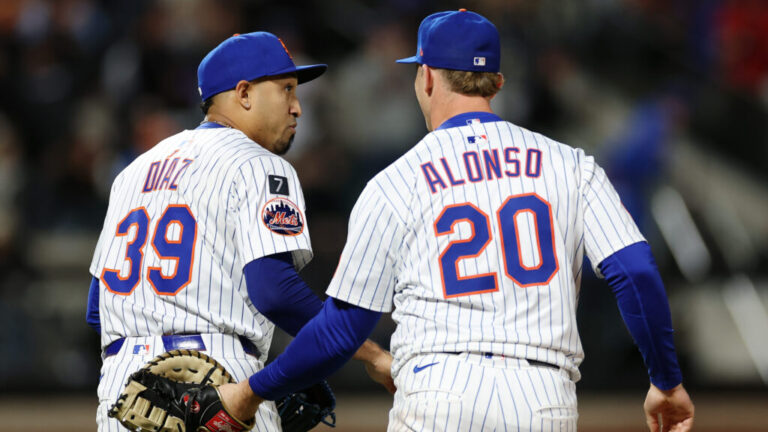
The 2026 offseason hasn’t been kind thus far to the New York Mets
One year after signing outfielder Juan Soto to the richest contract in league history, the fabric of the organization has completely changed.
First, it was All-Star closer Edwin Díaz departing for the Los Angeles Dodgers. Then, out of nowhere, the Baltimore Orioles poached Pete Alonso on a five-year deal worth $155 million.
The 2025 Mets season will forever be a “what if” scenario; all that offensive firepower, yet no October baseball.
Rosters turn over following disappointment. But the fashion in which it has turned over already, in a weak free agent class, leaves the immediate future in Queens looking bleak for the time being.
Or, to paraphrase Jonah Hill in Moneyball, does this open up a world of interesting possibilities?
Mets fans, it’s understandable to be frustrated. But look on the bright side. The worst-case scenario of signing right-hander Devin Williams was that it meant the end of Díaz in New York.
Yes, it happened, but Williams is hardly a bad consolation prize. Overall, his 2025 left something to be desired, but he had a 2.44 FIP and a 30.8% strikeout-minus-walk rate in his final 50.1 innings.
He wasn’t the usual degree of elite we got used to when he was in Milwaukee, but he was clearly better than his 4.79 ERA suggested. In fact, Mets fans should fully understand that, having watched Díaz since 2019.
Alonso is a big departure in stature and production. His 141 wRC+ ranked eighth in the sport in 2025. That production is tough to replace, but replacing his 128 since 2023 is less daunting a challenge.
To bring back the idea of opportunities, what are some for the Mets as they move forward?
The First Base Conundrum
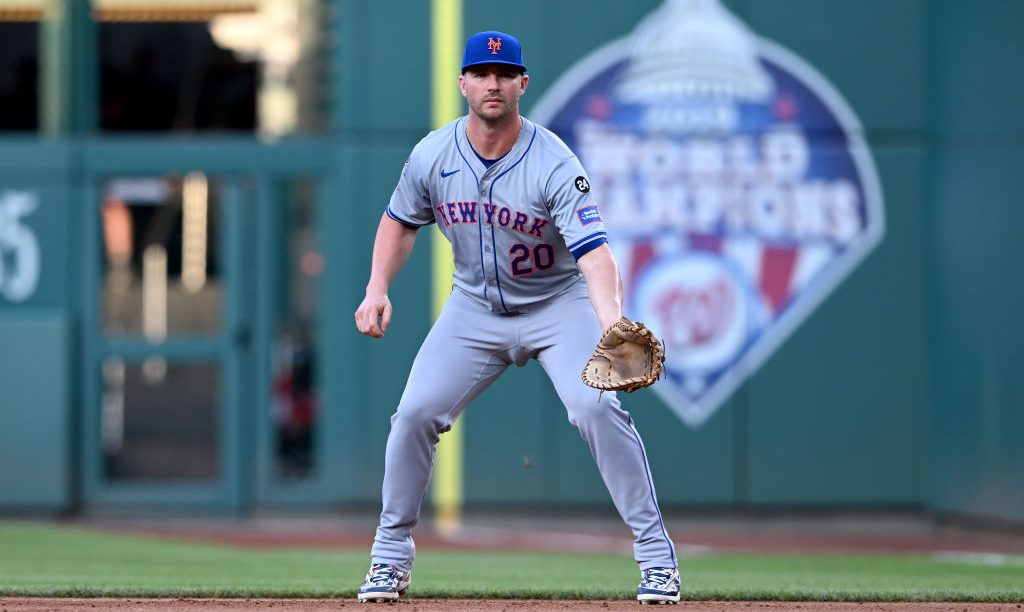
For all that made Alonso a force in the Mets lineup, he struggled defensively at first base. It wasn’t the be-all, end-all, because his bat made up for it, but his defense left outs on the table frequently.
If the barometer for a successful offseason is replacing a 141 wRC+ at first, odds are, you won’t achieve that. However, there’s more to accumulating WAR than hitting the ball out of the ballpark. Defense and baserunning, though less important components of being a first baseman, are still important components of winning baseball games.
Entering the offseason, first base was one of the deepest positions for hungry teams. Josh Naylor re-signed in Seattle right away, eliminating one potential replacement. But there are others, including the trade market.
Free Agent Options: Ryan O’Hearn, Rhys Hoskins, Munetaka Murakami
It didn’t look the same, but O’Hearn only trailed Alonso by 0.6 fWAR in 2025. In 144 games, he slashed .281/.366/.437 with a 127 wRC+ and 17 home runs between Baltimore and San Diego.
Fresh off his first All-Star campaign, the 32-year-old’s market hasn’t been well-documented this winter. The team seemingly most linked to the lefty bat is the Pittsburgh Pirates, which should encourage the Mets to at least kick the tires.
He’s not Alonso, but he outpaced him in baserunning runs by 4.8 and outs above average by 15. His impact won’t be felt the same way as Alonso’s, but he can be nearly as valuable. While projection models don’t love him, he’s not far removed from the dominance he exhibited with the Orioles a season ago.
Hoskins is like a baby Alonso. He’s a righty bat with immense power and below-average defense. Injuries limited him to 90 games in 2025, but he dominated his first 41 (141 wRC+).
The former Phillies first baseman has a dicey history with the Mets, fans and players alike. But, let’s face it, sports fans are hypocrites; his first big home run in Queens would forgive any past transgression.
Murakami is the biggest wild card on the free agent market. It feels like he’s been so heavily ridiculed this winter that he’s actually underrated. Expectations are in the gutter for him, at least if you see the discourse on social media surrounding his skill set.
Production is demanded in a market like New York, so there’d be no grace for the Japanese phenom. But the talent is there, and perhaps the league lost the plot on his game, opening the door for a more favorable deal for the Mets.
Trade Options: Willson Contreras, Triston Casas, Ryan Mountcastle, Coby Mayo
Contreras makes the most sense here from a control and track record standpoint. Since signing in St. Louis, the veteran has mashed the baseball to the tune of a 129 wRC+. He’s also hit 55 homers, has 75 doubles, and driven in 183 runs.
He’s dealt with some injuries and only became a full-time first baseman as of 2025, but he took to the position wonderfully. In 2025, the 33-year-old had six outs above average.
Casas is a massive wild card, but Boston hasn’t been shy about its willingness to listen on him. It seemed all last winter, he found himself in trade rumors. A ruptured patellar tendon ended his 2025 in May, but he’s a career 119 wRC+ guy with team control through 2028.
As Boston covets starting pitching, and New York looks to offload right-hander Kodai Senga, perhaps that’s a palatable concept for both parties. Given Boston also missed out on Alonso, this is probably unlikely, but you never know.
With Alonso ticketed for Baltimore, the future of Mountcastle is uncertain. Not just him, but Mayo.
Mountcastle is a rental but has a 33-homer season in his big league career. He also seems to be one of the most affected by the Orioles’ decision to move the fences back a few seasons ago.
Once a top prospect, Mayo’s struggled with consistency at the MLB level. In 102 games, he has an 81 wRC+ and -0.4 fWAR. Strikeouts have been a major red flag for him, but he’s a powerful dude capable of impacting the heart of a batting order.
The irony of trading for an Orioles first baseman after losing Alonso to them is pretty comical. However, it makes sense for both sides.
Internal Options: Jorge Polanco, Mark Vientos, Jeff McNeil, Ryan Clifford
The Mets signed Polanco to a two-year deal worth $40 million on Saturday. Last season, he slashed .265/.326/.495 with 26 home runs and a 132 wRC+ in 136 games. It was a major bounce-back campaign for the switch-hitter, who even nearly halved his strikeout rate from 2024.
Reports are he will play all over for the Mets, but primarily first base and designated hitter. That may be the intention, but he’s never had an attempt at first base in his major league career.
Also, kind of lost in the offseason chaos is the fact that Vientos has a 27-homer season under his belt. In 2024, he slashed .266/.322/.516 with a 132 wRC+ and 2.9 fWAR.
His 2025 was the antithesis of his 2024, but he showed signs of life in the second half. If the Mets are looking to maximize cost-effectiveness in 2026, Vientos may be the way.
Platooning him with McNeil isn’t an awful idea, either. With the Marcus Semien acquisition, it’s hard to see a pathway to second base burn for McNeil. But his bat is still somewhat effective, even with limited power potential.
Clifford would be a very fun possibility. While he struggled with results in his 34 Triple-A games, he was in the 90th percentile for xwOBA at .373. He’s got serious power, clubbing 29 homers in 2025, and makes quality swing decisions.
Replacing Nimmo
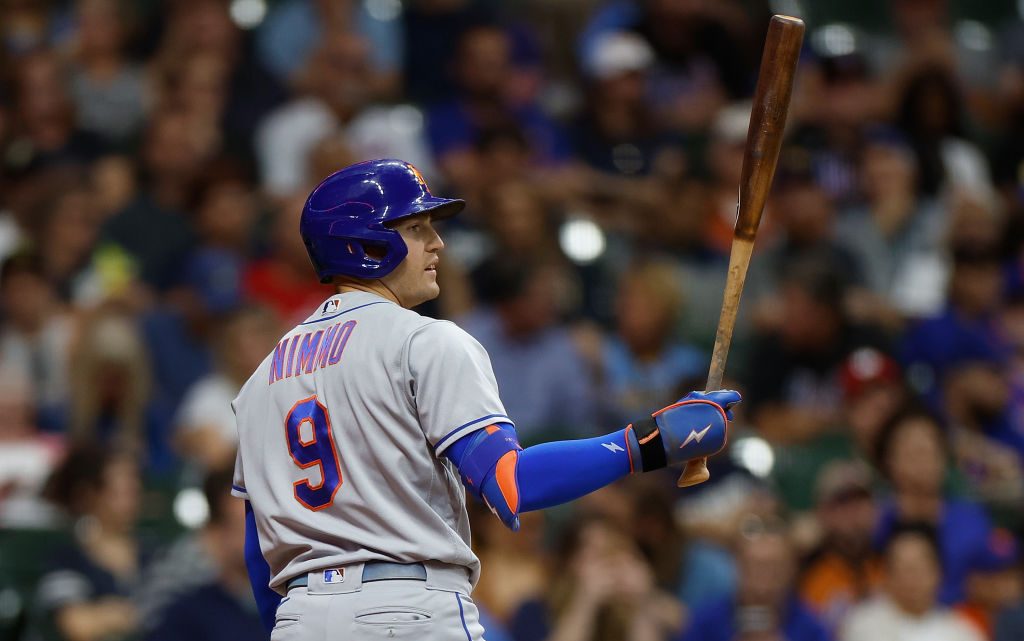
While there’s a justification for trading Nimmo to Texas, his departure leaves a gaping hole in the outfield.
It’s assumed top prospect Carson Benge emerges as an everyday option at some point in 2026, but FanGraphs projects McNeil and Soto flanking Tyrone Taylor in the Opening Day outfield. That trio has a combined projection of 8.5 fWAR, but Soto accounts for 6.1 of that.
Having Benge as a reinforcement instead of someone who needs to step up would dramatically improve the depth of the outfield. But how can the Mets achieve that?
Free Agent Options: Kyle Tucker, Cody Bellinger, Max Kepler, Rob Refsnyder
It goes without saying, but a big market team in need of an outfielder should engage in Tucker’s and Bellinger’s market.
If the Mets want to play for ceiling, Tucker is the obvious choice in a vacuum. Despite some injuries in recent years, he is one of the game’s best bats. His power took a dip in 2025, but it’s hard to maintain elite power production at Wrigley Field.
Bellinger is the floor play here. Not necessarily production-wise, but he posts. After a run of injury-riddled seasons to end his Dodgers career, Bellinger has largely remained healthy. His 2025 was overshadowed by Aaron Judge, but 4.9 fWAR and a 125 wRC+ are nothing to scoff at.
He’s probably best suited for a corner spot at this point, but that’s fine.
If Kepler runs out of fans, someone put a wellness check on me. He’s been a disappointing player the past two seasons, but he’s conventionally a solid ballplayer. Last year, he was 73rd percentile in barrel rate, 62nd percentile in xwOBA, and 80th percentile in squared-up rate.
Yet, he’s coming off a 0.6 fWAR campaign.
He pulls the ball in the air, is a passable defender, and walks a fair amount. Probably a platoon bat, but water should find its level with Kepler eventually (I hope).
If you’re locking in a platoon, Refsnyder is the best weak-side platooning outfielder out there. Since 2022, he’s fifth among right-handed hitters in wRC+ against lefties.
Refsnyder hammers the ball against southpaws, which has helped him carve out a very nice career for himself. The presumption is that Boston finds a way to keep him, but there are several teams interested in the veteran outfielder.
Trade Options: Jarren Duran, Jo Adell, Lawrence Butler*
I doubt the Athletics entertain trading Butler, but I’d force them to say no if I were the Mets. After a breakout 2024, he entered last season with a ton of helium.
He was reasonably valuable, accumulating 2.0 fWAR in 152 games, but his wRC+ dropped from 130 to 96. His strikeout rate climbed, but so did his walk rate.
He’s never played left field in the majors, but ideally that’d be his landing spot with the Mets. He graded out fine in center field in 2025 with the A’s but is better suited for a corner. He’s a great baserunner despite not being exceptionally fast, a capable outfielder with solid command of the zone.
With the A’s on the prowl for starting pitching, there’s a concept out there for these two teams to work out a deal. Probably not open to moving Butler after a down year, but make them say no.
The likeliest scenario involves Duran. It’s not exactly a secret that Boston needs to move an outfielder, and Duran makes the most sense given his age and skill set. Coming into his own from a power standpoint, and still an elite baserunner, Duran possesses a unique blend of traits most teams lack entirely.
Again, Boston is always looking for pitching, and the Mets have that aplenty. Could Jonah Tong make sense? Brandon Sproat? Maybe a Luisangel Acuña and prospects concept could work for the Red Sox, who also need to shore up the infield, especially defensively.
Adell is a similar level of “make them say no” to Butler. The Angels aren’t necessarily close to contending, but the American League West is a weird division. The power is tremendous from the right side, and Adell has it to all fields.
Elevating the Rotation
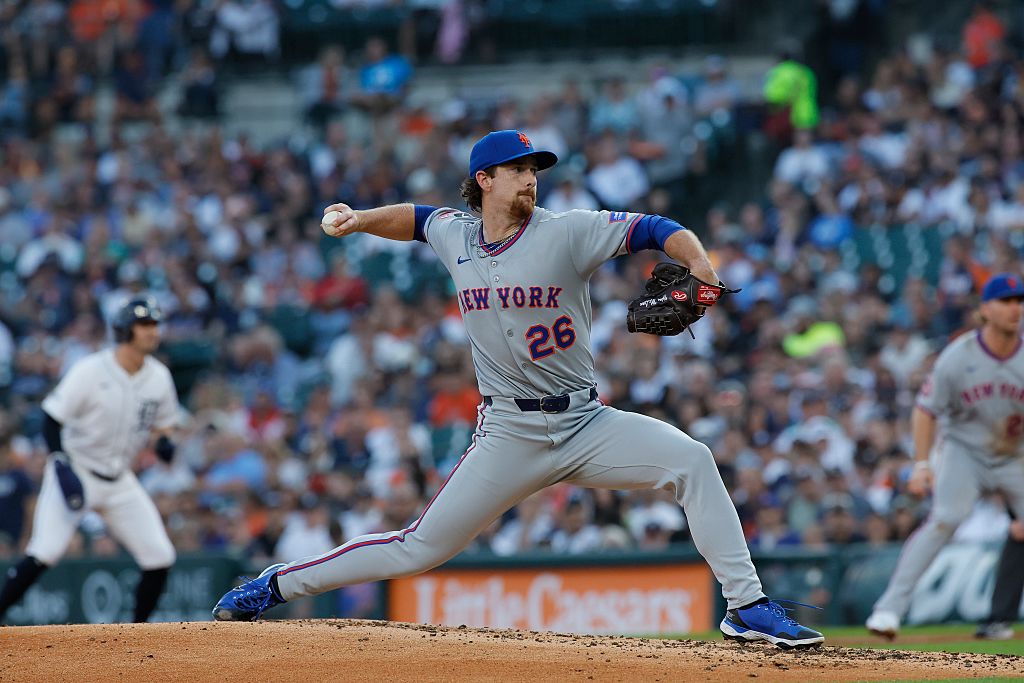
Injuries to Senga and Sean Manaea didn’t help, but the Mets’ rotation was unimpressive in 2025. After making a Cinderella run on the backs of strong starting pitching in 2024, the Mets fell to 18th in starter ERA, 13th in fWAR, and 27th in innings.
McLean aside, it’s also an old rotation. The other four starters in FanGraphs’ projected Opening Day rotation average 32.5 years of age.
Trading Senga helps the age issue, but he’s still a commodity you need to replace. Could that be through a Tong breakout? Sproat? For sure, but can a win-now team like the Mets afford several rotation question marks at once?
Free Agent Options: Michael King, Framber Valdez, Zac Gallen
All three of these options have the qualifying offer attached to them, but they’re the only three true ceiling-raisers on the market.
King is the ideal one, despite his injury concerns. For starters, he’s younger than Valdez, but his stuff isn’t the red flag. Gallen finished the 2025 season strong relative to his first-half performance, but his drop-off in a walk year was glaring, to say the least.
That said, Valdez logistically makes a ton of sense for the Mets as a heavy groundball pitcher. With a middle infield pairing of Francisco Lindor and Semien, along with Baty at third, keeping the ball on the ground would play to the strength of the defense.
Valdez’s second half killed his 2025 numbers, and who could forget “CrossupGate”? His market isn’t hot at the moment, but his talent will still get him paid. He’s already 32, so this signing wouldn’t fix the age issue with the Mets’ rotation, but he’s someone who should age pretty well.
Trade Options: Freddy Peralta, Mitch Keller, Luis Castillo
Of these three, Peralta appears the likeliest trade chip. However, he’s a rental and given the widespread interest, probably costs more prospect capital than a rental typically would.
That said, Peralta is immensely talented. Last season, his best, he posted a 2.70 ERA across a career-high 33 starts. He’s one of the game’s best strikeout artists as well, placing third in baseball since 2023.
Keller seems to always be in trade rumors. The oldest of a very young and talented Pittsburgh rotation, Keller feels like an odd man out once Jared Jones returns from elbow rehab.
Last season, the 29-year-old had a 4.19 ERA in 32 starts. Nothing special, but he’s a very high floor-caliber arm. He’s made at least 29 starts every year since 2022, eclipsing the 2.0 fWAR plateau each season. His strikeout numbers teeter year-to-year, but he’s an effective arm in the middle of a good rotation.
Castillo is another high-floor guy. Not quite the same dominant arm he was in Cincinnati, or his early days in Seattle, but a mid-three ERA every year is nothing to scoff at. He’s on a very reasonable contract as well, earning $48.25 million over the next two seasons. He also has a vesting option for $25 million in 2028 if he hits 170 innings in 2027.
His strikeouts aren’t what they used to be, but he hammers the strike zone and has a very good fastball.
With Seattle looking at second base help, perhaps the framework is there for a Castillo for McNeil-plus deal.
Fortifying the Bullpen
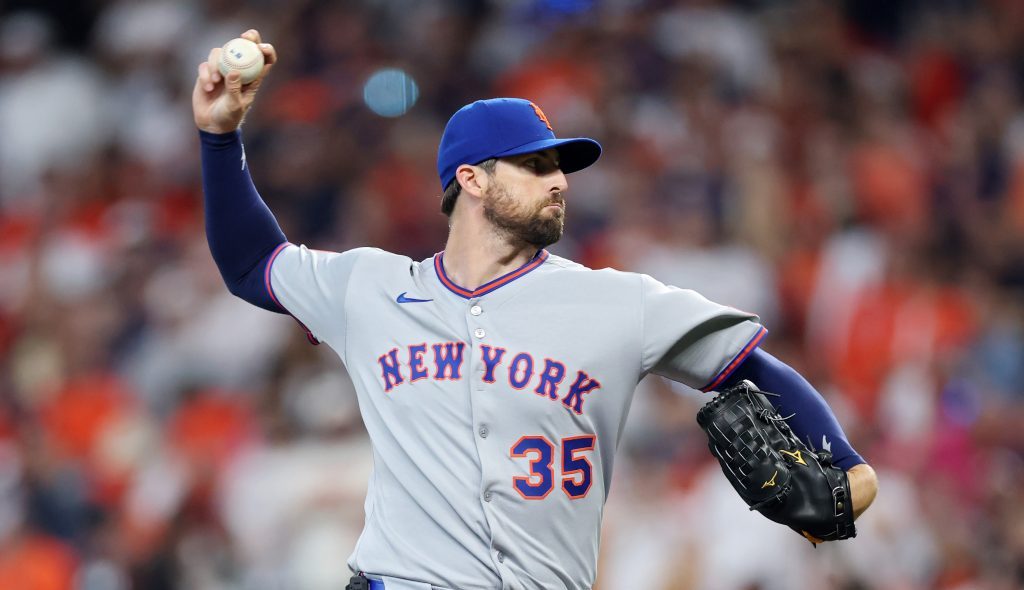
Last but not least, the bullpen.
The framework is already there for this to be a strong pen in 2026. A.J. Minter, Huascar Brazoban, Brooks Raley, and Adbert Alzolay support the newly acquired Williams.
It’s a good group that could be better. But how?
Free Agent Options: Pete Fairbanks, Luke Weaver, Brad Keller
When Williams signed, there were reports that the Mets wouldn’t close the door on retaining Díaz. There’d also been dialogue that they’d be in the Robert Suarez market. Obviously, neither became Mets, but that should leave the door open for an interest in Fairbanks.
The former Tampa Bay Ray has 75 saves since 2023 and has a 2.98 ERA over that span. He’s only slightly above average in generating whiffs and chase but is elite at missing the barrel. Moreover, his slider held opponents to a .173 average and a .255 xwOBA against in 2025.
Weaver would be the second former Yankees reliever to join the crosstown rivals. After a tremendous 2024, he regressed in 2025 on a results basis. However, his off-speed is elite, he generates chase and whiffs at an elite rate, and his strikeout-to-walk numbers are very good.
It’s been shocking to see him not have much of a reported market.
As for Keller, there’s a bit of uncertainty regarding how teams covet him this winter. Despite a track record of limited success as a starter post-rookie season, that seems to be how most teams view him.
That said, he was elite as a reliever last year for the Cubs. The owner of a bloody Savant page, that 3.4-mph uptick in average fastball velocity certainly helped. He also increased the usage of his sweeper, which was elite.
Trade Options: Adrian Morejon, Justin Wrobleski
Trading assets for a reliever is somewhat risky given the volatility. However, there’s a scarcity of lefty relievers out there, especially very good ones.
Morejon is a personal favorite, as he leans heavily into the groundball game. As a result, he’s somewhat unorthodox as a high-leverage reliever. Given the nature of his profile, he’s a bit susceptible to BABIP luck, but the Mets’ infield defense is very good.
He also strikes out opponents at an above-average rate and abstains from walks, creating an avenue for sustained success as a contact-first relief pitcher.
Wrobleski flourished as a reliever last year, posting a 2.18 FIP, 29.4% strikeout rate, and a 53.1% groundball rate in 55.2 relief innings. Given the Dodgers’ payroll, they’re not necessarily in a position to offload cheap productivity. Yet, they have an abundance of young pitching, plus they just signed Díaz.
Someone likely falls off the totem pole, so why not aim high if you’re the Mets?
Internal Options: Clay Holmes
Holmes wasn’t bad as a starter in 2025; he’s just a much better reliever.
His strikeout numbers plummeted as a starter, but so did his groundball rate. He was still elite at generating groundballs, but the rate itself dropped 10% from 2024.
In addition to losing strikeouts, his command worsened as well. It’s one thing to lean into more contact as a byproduct of getting deeper into games. It’s another for the very traits that make you elite to become merely ordinary.
Holmes is not only a much better reliever, but he’s another guy with closing experience. A duo of him and Williams at the back end of games would genuinely be one of the most uncomfortable series of at-bats in baseball.
His sinker dropped nearly three mph on average velocity, whiffs saw similar steepness of decline, and the expected data worsened. Holmes is already paid like a high-leverage reliever; just let him be one regardless of other potential external additions to the bullpen.

Written by