
Minnesota Twins Arbitration Projections and Tender Decisions
A deep dive into the Minnesota Twins roster outlook, with projected arbitration salaries and tender decisions to be made this offseason.
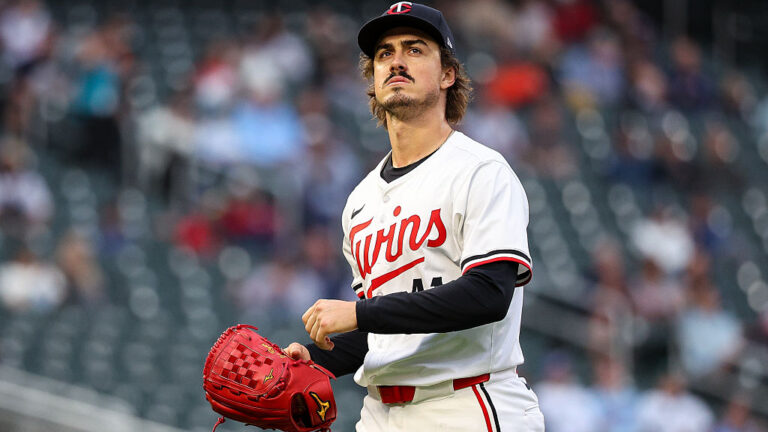
Once a team comes up with its projected salary for all of its arbitration-eligible players, it will begin a tender analysis to simply determine: “Are we comfortable guaranteeing Player X this much money?”
If the answer is yes, the player will be tendered a contract prior to the mid-November Tender Deadline. Tendering a contract means the team offers the player a contract for the following season while retaining his rights, with the player’s salary either agreed to later or determined through the arbitration process.
If the answer is no, the player will be DFA’d/non-tendered. Once a player is non-tendered, he is removed from the 40-man roster and becomes a free agent immediately.
The other option a team has is to pre-tender a player, which is a contract agreed to before the Tender Deadline that takes the player out of the arbitration process. This is typically done when a team wants to keep a player, but only at a slightly discounted rate, or when it is a very obvious, typically small raise case that teams like to get out of the way.
This article dives into the market analysis of each case, showing the reasoning behind my leaguewide salary projections, before predicting the tender decision for each player.
All opinions in this article are my own, there was no non-public information used in my analysis.
Minnesota Twins Roster Outlook
40-MAN + 60-DAY IL (NON-FA): 46
PENDING FA + MUTUAL OPTIONS: 5
OPTIONS: None
R5 PROJECTED ADDITIONS: 2; Kala’i Rosario, CJ Culpepper
ANTHONY BANDA (5.135): $2,100,000 ($475k raise)
The Case: Banda entered from a $1.625M Arb-2 salary and made 39 appearances totaling 34.1 IP with 10 holds and 2 saves before ending the season on the IL.
Rafael Montero (2021, $475k raise) had one fewer combined SV+HLD than Banda with worse quality, but large bulk advantage pitching 49.1 IP. Banda belongs at Montero’s raise, so I project a $475k raise, bringing him to $2.1M.
Tender Prediction: With Banda undergoing surgery, this becomes a complicated decision, especially because he is a 5+ player. I expect the Twins to offer him a pre-tender deal at a salary similar to what he made in 2026, and I would expect Banda to accept it. If he does not accept the pre-tender offer, I think Minnesota would move on rather than carry his arbitration projection. Pre-Tender.
DEAN KREMER (5.108): $6,750,000 ($1.0M raise)
The Case: Kremer missed more than two months due to injury but still made 17 starts totaling 90.1 IP with a 4.68 ERA.
Cal Quantrill (2023, $1.05M raise) provides the best historical comparison from a similar previous salary after throwing 99.2 IP across 19 starts with a 5.24 ERA.
The current class provides insightful comparisons. Nick Lodolo (2026, $1.075M proj. raise) should get a higher raise than Kremer due to amassing 108.2 IP, while Edward Cabrera (2026, $850k proj. raise) should make a smaller raise with just 80 IP. Kremer fits directly between the two current-class cases and just under Quantrill. I project a $1M raise, bringing his total salary to $6.75M.
Tender Prediction: Kremer will be tendered a contract, and the case should settle without needing to go to a hearing. Tender.
BAILEY OBER (5.093): $7,650,000 ($2.45M raise)
The Case: Ober made 24 starts and threw 131 IP with a 4.47 ERA and 6 quality starts while spending more than a month on the IL after earning $5.2M in his previous arbitration trip.
Tyler Mahle (2022, $2.3M raise) is extremely useful because he entered from the exact same $5.2M salary and made 23 starts across 120.2 IP with a 4.40 ERA and 10 quality starts while also spending more than a month on the IL and finishing injured. Frankie Montas (2022, $2.475M raise) provides the ceiling with 144.1 IP thrown to a 4.05 ERA.
Ober has slightly more bulk than Mahle but fewer quality starts and belongs just below the Montas ceiling. I project a $2.45M raise, bringing his total salary to $7.65M.
Tender Prediction: Ober will be tendered a contract, and the case should settle without needing to go to a hearing. Tender.
JOE RYAN (5.033): $10,000,000 ($3.8M raise)
The Case: Ryan’s mutual option is expected to be rejected by the club, triggering a $100K buyout that brings his starting compensation for this case to $6.2M. Ryan was named an All-Star and made 27 starts totaling 144.2 IP with a 3.79 ERA and 12 quality starts despite missing around a month on the IL.
Ranger Suárez (2024, $3.75M raise) is an extremely strong comparison after also being named an All-Star and throwing 150.2 IP with a 3.46 ERA and 11 quality starts while missing around a month on the IL. Suárez has slight innings and ERA advantages, while Ryan has the slight quality-start advantage.
Ryan’s more than $1M higher starting compensation supports matching or slightly exceeding Suárez’s raise. I project a $3.8M raise from Ryan’s $6.2M starting compensation, bringing him to exactly $10M.
Tender Prediction: Ryan will be tendered a contract and is an extension candidate. I believe the Twins expect to be competitive over the next few years, and locking up a front-of-the-rotation starter could be a possibility. If an extension does not come together, a trade is also possible, but it feels like Minnesota has to make a longer-term decision on Ryan this offseason. Tender.
TREVOR LARNACH (5.014): $6,375,000 ($1.9M raise)
The Case: Larnach enters from a $4.475M salary after totaling 433 PA with a 123 wRC+ in a true-side platoon role before ending the season on the IL.
Garrett Cooper (2022, $1.7M raise) is the strongest recent IL-finish comparison after posting a 110 wRC+ in 469 PA. Larnach’s higher previous salary, superior 123 wRC+ and power advantage justify getting above Cooper, while the IL finish and sub-qualifying 433 PA keep the raise constrained. I project a $1.9M raise, bringing him to $6.375M.
Tender Prediction: I expect the Twins to tender Larnach, but I do not expect him to be on the Twins in 2027 with the influx of young left-handed-hitting outfielders in the organization. Minnesota should not have a problem moving him at his projected salary for a prospect or two. Tender.
ROYCE LEWIS (4.142): $5,200,000 ($2.35M raise)
The Case: Lewis enters from a $2.85M Arb-2 salary after totaling 509 PA with 15 HR, 57 RBI, 16 SB and an 85 wRC+ in his first qualifying season.
Jesús Sánchez (2025, $2.3M raise) provides the floor after a season with 497 PA with 14 HR and 61 RBI. Luis García Jr. (2025, $2.375M raise) is the closer comparison with his season of 526 PA with 16 HR, 66 RBI and an 89 wRC+. García holds slight statistical advantages, placing Lewis between the two. I project a $2.35M raise, bringing him to $5.2M.
Tender Prediction: Lewis will be tendered a contract, and the case should settle without needing to go to a hearing. Tender.
COLE SANDS (4.017): $1,170,000 ($70k raise)
The Case: Sands pitched in 13 games before missing the rest of the season with injury.
Josh Sborz (2024, $75k raise), Lucas Sims (2022, $67.5k raise), and Julian Merryweather (2024, $50k raise) all came from similar Arb-1 salaries and threw in a similar number of games before missing the rest of the season and ending on the IL.
Sims is the only other player in the group who recorded a save, though in an even briefer season than Sands, while Sands’ holds total falls between Sborz and Merryweather. Sands falls directly in this range, and I project a $70k raise resulting in a $1.17M total salary.
Tender Prediction: With an option still remaining, I expect Sands to be tendered assuming the injury is not more serious than it has been reported. Because of his injury, he may be a candidate to be pre-tendered and try to push through outright waivers before the deadline to outright injured players.
With a guaranteed salary it could provide them a way to open up a roster spot if needed. Pre-Tender.
TOMMY NANCE (3.165): $1,000,000
The Case: Nance is a first-time arbitration case after failing to qualify for Super Two last offseason. He enters arbitration with 184.2 career IP, 19 HLD and 0 SV with a 4.24 ERA, then threw 58.2 IP across 56 appearances with 7 HLD and a 3.99 ERA in his platform season.
Brock Burke (2023, $1.035M salary) is probably the cleanest comparison in this entire group. Burke entered arbitration with 168.2 career IP and 21 HLD before throwing 59.2 IP with 12 HLD, 0 SV and a 4.37 ERA. Nance has almost identical career and platform bulk with a slight quality advantage, but Burke holds the clear leverage advantage with 5 more platform-year holds.
Oliver Drake (2019, $1.025M salary) also entered arbitration with almost identical career bulk at 177.2 IP, but had 16 HLD and 3 SV for his career before adding 10 HLD and 2 SV in his platform season. Again, Nance has comparable bulk but significantly less leverage production. Those two cases put him just below the $1.025M-$1.035M historical range. I project a $1M total salary.
Tender Prediction: Nance threw the ball well for the Twins after coming over in a trade this season. I expect Minnesota to pursue a pre-tender deal, but either way I expect him to be in the Twins’ 2027 bullpen. Pre-Tender.
KODY CLEMENS (3.134): $2,800,000
The Case: Clemens enters arbitration after bouncing around three different organizations, including being DFA’d in 2025, before breaking out in 2026 with his first qualifying season. He totaled 583 PA with 27 HR and a 108 wRC+ in his platform year, bringing his career line to 1,364 PA, 60 HR and a 93 wRC+.
Josh Jung (2025, $2.9M salary) and Nolan Gorman (2025, $2.655M salary) provide the best historical range. Jung also qualified in his platform year, which was his second qualifying season, but produced only 14 HR with a 92 wRC+ in that season. He entered arbitration with a very similar career line of 1,316 PA, 49 HR and a 101 wRC+. Gorman had significant career-bulk and power advantages over both, entering arbitration with 1,581 PA and 74 HR to a 100 wRC+, but his platform year was weak at just 402 PA, 14 HR and an 87 wRC+, and he had never posted a qualifying season before arbitration.
The fact that Gorman carried those career advantages over Jung but still earned more than $245k less in the same offseason shows how strongly the market rewards both platform-year performance and qualifying seasons. Clemens fits between this group and should land a little closer to Jung because of the strength of his qualifying platform year.
Mark Vientos (2026, $2.675M proj. salary) provides a useful current-class check. Vientos owns career-bulk and power advantages, but like Gorman he has never posted a qualifying season and enters arbitration off a poor platform year. Clemens’ qualifying breakout season should allow him to slot comfortably above Vientos. I project Clemens at a $2.8M total salary.
Tender Prediction: Clemens will be tendered a contract, and the case should settle without needing to go to a hearing. Tender.
TAJ BRADLEY (3.097): $3,975,000
The Case: Bradley enters arbitration after an up-and-down start to his career followed by a career-best platform season, pitching to a 3.73 ERA in 31 starts and 178.1 IP. That brought his career line to 563.2 IP across 106 games, including 104 starts, with a 4.50 ERA. The career bulk and high-quality platform year are a strong recipe to land near the top of this market, but the lack of awards recognition makes Bradley an interesting case without a perfect comp.
Logan Gilbert (2025, $4.05M salary) is the best historical placement point. Bradley enters with 39 career quality starts compared to Gilbert’s 40, and the two had very similar platform seasons, with Gilbert posting a 3.73 ERA in 190.2 IP across 32 starts.
Their careers are much different, though, with Gilbert entering arbitration with less career bulk at 495.2 IP but significantly better quality with a 3.76 career ERA. Bradley should slot below Gilbert because of the career-consistency gap, but the nearly identical platform year and Bradley’s career-bulk advantage should keep him close. I project Bradley at a $3.975M total salary.
Tender Prediction: Bradley will be tendered a contract. His representatives could be aggressive with this case because of the amount of bulk he has accumulated in his career. Tender.
Become a Member of Just Baseball
Subscribe and upgrade to go ad-free!
* Save 25% by subscribing annually.

Written by
Zach Cioffi has seen the game of baseball from both sides of the business, specializing in arbitration, the CBA, contracts, and transactions, with additional professional experience…