
Miguel Vargas Became the Heart of the White Sox Turnaround
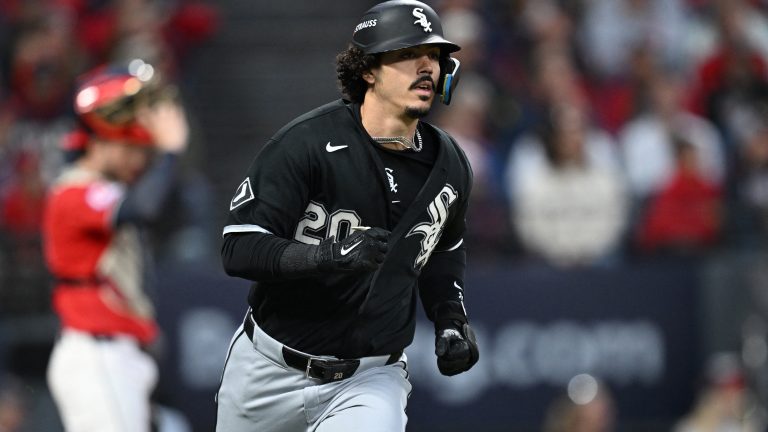
For Miguel Vargas, 2026 was a major turnaround for a player who struggled to establish himself after joining the White Sox a few years ago.
The Chicago White Sox were still searching for their first victory when Miguel Vargas returned to Miami on March 30. The Cuba-born infielder calls the city home and had dozens of family members and friends in attendance at loanDepot park.
He gave them plenty to celebrate.
Vargas opened the scoring with an RBI single in the third inning before launching a 402-foot grand slam off Chris Paddack in the fourth. He later added a sacrifice fly to finish with a career-high six RBIs, helping Chicago secure its first win of the season with a 9-4 victory over the Marlins.
That memorable homecoming turned out to be an early indication of the season ahead.
Vargas finished 2026 hitting .250/.363/.474 with 33 home runs and 93 RBIs across 159 games. He scored 106 runs and drew 101 walks while adding 31 doubles and 22 stolen bases. His .837 OPS was a considerable improvement over the .717 mark he posted in 2025.
The 26-year-old earned his first All-Star selection and produced 5.4 wins above replacement according to Baseball-Reference, leading all White Sox position players.
His emergence came during an unexpected turnaround for the organization. After three consecutive 100-loss seasons, Chicago returned to the playoffs for the first time since 2021 and won its first postseason series since 2005.
For Vargas, the season represented a remarkable turnaround from the player who struggled to establish himself after arriving from Los Angeles two years earlier.
How Vargas Unlocked His Offensive Potential
Vargas joined the White Sox at the 2024 trade deadline with a strong prospect pedigree but limited major league success. His first two months in Chicago did little to inspire confidence in the acquisition.
He hit just .104/.217/.170 over 42 games following the trade. His first full season with the White Sox brought improvement, including 16 home runs and a .717 OPS, but there was still considerable work ahead.
Much of that work began in April 2025. White Sox hitting director Ryan Fuller and assistant hitting coach Joel McKeithan began addressing a mechanical issue that left Vargas vulnerable to elevated fastballs.
His previous loading pattern caused his hands and barrel to work away from his body. That often left the barrel underneath pitches at the top of the strike zone.
The coaches wanted Vargas to load more efficiently while maintaining his ability to adjust to breaking pitches down in the zone. He committed to the changes despite the initial discomfort of altering a swing he had used for years.
Vargas had already spent the previous offseason rebuilding his strength after losing nearly 15 pounds during a difficult 2024 campaign.
Fuller later attributed much of his increased bat speed to improved mechanical efficiency and faster pelvic rotation rather than weighted-bat training alone. Vargas continued refining his swing throughout the offseason, with the results becoming apparent in 2026.
According to Baseball Savant, his average bat speed increased from 70.6 mph in 2025 to 73.9 mph this season. That moved him from the 25th percentile to the 71st percentile among major league hitters.
His barrel rate climbed from 9.4% to 13.0%, while his expected slugging percentage improved from .407 to .496. Vargas produced 61 barrels after recording 38 the previous season, finishing eighth in the majors.
He also began pulling the ball more frequently. His overall pull rate increased from 40.5% to 46.7%, with a larger share of his contact traveling in the air to the pull side.
The improvement in contact quality helped Vargas more than double his home run total despite only a modest increase in average exit velocity.
His strike-zone discipline remained one of his greatest strengths. Vargas chased just 20.9% of pitches outside the strike zone, placing him in the 95th percentile. His strikeout rate remained steady at 17.9% despite the increase in power.
Pitchers also became more cautious. The percentage of pitches he saw inside the strike zone dropped from 51.5% in 2025 to 47.9% this season. Vargas rarely expanded his approach in response. His walk rate increased from 9.8% to 14.3%, allowing him to maintain a strong on-base percentage even when opponents avoided challenging him.
Bench coach Walker McKinven discussed how Vargas had preserved his swing decisions and contact ability while improving his capacity to drive the baseball. That consistency became particularly valuable alongside Munetaka Murakami and Colson Montgomery, who supplied much of the lineup’s additional home run production.
Vargas had always shown an ability to recognize pitches. With more bat speed and better contact quality, he could punish mistakes more frequently without abandoning the patience that helped him reach the majors.
More Than a 30-Homer Season
Vargas also made considerable progress on the bases. His sprint speed increased from 27.5 feet per second in 2025 to 28.6 in 2026, moving him from the 51st percentile to the 82nd percentile according to Statcast.
That represented a return to the speed he had displayed earlier in his career. Vargas also averaged 28.6 feet per second in 2024 before slowing the following season.
After stealing only six bases in 2025, he finished this year with 22 steals in 24 attempts. Statcast credited him with three runs of overall baserunning value.
The improvement fit the White Sox’s emphasis on aggressive baserunning under first-base coach José Leger.
As reported by the Chicago Sun-Times, Leger introduced a competition rewarding players for advancing extra bases and making smart decisions on the bases.
Vargas was leading the team’s standings in late June. His mother even designed the “Speed demon” shirt awarded to the winners. By September, Vargas had accomplished something no White Sox player had done before.
He became the first player in franchise history to record at least 30 doubles, 30 home runs, 100 runs scored and 20 stolen bases in the same season.
Only Magglio Ordóñez (2001) and Luis Robert Jr. (2023) had previously reached 30 doubles, 30 homers, and 20 steals for Chicago. Neither scored 100 runs in those seasons.
Vargas also provided several memorable moments throughout the year.
His first career walk-off home run came against Detroit in May. Two months later, he became the first White Sox third baseman selected to the All-Star Game since Joe Crede in 2008.
He homered in his first appearance at the Midsummer Classic, launching a 433-foot shot off former Dodgers teammate Justin Wrobleski. The blast made him just the third White Sox player to homer in an All-Star Game, joining Frank Thomas and Ordóñez.
Vargas was also named an American League Hank Aaron Award finalist following the regular season.
His first All-Star selection carried additional meaning after the struggles he experienced following the 2024 trade. Vargas had previously considered walking away from baseball and discussed the possibility with his father, former Cuban baseball star Lázaro Vargas.
In a July interview with MLB.com, he acknowledged how difficult that period had become and credited his teammates with helping him rediscover his enjoyment of the game. He said the group had “given me that joy back,” a considerable change from his first months in Chicago.
His growing clubhouse presence became another part of his season.
Davis Martin described Vargas as “the definition of a glue guy” when discussing his personality and relationships with teammates.
His friendship with Murakami became especially notable after the Japanese slugger signed with Chicago during the offseason. Vargas helped Murakami adjust to a new clubhouse and navigate the challenges of communicating in a second language.
The two developed a close friendship that frequently appeared in their celebrations and interactions around the team. Vargas also became close with younger players such as Sam Antonacci, with whom he shared a fantasy football team.
His offensive importance carried into October.
In Game 4 of the American League Division Series against Cleveland, Vargas drew three walks before homering off closer Cade Smith to lead off the ninth inning.
Cleveland pitched carefully around Vargas throughout the five-game ALDS, walking him nine times. In Game 4, he drew three walks before homering off closer Cade Smith to lead off the ninth inning.
Chicago eventually lost the series in five games, but the postseason offered another example of how differently opponents now approached Vargas.
What His Breakout Means for the White Sox
Vargas’s emergence has substantially changed the perception of Chicago’s 2024 trade deadline.
The White Sox acquired him alongside prospects Jeral Perez and Alexander Albertus from the Dodgers in a three-team deal that sent Erick Fedde and Tommy Pham to the Cardinals and Michael Kopech to Los Angeles.
Vargas was the most recognizable prospect Chicago received, but his initial struggles raised questions about whether the organization had acquired the right centerpiece.
Two seasons later, the deal looks considerably better from Chicago’s perspective.
Vargas became a five-win player and one of the American League’s better offensive performers during Chicago’s return to the postseason. There was even an interesting twist to the original trade. Fedde returned as a free agent in February, while Pham rejoined Chicago through an August trade with Philadelphia.
Chicago’s return provides an encouraging example of the organization helping a talented player make adjustments after struggling to establish himself elsewhere.
Vargas received regular playing time and worked closely with the hitting department to address specific weaknesses. His commitment to those changes played a considerable role in his improvement.
The White Sox will hope to repeat that success with other acquisitions like Brenton Doyle, although turnarounds like Vargas’s don’t grow on trees.
His position on the field presents another consideration. Vargas appeared in 140 games at third base and provided stability at a position he had not previously occupied on an everyday basis. He also made important defensive plays during the playoff race, including two against Detroit in September.
Statcast still graded his range well below average, leaving room for improvement despite his increased comfort at the position.
As Chicago’s infield depth grows, keeping Vargas at third base may become less important than finding the best defensive alignment for the overall team.
Murakami currently occupies first base, with Montgomery and Chase Meidroth handling much of the middle infield. Antonacci provides another option, while prospects Caleb Bonemer and Roch Cholowsky are working toward eventual major league opportunities.
General manager Chris Getz has already acknowledged the possibility of an infield surplus heading into 2027.
Vargas has experience at both corner-infield positions and could eventually factor into the designated hitter rotation. The White Sox have yet to indicate that a permanent position change is planned.
He also remains under team control through 2029 and will enter his first year of arbitration eligibility in 2027. His breakout could make this an opportune time for Chicago to explore an extension that buys out his arbitration years and keeps him around beyond 2029.
Such a deal would give the White Sox some long-term certainty while the organization determines how its younger infielders fit together.
During the ALDS, Vargas admitted he thought it would take much longer for the White Sox to reach October. He helped change that timeline, and Chicago has every reason to want him around for the seasons that follow.
Become a Member of Just Baseball
Subscribe and upgrade to go ad-free!
* Save 25% by subscribing annually.

Written by
Adrian White covers the Chicago White Sox for Just Baseball and FutureSox. He studies sports management at Florida Atlantic University and focuses on player development and…