
Why the New York Mets Should Trade Kodai Senga for Sonny Gray
Kodai Senga comes with injury concerns, Sonny Gray has a $35 million contract. Here's why a Mets-Cardinals pitcher swap makes a lot of sense.
 | |
| | 
Today’s article is my own personal letter to David Stearns and Chaim Bloom. I am hoping this piece can be my way to reach out into the ether (through the internet), and both of you will be reading my words. Because it is time you guys pick up the phone and talk turkey.
A deal that should be done before Thanksgiving, allowing each of you to spend time with your families knowing you have checked a big box off your offseason to-do lists well before the Winter Meetings.
Each team has a prominent starting pitcher on the trade block right now, and a swap may just be the best way for both teams to move on.
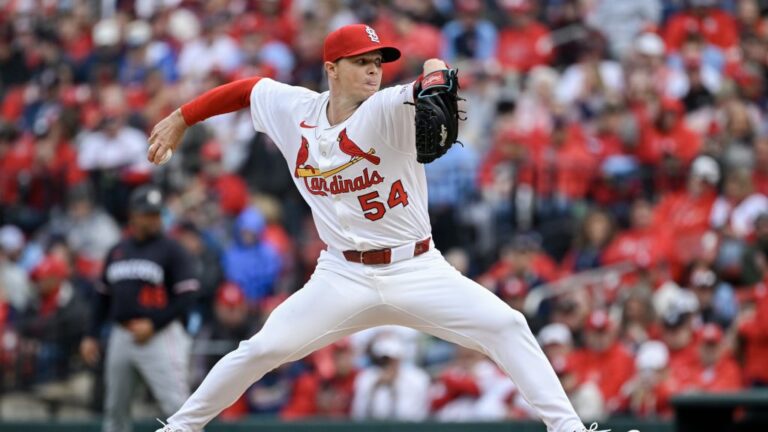
Kodai Senga was described as “extremely available” in Jeff Passan’s offseason preview for ESPN. Passan also mentioned Sonny Gray as one of three Cardinals with no-trade clauses who could be on the move. Willson Contreras and Nolan Arenado being the others.
Based on name value, you may think it would be easy to find a trade partner for Senga, and even more so for Gray, but each pitcher comes with some complications that make them harder to deal.
This is why a swap could be beneficial for both sides, because it would solve problems for both teams and could free them up to focus on other needs.
Why the Mets Need to Trade Kodai Senga
The New York Mets need to trade Kodai Senga because of a very unique problem. They have too much (unreliable) starting pitching.
There are a lot of reasons you can point to for why the Mets fell out of a Wild Card spot, but the most glaring was their starting rotation.
David Peterson, Sean Manaea, and Kodai Senga all became unpitchable as the season wound down, and the Mets were forced to promote three top prospects to try to save their season.
Nolan McLean played the role of savior quite well and is looking like the Mets’ de facto ace until proven otherwise. Now ranked as the best pitching prospect in baseball after our latest top 100 update, McLean will enter 2026 as the favorite to win NL Rookie of the Year.
McLean could have some competition in his own rotation, with fellow top 100 prospects Jonah Tong and Brandon Sproat each being in the mix to start for the Mets as well.
Counting on all three rookies to be in the rotation on Opening Day is premature, but the Mets do have to leave room for those guys to make starts in the big leagues.
Having Sproat and Tong seventh and eighth on the depth chart going into spring training is an ideal place to be, but getting there could require some maneuvering.
Here is the Mets’ current depth chart without making a single signing or trade.
- RHP Nolan McLean
- LHP Sean Manaea
- RHP Clay Holmes
- LHP David Peterson
- RHP Kodai Senga
- RHP Brandon Sproat
- RHP Jonah Tong
- RHP Christian Scott
While Peterson and Manaea each struggled down the stretch, both are likely to have rotation spots in 2026.
When you look at David Peterson’s 4.21 ERA, it is hard to remember that he was an All-Star in the midst of a career year before it all fell apart. In the first half, Peterson pitched to a 3.06 ERA across 18 starts and 109 innings pitched. In the second half, he pitched to a 6.34 ERA in 12 starts.
The drop-off was concerning, but Peterson also blew past his previous career-high in innings pitched by nearly 50 innings. It certainly seemed like the case of a pitcher being worn out in his first full season, making every start.
Manaea’s issues seemed to be more mental than physical, as his stuff still looked good when he finally returned from injury around the All-Star break, but he never found his footing.
Set to make $25 million for the 2026 season, Manaea is going to be given every opportunity to start, and rightfully so. He also would be way harder to move than Senga (more on that in a minute).
Finally, Clay Holmes earned a spot in the 2026 rotation after being the Mets’ best starter wire-to-wire in 2025.
There were bumps along the way, but finishing with a 3.53 ERA over 165 2/3 innings pitched was awfully impressive for Holmes. He is a lock to hold down a spot right in the middle of that Mets rotation as an ideal No. 3 starter, and an even better No. 4.
All of this leads to Kodai Senga. Who does not fill the Mets’ rotation as their fifth starter because his presence in the rotation requires them to carry a sixth.
Senga is the luxury sports car of starting pitchers. When he is going right, there are few pitchers who are better. But across three seasons for the Mets, Senga has been good for exactly one and a half seasons. He was great in his rookie season, pitching to a 2.98 ERA over 166 1/3 innings pitched.
In 2024, Senga made just one start, which ended with him crumbled to the ground due to a lower leg injury. In a moment that was eerily reminiscent, Senga again crumbled in a heap during the 2025 season, as a leap for an errant throw by Pete Alonso ended with Senga back on the IL.
Prior to the injury, Senga had pitched to a 1.47 ERA across his first 13 starts. Over his final nine after he returned from the IL, Senga pitched to a 5.90 ERA. It got so bad that the Mets even demoted Senga to try to get him right in the season’s final weeks.
This makes for a puzzling situation for the Mets front office to navigate now, as there is no way they can count on Senga to make 30 starts. If the sports car is finely tuned and nothing throws it to whack, Senga could be unbelievably valuable next season. But what are the odds that it happens?
Another team with less at stake can take a gamble on Senga. With only a $14 million salary for the next two seasons, it is not the most expensive gamble to take when you consider some of the risks teams will expose themselves to in free agency.
Why the Cardinals Need to Trade Sonny Gray
There are 35 million reasons why the Cardinals need to trade Sonny Gray, and those reasons are a lot easier to explain than breaking down the intricacies of the Mets’ starting rotation.
It all comes down to Gray’s contract and where the Cardinals are as a franchise right now.
Chaim Bloom has taken over as their new President of Baseball Operations, and just like when he took over in Boston, the first order of business is to tear things down.
The Cardinals have three veteran players on their books that they would like to move on from, with Sonny Gray, Nolan Arenado, and, to a lesser degree, Willson Contreras.
Arenado has become a tough sell, as he is not worth anything close to the $31 million he has left on his deal over the next two seasons. They will try to move him, but won’t be able to do so without eating a bunch of salary.
Contreras could be moved, but he is also still a very good hitter who is on an affordable deal for what he is providing. Gray, on the other hand, was affordable, and now he is not.
A back-loaded three-year, $75 million deal, Gray is set to collect the same amount of money in 2026 as he received from the Cardinals in 2024 and 2025. While Gray is still a very effective pitcher, the Cardinals will be hard-pressed to find a team that can pick up the full $35 million, especially when you tack on a $5 million buyout on a $30 million club option for 2027.
This is where the New York Mets come in.
Why a Kodai Senga for Sonny Gray Swap is a Win-Win
If Kodai Senga were in the final year of his contract, the Mets could probably extract some real value out of him as a one-year high-upside gamble on the trade market. The fact that he has two years left on his deal complicates things, as it doubles the financial risk.
At the same time, if the Cardinals want to move Sonny Gray, they have to navigate his no-trade clause and will likely have to eat about $15 million of the $40 million he is still owed, bringing the total money closer to $25 million.
Instead of paying Gray to pitch for another team, the Cardinals can simply pay Kodai Senga to pitch for there’s, taking a gamble that he can rediscover the elite form he has flashed when healthy.
Let’s just say Senga opens up the season and reels off 10 starts at a sub-2.00 ERA like he did in 2025. Suddenly, Senga is a commodity again, and the Cardinals can get a prospect better than anything they would get in a deal for Gray.
If it doesn’t work out, Bloom still saved his owner $21 million in salary for the 2026 season ahead of a potential lockout.
If the worst-case scenario is that you never got to trade Senga and you are taking the gamble on him again in 2027, a $14 million salary is pretty standard for a starting pitcher anyway.
On the Mets’ side of things, they rid themselves of all the risks that come with Senga, and they pick up one of the more dependable starting pitchers in Major League Baseball.
While Gray had an inflated 4.28 ERA in 2025, his 3.39 FIP suggests some bad luck. He also still struck out over 10 batters per nine, and walked under two.
In terms of K-BB%, Gray ranked seventh in all of baseball. The pitchers ahead of him?
Tarik Skubal, Garrett Crochet, Paul Skenes, Joe Ryan, Bryan Woo, and Jacob deGrom. Jesus Luzardo, Cristopher Sanchez, and Logan Webb round out the top 10.
Gray has missed just four starts in the past three seasons, with his 531 innings pitched ranking 11th amongst in MLB. By fWAR, Gray has been a top-five pitcher in baseball since 2023, pitching to a 3.63 ERA, 3.11 FIP, and a 12.8 fWAR.
This trade will kill two birds with one stone for the Mets, as they move on from Senga and pick up a veteran who can lead their rotation along with rookie ace Nolan McLean. Not to mention, is there a better pitcher to mentor McLean than Gray?
Two pitchers with a deep arsenal of pitches that thrive on keeping the hitter guessing with balls that break in every direction.
By swinging this trade early, the Mets would have more leverage in talks all winter, as a rotation of Gray, McLean, Manaea, Holmes, and Peterson is a pretty solid place to start. Especially when you consider the young guns coming through the system.
Signing free agents this year is complicated, as all five of the top arms were offered the qualifying offer, so the Mets would forfeit draft capital to sign one.
If the Mets look to trade for any of the big names on the market, Tarik Skubal, Freddy Peralta, Joe Ryan etc., they are going to have to pay a premium in terms of prospect capital.
Gray is a straight money transaction with no strings for the Mets, which is exactly how Stearns should be using Steve Cohen’s resources to his advantage.
Trading Kodai Senga for Sonny Gray is a win-win move for both the Mets and the Cardinals.
So I again humbly ask that everyone on the internet do their thing to share this article enough that it reaches the eyes of Stearns and Bloom, and we get a deal done immediately.
Written by
Ryan Finkelstein has led editorial for Just Baseball since 2021 and officially became the Editor-in-Chief in 2025. He also hosts Locked On Mets, the No. 1…