
How Will Injuries Impact the Athletics’ Trade Deadline Strategy?
Caught between buying and selling, recent injuries could ultimately determine the Athletics' approach at the trade deadline.
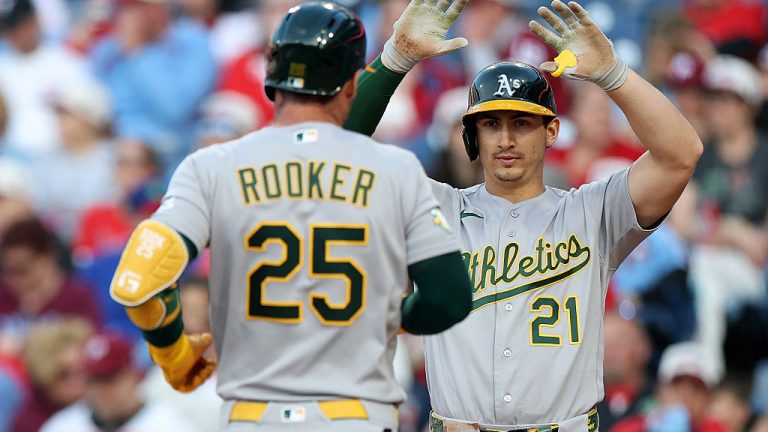
For the first time in several years, the Athletics had raised expectations heading into the new season. After starting a rebuild a few years back, the A’s have developed a young offensive core that made some noise last season and grabbed the attention of even the most casual baseball fan.
When projecting ahead for the year, if you simply looked at the lineup, you could convince yourself that this could be a playoff team. Nick Kurtz, Brent Rooker, Tyler Soderstrom, Shea Langeliers, Jacob Wilson, and others create a high-upside core with potential to dream on. As your eyes moved to the pitching staff, the cracks started to show.
The rotation was lead by Luis Severino to start the year, who’s a servable starter but far from an ace. Jeffrey Springs and Aaron Civale are veterans who were expected to fill the back of the rotation, and the rest was unknown.
Then there was the bullpen. To summarize it briefly: yikes.
Fast forward to now. The lineup has enough to keep them in contention, while J.T. Ginn’s breakout has given the A’s something to be excited for into the future. The arrival of Gage Jump brings even more excitement and has helped hold the A’s above water while they fight for a playoff spot.
Usually, a 41-49 team does not have much hope for the playoffs. However, the American League is having a bizarre year, and almost everyone is still in the race. The A’s are four games back of a wild-card spot and 5.5 games behind the division lead. The idea of being buyers is not crazy, but injuries could end that hope before the deadline gets here.
Stats were taken prior to play on July 7.
Injuries Are Holding the A’s Back
Every fan reaches a point in the season where they feel their favorite team is dealing with an unorthodox amount of injuries. The truth is having a number of players on the IL is completely normal and most teams are dealing with the same issue.
A 162-game season is brutal on the body, and the battle of attrition can be as important as talent alone.
For the A’s, injuries have a larger impact that many other teams battling for playoff position. Although the buildup to becoming contenders again is going well, they have not yet been able to build the necessary amount of depth needed to withstand a postseason push.
Every team has these types of players. They’re the guys who are fringe major leaguers and have bounced up an down for a few years while gaining experience. Or they’re the veterans who joined your team to play a depth role but end up chasing playoff success.
Within the past two weeks, the A’s have lost Rooker, Soderstrom, Zack Gelof, and Wilson to injury. Those are key members of the roster, including two of their bigger power threats, their shortstop who excels at putting the ball in play, and their breakout utility guy who was doing everything for this team in light of other injuries.
Their de facto ace, Severino, has also been sidelined since the end of May, and Denzel Clarke has missed the majority of the season.
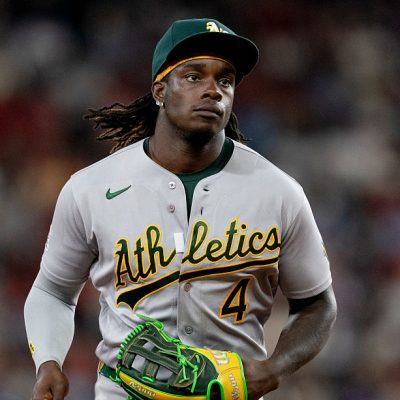
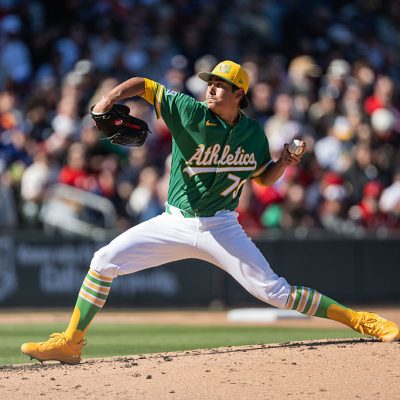
While an abundance of injuries isn’t unusual this time of year, the types of players the Athletics are losing to injury is concerning. Rooker, who was having a down year, is a feared power bat cemented into the middle of the lineup. You are now seeing Colby Thomas, a short-side platoon option, having to take his spot.
Soderstrom started rather slow but bounced back to normal production, slashing .242/.343/.460 with 13 home runs and a 119 wRC+ on the year. Obviously that production is difficult to replace, but so is the balance his lefty bat gave the lineup with Rooker, Langeliers, Wilson, and Gelof being right-handed hitters.
Lawrence Butler now has a bigger role, and although he has been better, a 69 wRC+ is not something you want in the heart of your lineup.
Wilson has been injured a couple of times this year and has yet to really get going. His .277/.310/.386 slash is still welcomed in this lineup even if it is a step back from last season. He’s one of the best bat-to-ball players who also helps balance a lineup that has a number of high swing-and-miss guys.
Gelof’s injury really threw a wrench into the lineup construction. His .282/.336/.495 slash line, 11 home runs, and 129 wRC+ picked up a lot of the slack left by others who were struggling. But, more importantly, his versatility allowed manager Mark Kotsay to navigate various injuries and plug him in anywhere to keep the line moving until others got healthy.
While he just returned to the lineup, his IL stint led to bigger issues in the lineup.
On the pitching side, the emergence of Ginn and Jump has helped ease the blow of the Severino injury. However, it falls off after that.
If healthy, the A’s would have a top three that they’re at least comfortable with. Instead, they’ve been forced to turn to Springs (5.79 ERA), Civale (5.10 ERA), and Jack Perkins (6.75 ERA) to try and stay afloat.
The next couple of weeks leading up to the trade deadline will ultimately tell us if the A’s could be buyers or if they once again will be sellers. Can they stay afloat until a few of these players get healthy, or will they sink even further?
The Athletics’ Trade Deadline Strategy
The trade deadline across the league could look very different this season. With the CBA set to expire after this season, teams could be acting in a different manner than in years past. The trades for rentals will still be available but the returns might look a little different.
For the A’s, I do not think they will be in the market for any significant rentals at the deadline. A back-of-the-rotation arm or bullpen piece, sure, but not an impact option.
One route the A’s could explore would be trading for a major leaguer with control. Someone who could not only help them for the 2026 season, but beyond as well. A trade of this caliber will cost more, and one could argue that the system’s depth is not worth making this type of move.
I do think that there’s enough big-league answers in the outfield and overall organization depth to move a prospect like Devin Taylor, a 2025 second-round pick. The outfielder is slashing .347/.404/.633 with a 161 wRC+ in Double-A.
He’s close enough to being major-league ready where teams could feel confident in what they are getting and willing to part with a pitcher, perhaps, who comes with an additional year or two of control.
Corner infielder Tommy White, a 2024 second-round pick, is a name A’s fans have been floating as a possible trade chip. He’s slashing .301/.335/.488 with eight home runs and 11 doubles in a hitter-friendly environment in Triple-A, but I do not see him as a major trade piece.
Maybe the A’s could use him in a trade to get a bullpen piece with control, but I do not think he is valued as highly as some fans might anticipate.
Buying a player with years of control might cost an extra prospect, but I am okay with that. The A’s have drafted and developed well enough to give me the confidence that they could continue to reload. They have core pieces locked up and should be bigger players, relatively speaking, in free agency. Getting pitchers to sign with them might be difficult, so trading for one may be their best bet.
Part of the reason I like the idea of buying a player with more years of control, even if it does cost more, is that the A’s really don’t have anything to sell. Who’s their best trade chip that they don’t see as part of the future? Maybe cashing in on found gold in Carlos Cortes is the answer, but I don’t think the return will make major headlines.
Jeff McNeil is not bringing back any value. Civale and Springs aren’t either for that matter. I’d rather the A’s hold onto Hogan Harris than move him simply to move him. The team is not so bad where they need to become sellers, and the players that would actually bring back significant returns are part of the Athletics’ future in 2027 and beyond.
Final Thoughts
The A’s are kind of stuck. They’re not good enough to sink prospects into trades for rentals, but they’re not bad enough to lean into becoming sellers.
Of course, by the time the deadline rolls around, this could all be a moot point. If the current cast of characters cannot keep the A’s afloat until they get healthy, the deadline will simply come and go.
We all know the A’s need to improve ahead of next season. That means trades, free agency, whatever it takes. If there are certain players they’d be interested in trading for in the offseason, why not go ahead and target them now? Excluding rentals, of course.
Pay the premium and give your team a chance to make the playoffs in 2026, even if the goal is simply to gain postseason experience.
Become a Member of Just Baseball
Subscribe and upgrade to go ad-free!
* Save 25% by subscribing annually.

Written by