
Breaking Down the Brewers’ Side of the Caleb Durbin Trade
The Brewers pulled off a shocking trade with the Red Sox on Monday morning. Here's a deeper look at the newest members of the Brew Crew and how they fit into the picture for 2026.
 | |
| | 
Just a couple of weeks after their blockbuster trade that sent Freddy Peralta to the New York Mets, the Milwaukee Brewers stayed active in the trade market with a rather shocking deal.
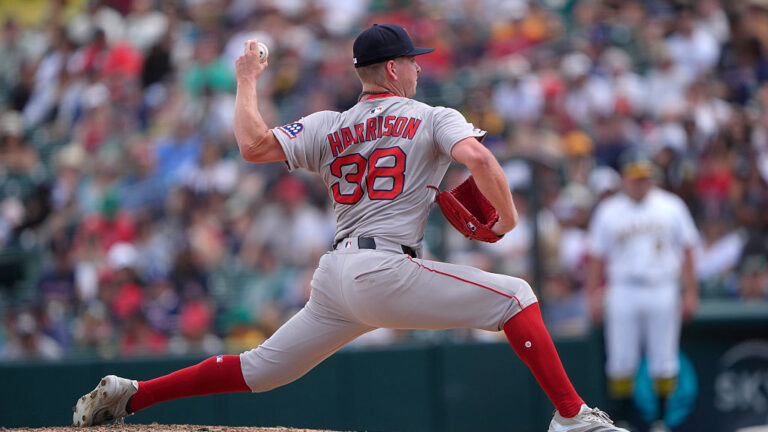
Early on Monday morning, Jeff Passan reported that the Brewers traded their 2025 breakout third baseman, Caleb Durbin, to the Boston Red Sox in exchange for southpaw Kyle Harrison, infielder David Hamilton, and lefty Shane Drohan.
Also headed to Boston are infielders Andruw Monasterio and Anthony Seigler, along with Milwaukee’s Competitive Balance Round B pick. There’s a lot here to digest, and it’s certainly a transaction that was not on anybody’s radar.
Durbin was brought in last offseason from the New York Yankees in a package for closer Devin Williams. After starting the year in Triple-A, Durbin made his MLB debut just a few weeks later, took hold of the starting third base position shortly thereafter, and established himself as a key member of the lineup during the team’s historic 97-win campaign.
Durbin perfectly embodies the Brewers’ brand of baseball, so it was somewhat surprising to see them move him after what he showed in 2025. But it’s even more surprising to see them also include both Monasterio and Seigler in the deal, sapping their MLB third base depth entirely.
While the player capital itself was unexpected, parting ways with a Comp B selection is another surprising element of the package considering the Brewers value draft capital as much as any organization in the sport.
But that speaks volumes to how highly the Brewers view the assets they have coming in. They received three players who can make an impact from the get-go, which has been a key part of their success for the past handful of seasons.
Hamilton is a versatile defender who also fits the Brewers’ brand of baseball. While he has something to prove offensively, his defense and baserunning will be put to use in the Brewers’ lineup.
Likewise, it’s no secret how much the Brewers value acquiring young and controllable arms who have room for optimization. Both Harrison and Drohan fit that bill, as they both have a strong foundation to build upon with upside to dream on with the right pitching development.
Bringing in two players like Harrison and Drohan, especially on the heels of acquiring Brandon Sproat from the Mets, gives this team an abundance of starting options heading into 2026, and all three of the players acquired from Boston will factor into the picture to some degree this coming season.
Meet the Newest Members of the Milwaukee Brewers
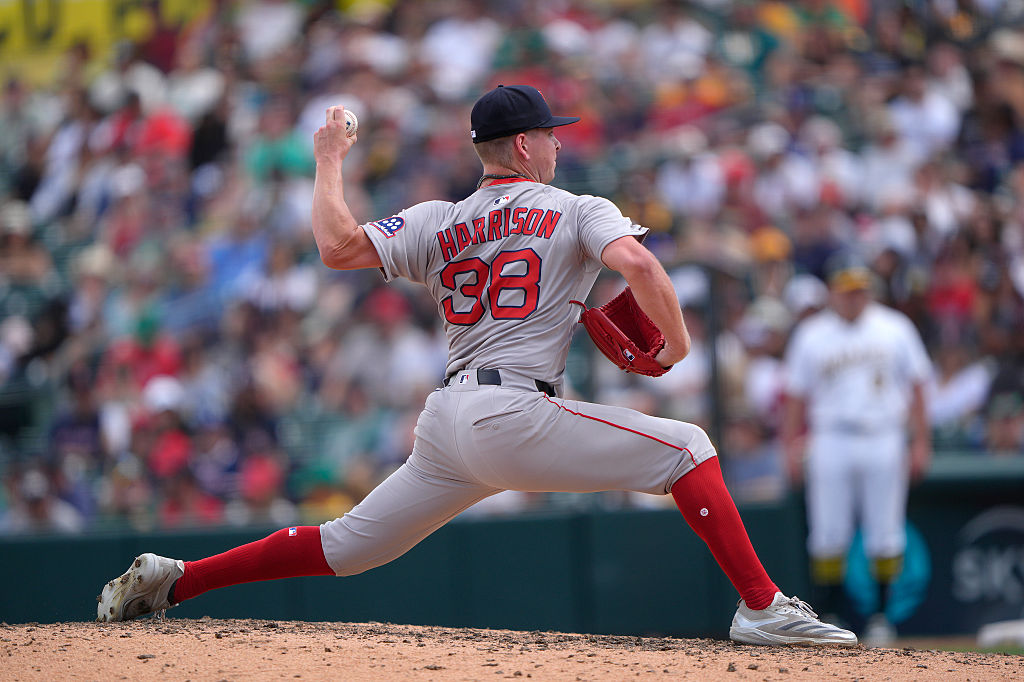
LHP Kyle Harrison
Kyle Harrison, 24, comes to Milwaukee with some big-league experience, but the Brewers feel he has another level to reach.
Harrison was drafted in the third round by the Giants back in 2020 and made his MLB debut in 2023, pitching to a 4.15 ERA in a limited sample size (34.1 IP). His 2024 campaign was less than stellar, posting a 4.56 ERA and a 4.33 FIP in 24 starts (124.1 IP) while dealing with an ankle sprain and a left shoulder injury at points throughout the season.
The southpaw made eight appearances (four starts) with San Francisco in 2025 to the tune of a 4.56 ERA before being traded to the Red Sox in exchange for Rafael Devers.
Harrison was sent to Triple-A upon his arrival to the organization and spent most of his time there, making 12 starts at a 3.75 ERA before being promoted to the big leagues in September. There, he made just MLB three appearances for Boston while pitching to a 3.00 ERA, and he now switches clubhouses once more as the Brewers look to unlock some untapped potential.
Harrison throws the kitchen sink at opposing hitters, including three separate fastballs (four-seam, cutter, sinker) to go with a slurve, curveball, and changeup. The Brewers are clearly intrigued with Harrison’s profile, as it’s one they have gravitated toward recently.
His four-seamer performed well in his limited big-league sample size in 2025, yielding a sub-.200 batting average while holding opponents to a .310 slugging percentage. It isn’t the hardest-thrown fastball (94.6 mph average velocity), but it is by far his go-to offering.
The rest of his arsenal will be a work in progress, but he has a high floor to build upon as a back-end starter with upside of a middle-of-the-rotation arm should the Brewers optimize his secondaries. His second-most-used pitch is a slurve, and it’s one that got hit hard and often at the next level.
Harrison’s slurve performed much better in Triple-A last season, however, so perhaps it can turn into a reliable offering with some help from the Brewers’ pitching lab.
Harrison’s walk rate and strikeout rate have hovered around league average throughout his young MLB career. Limiting hard contact, missing barrels, and seeing more ground balls will likely be a point of emphasis as the Brewers develop his arsenal.
He made some tangible improvements to his arsenal in 2025, and the Brewers will look to continue that development in 2026. Though he’s an MLB-ready arm, the Brewers can take their time with his development. He likely starts the year in Triple-A Nashville as he works on his arsenal and gets used to the organization, but he will have a prevalent role on the big-league staff at some point in 2026.
LHP Shane Drohan
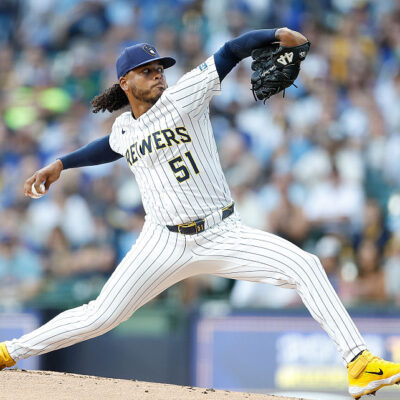
Shane Drohan is another lefty primed to make his MLB debut in 2026, and it’s easy to see why the Brewers targeted him in this package.
Drohan, 27, was drafted by Boston in 2020. He was selected in the Rule 5 draft by the White Sox in December of 2023 but was later returned to the Red Sox following a shoulder injury. Left forearm inflammation is something he has battled across his last two seasons, but, when healthy, he has flashed some upside, especially in 2025.
That said, it’s been a mixed bag of results for Drohan to this point in his professional career. In 2023, the southpaw posted an ERA over 5.00 across 123 innings in Double-A and Triple-A. He threw just 16.1 innings in 2024 as a results of his shoulder injury, but he took a step forward in 2025.
In 47.2 innings with Triple-A Worcester, Drohan pitched to a sharp 2.27 ERA to go with a 2.85 FIP while striking out 12.65 hitters per nine innings. He managed to drop his walk rate to just 8.4%, which was his lowest mark since his Double-A stint in 2023, while striking out a whopping 35.3% of batters.
Drohan features a five-pitch arsenal. While his four-seam fastball is his primary offering (31% usage in Triple-A last season), his slider was his most lethal pitch in 2025. Thrown nearly 29% of the time in Triple-A, Drohan’s slider generated a 43.1% whiff rate to go with a .125 opponent batting average, .179 opponent slugging percentage, and .159 opponent wOBA last season.
With a near 10-mph separation between his four-seamer and his slider, it’s that combination that makes him such an intriguing arm. Not to mention he has a handful of other offerings that generated strong results in Triple-A last season.
Drohan’s cutter, which he threw 21.4% of the time, has some room for improvement and was statistically his weakest offering last season, but with how the Brewers’ pitching lab has helped its arms develop cutters over the years, there’s reason to believe better results are in the tank in regards to that pitch.
His changeup (13% usage in Triple-A), held batters under a .100 batting average and generated a whiff over 44% of the time, while his curveball (11.8% usage) was just as dominant, posting a .077 opponent batting average and opponent slugging percentage with a 47.2% whiff rate.
Point being, there’s serious upside to dream on with Drohan. He already has a solid fastball and breaking pitch to build upon with a trio of other offerings that could develop into strong weapons with the proper development.
At 27 years old, Drohan should see major-league action in 2026. He managed to cut his walk rate while adding to his repertoire and maintaining his strikeout stuff, which is a very encouraging sign for his development as he comes to Milwaukee.
Whether it’s as a starter or a swingman, he should get some meaningful innings at the MLB level this coming year.
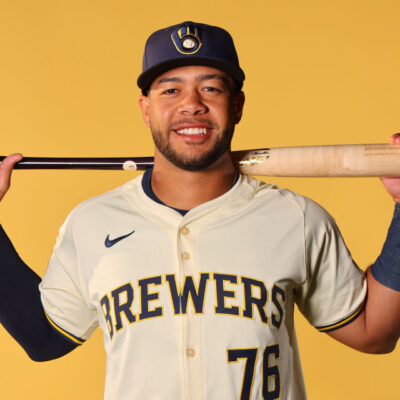
INF David Hamilton
Hamilton, whom the Brewers drafted in the eighth round of the 2019 MLB draft, has all the tools that the Brewers tend to seek out in a utility player.
Hamilton is a threat on the basepaths, swiping 55 bases across the last two seasons thanks to his 95th-percentile sprint speed (29.3 ft/s). He’s also a versatile defender who played a majority of his games at second base in 2025 while mixing in at shortstop, designated hitter, and third base.
While he only has just over an inning of playing time recorded at the MLB level at third base to this point, he likely will see much more run at the position for the Brewers moving forward.
Frankly, Hamilton leaves a lot to be desired offensively. In 550 career MLB plate appearances, he is slashing .222/.283/.359 for a 77 wRC+ and 79 OPS+. A lack of power is a common criticism of the Brewers’ lineup heading into 2026, and Hamilton won’t contribute much in that department. The 28-year-old has 14 homers in 204 career MLB games to go with a .137 ISO.
Interestingly enough, Hamilton strikes out more often than a player typically does with his contact numbers.
Hamilton is walking at just a 6.8% clip while punching out nearly 25% of the time across his last two seasons all while posting an above-average chase rate, whiff rate, and zone-contact rate. So, there’s reason to believe the Brewers are hoping better results are ahead if he can maintain a similar approach.
As was alluded to, the problem is that Hamilton does not impact the ball nearly enough to do damage at the plate.
In 91 games last season, Hamilton posted just a 27.8% hard-hit rate and an average exit velocity of 86.6 mph. His BABIP of .285 across the last two seasons (.234 in 2025) is significantly lower than league average, especially for a player with his type of speed, but much of that likely has to do with his poor quality of contact.
Hamilton’s xwOBA of .260 last season was the 15th-lowest mark in MLB (min. 190 PA). Whether or not the Brewers can get Hamilton to do more damage with his contact will be the deciding factor in him taking a step forward with the bat in 2026.
Tapping into his pull-side power will be the key to getting more homers out of Hamilton, however he has shown an ability to rack up doubles all over the field thanks to his level of speed and ability to put the bat on the ball. That will be something the Brewers look to emphasize with more consistency as he gets settled in 2026.
While the results at the plate have been underwhelming to this point in his career, there’s reason to believe Hamilton’s best offensive days are ahead of him.
Closing Thoughts
Later on Monday afternoon, president of baseball operations Matt Arnold spoke to the media about the trade and highlighted how important it is for them to have ample pitching depth following the departure of Freddy Peralta.
The Brewers now have an abundance of young and near-MLB-ready arms who can take their time developing in the minors until their moment comes. They clearly feel comfortable with the bats they have internally, and they were okay trading from their infield depth in exchange for some high-upside pitching.
Likewise, Hamilton will fill the utility role that Andruw Monasterio has filled for the past couple of years. He’ll likely be one of the leading candidates to get the majority of reps at third base to start the season, and the Brewers clearly value his ability to play all over the diamond.
For Brewers fans, it stings to see them part ways with Durbin, who immediately became a fan favorite just a year into his Brewers tenure. However, they capitalized on an opportunity to bring in two talented arms who have room to grow. With spring training on the horizon, it will be fascinating to see how the third base role and starting rotation shake out heading into Opening Day.
Written by
Joey Peterson is a graduate of the University of Wisconsin-Madison and an editor for Just Baseball. Joey covers the Milwaukee Brewers, along with general MLB topics…