
2026 MLB Draft: NHSI Notebook
Every year, sixteen high school teams from across the country travel to Cary, and it is always an action-packed week.
 | |
| | 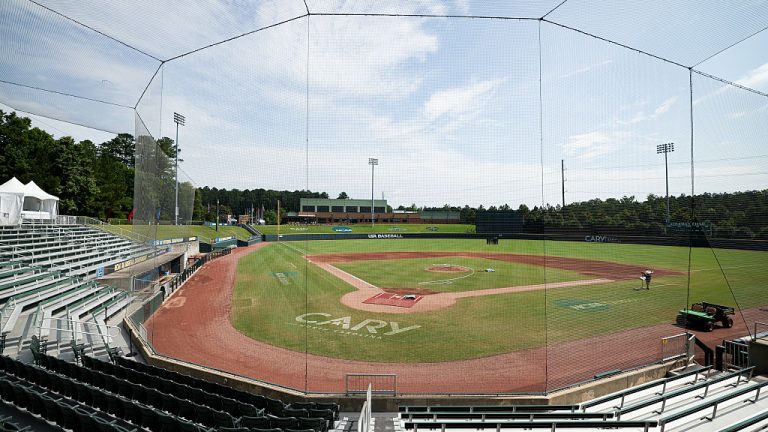
We’re halfway through the spring season, and it’s hard to believe that. However, it’s one of my favorite parts of the year, as USA Baseball hosted their annual NHSI tournament. Every year, sixteen high school teams from across the country travel to Cary, and it is always an action-packed week.
Orange Lutheran grabbed their fourth title (first since 2019), beating out reigning champions Venice in a 7-6 victory. The final matchup kept the California/Florida stronghold that has been on display since the event’s inception, and it was the 10th time a California program won the event.
We’ll keep the introduction short, as there are a lot of players to cover from the event. In fact, it will be the largest piece I’ve done in a couple of years. Video will be posted to our YouTube page, so please spare a click on the link in honor of my digits. Don’t forget to check out the latest Top 100 Prep Board, as well.
2026 Eligible Players
RHP Kaden Waechter, Tampa Jesuit
One of the best pitchers at the event, Waechter found himself on the bad end of an exciting pitcher’s duel, striking out ten batters across six strong innings against Trinity (KY). While his command took a bit to show up, his fastball/slider combination shined in his appearance.
Waechter is an extremely athletic pitcher with a loose delivery and projection. The fastball topped out at 95 MPH, holding 90-94 MPH throughout the outing with command improving deeper into the game. It’s a high spin offering that mixes carry and tail well, and the pitch generated nine whiffs on 28 swings (32% whiff rate).
Waechter commanded his slider extremely well, which is a mid-80s pitch with shorter break and serious teeth. He landed the pitch for strikes consistently, plus he generated a 50% whiff rate on the night. He threw a change-up early but ditched it as the outing went on. It sat in the mid-80s with good fading action, but Waechter struggled to with feel of the offering.
The Florida State commit has the polish, arsenal, and bloodlines to be a high round pick. His ceiling fits best in the backend of the first round, but the second round seems to be a better fit currently.
RHP Wilson Andersen, Tampa Jesuit
The second noteworthy draft arm in Tampa Jesuit’s stable, Andersen struggled a bit more than his teammate, but there’s significant upside in his profile. However, command has been the biggest wart in his profile.
Possessing a lean, projectable build and an extremely quick right arm, Andersen pitches with an over-the-top arm slot and creates a downhill angle with slight crossfire. However, he pitches with a good bit of effort, and there’s noteworthy head whack and violence at release.
His fastball command varied from inning to inning, but he held 91-95 MPH throughout his outing, briefly topping out at 96-97 MPH in the early going. He gets a fair bit of carry and slight cut with the pitch, but he does spray the offering a bit. Andersen got his fair share of chases on the pitch, but struggled to miss bats on a consistent basis with a 21% whiff rate.
Andersen’s strongest offering was his low-to-mid-80s slider that plays off the angle he generates. He landed it consistently for strikes, displaying sharp downward break and acting like a curveball at times. He’ll flash a power change-up in the upper-80s with fading life, too. Both pitches registered whiff rates north of 60% in his outing.
There’s some crudeness to his profile, but Andersen has big upside at the next level if everything clicks. He should hear his name called closer to pick #100 rather than pick #50, but it’s still a Day 1 profile.
SS/OF James Clark, St. John Bosco
The best prep bat in our rankings to play at the event, Clark is among the best pure hitters in the class. While he registered just three hits on the week, his approach and plate discipline stuck out, as well as his speed.
Clark’s swing has some moving parts to it, namely a barrel move that helps put his hands into a position to launch. It is unorthodox and creates a hitch that could be extorted at the next level, but his bat-to-ball skills and bat speed do alleviate that a bit. He rarely expands the zone and while he’s not a big power threat, he’ll attack the gaps and use his speed for extra bases. He consistently posted plus run times with great first steps out of the box.
With the glove, Clark was a mixed bag at shortstop. He’s a solid athlete, but he struggled with his fielding mechanics throughout the weekend, which led to errant throws and errors. Most notably, his footwork was a bit messy, which snowballed into his accuracy wavering on throws to first base. It does create some discourse on his future defensive positioning, though he should be allowed to start at shortstop to begin his professional career. If he doesn’t work out at the position, he could move to second base or center field.
Overall, given the weaker nature of the high school shortstop class this year, Clark will hear his called early due to his offensive upside and tools. It would not be a stretch to see him become a first round pick in July.
RHP Gary Morse, Orange Lutheran
Arguably the loudest performance of the entire tournament, Gary Morse tied the single-game strikeout record, as he struck out 16 batters in a complete-game shutout. The uber-physical prospect utilizes a funky over-the-top delivery to overpower hitters at the plate.
At his best, Morse’s fastball was touching 96 MPH and held 92-95 MPH for a majority of the outing, locating well to both sides of the plate. He gets plenty of backspin and carry on the offering, as well as some slight cutting action. It’s a power offering with swing-and-miss traits, and he showed it off in this start, generating a 43% whiff rate.
However, Morse’s mid-80s changeup was the primary highlight. A truly devastating off-speed pitch, it features parachute-esque fade and depth, slamming on the brakes halfway to home plate. While it was utilized primarily to left-handed bats, they could not touch it, whiffing a dozen times and giving Morse an 80% whiff rate on the pitch. He throws a soft low-80s breaking ball with inconsistent shape and low spin rates, as well.
Given the projection, track record, and dynamic one-two punch, Morse has firmly placed himself in Top 100 conversations. It may cost a pretty penny to convince him to push away his Tennessee commitment, but I believe someone will be willing to meet his number.
OF Eric Zdunek, Orange Lutheran
The MVP of the tournament, Zdunek was the driving force for Orange Lutheran offensively, and with how we’ve talked about him in the past, it shouldn’t be a shock to see him perform so well on a big stage. The Notre Dame commit has a track record as one of the best fastball hitters in the country.
A physical corner outfield prospect, Zdunek has changed his stance a bit since last summer. He’s opened up his front leg slightly, and there’s more movement in his hands during his load. This has given him a bit more bat speed and barrel whip, though he did get beat a bit by velocity upstairs. That said, the impact was meaningful. Zdunek recorded two loud doubles to the pull side, which were screaming line drives. He also walked twice and struck out just once throughout the week.
Defensively, the physicality and athleticism pairing should play in a corner outfield role at the next level. He’s got a solid enough arm to stick in right field, too. If Zdunek outgrows his athleticism as he physically matures, he could turn into a first baseman.
The track record and power potential is too loud to ignore here. He’s someone that has viability in the top five rounds of this draft.
RHP Cooper Sides, Orange Lutheran
After not being eligible to pitch for Orange Lutheran until March 27, Sides wound up pitching in the semifinal matchup against a tough Casteel team that is rather pesky. While it wasn’t the cleanest outing he’s had, Sides was still able to showcase his upside in front of a large scouting contingency.
Sides has filled out his frame slightly since the summer, but there’s still plenty of projection left in the tank. He pitched with some effort and violence, especially early on, and this did hamper his command, particularly on the fastball. There was terrific arm speed and good extension from a traditional three-quarters slot with some body contortion.
The fastball did not miss any bats due to the lack of command, though it did get up to 97 MPH early and display power. The velocity began to waver as the outing progressed, though he did maintain 92-94 MPH for a few innings. He generated more run than carry when located lower in the zone, and he had feel to elevate and display some cut.
Sides’ most successful offering was a slider with a variety of shapes in the 80-85 MPH range. When thrown harder, it has tighter two-plane shape with good bite, and later in the outing, he began throwing more of a shorter breaking ball with gradual break. It generated six whiffs throughout the outing. While he didn’t throw it much, his mid-80s change-up flashed well with significant fade and depth.
Committed to Louisiana State, it may be another case of spending a pretty penny to acquire his talents. However, he has a track record, and while this outing wasn’t his best, there are traits to fall in love with. He’s someone to watch in the back half of the Top 100 picks.
SS/OF Ryne Barker, Casteel
One of the biggest risers this spring, Barker’s twitchy nature and outstanding bat-to-ball skills were on full display in Cary. The wiry infielder has legitimate double-plus to elite speed and will be a menace to infield defenders at the next level.
Barker’s approach and swing were tailored to slapping the ball around the field and forcing the defense into mistakes, though the bat-to-ball skills are pristine. Barker did not whiff a single time throughout the week, walking once and recording five singles. He’s got the makings of a true table-setter, and scouts believe he will grow into more impact as he fills out his frame. There’s significant projection and bat speed here.
As a defender, Barker played at third base and moved quite well given his athleticism, displaying solid arm strength across the diamond in the process. Barker should get the chance to play at the “six” at the next level, plus his speed makes him a possible candidate to move into a center field role.
Barker’s uptrend this spring is worth keeping track of. There’s a ton of traits to fall in love with for the Texas Tech commit, though he will be 19.7 on draft day.
3B/OF Noah Danza, Gloucester Catholic
Another name with helium attached to it, Danza has burgeoning impact and physicality that few were able to match in Cary.
Danza has tightened up his swing mechanics from last summer, operating with a crouched stance and an inward front foot. There’s quite a bit of movement in his load, but it’s explosive when he opens up. It’s loud hip/shoulder separation with a heavy barrel through the zone, recording three doubles on the week with exit velocities reaching 105 MPH. He coils his core well, generates big bat speed, and gets a ton of leverage in his swing. While there is swing-and-miss, the power alleviates the concerns.
Despite being physical, Danza moves quite well for his size and features smooth actions at shortstop. As he grows, most expect him to slide over to third base, and there’s a non-zero chance that his arm strength plays in right field.
The Mississippi State commit will have large scouting contingencies throughout the spring and fits best in the third-to-fifth round.
RHP Julian Garcia, St. John Bosco
After returning from an elbow injury last summer, Garcia has steadily risen up draft boards, especially after loud performances at WWBA and Area Code Select. At NHSI, he stymied a talented Nolensville lineup, even without his best stuff.
Garcia’s frame is relatively filled out and there’s some violence at release, though he repeats his mechanics well and has considerable arm speed. He pitched off the fastball primarily, throwing it 75% of the time and hammering the strike zone with it. He got up to 96 MPH early and pitched in the 92-94 MPH range consistently, displaying big spin rates and solid carry. It has the makings of a true power heater.
Garcia’s lead secondary was a big curveball in the mid-70s that has high spin rates (~2,800-3,000 RPM) and bite. It does jump out of his hand, plus it breaks so much that it’s tough to command, but it was at its best when below the zone. He threw three cambios in the mid-80s, flashing some fading action, though he did not locate them well.
Garcia has the makings of a powerful relief arm down the line, though I believe an organization will let him start until he proves he can’t. The Long Beach State commit will be 18.3 on draft day.
RHP Grayson Willoughby, Trinity
Willoughby went toe-to-toe with Waechter on Wednesday night, throwing a shutout despite battling through some adversity throughout the night. Relying heavily upon his fastball, Willoughby struck out seven batters en route to a big upset over Tampa Jesuit.
Willoughby has filled out his frame a bit since the summer, and he’s got a bit more velocity as a result. He threw his fastball 85% of the time, peppering the strike zone and daring opposing hitters to touch it. He touched 97 MPH early before dipping into the low-90s, and after taking a comebacker off his leg in the fifth, he emptied the tank and sat 93-95 MPH the rest of the night. He doesn’t get behind the baseball, allowing him to get plenty of run on the pitch, but he spins it really well, and he racked up nine whiffs throughout the outing.
Willoughby did throw a mid-70s breaking ball that was soft and a good change-up in the upper-70s, though he did lack feel for both when thrown. The Kentucky commit may end up at school, where he has a chance to evolve into a useful arm for Nick Mingione’s crew.
OF/1B Kael Barney, Nolensville
Barney grabbed my interest after an intriguing showing at Area Codes last summer, but after a strong NHSI performance, he’s certainly on our radar. The lanky southpaw recorded four hits and three walks while splitting time at first base and right field during the event.
Boasting quality projection and a heavy barrel, it’s no shock that Barney has enticing power potential. Three of his four hits were for extra bases, including a home run off Julian Garcia on a 92 MPH fastball. There’s substantial leverage and bat speed in his swing, and he’s shown the ability to pull the baseball with ease. The hit tool isn’t too shabby, either. The bat will likely drive his profile, but it’s a quality one.
Defensively, Barney has been trying to shed the “first base only” label, and he’s done well when manning right field. He moves well for his size and has a solid arm, though it’s not ruled out that he’ll stick at first base.
Committed to Oregon State, Barney could hear his name called early on Day 2 if someone believes in the offensive upside.
RHP Laird Williams, Edmond Memorial
A Tulane commit, Williams quietly put together one of the more complete performances of the event, striking out ten batters and allowing just two hits in a complete game against Regis Jesuit on Thursday.
Boasting an extra-large frame, Williams is an imposing presence on the bump. He operates with a low effort delivery with deception and funk, throwing across his body with a short arm swing that hides the ball well. His release point tends to start behind the heads of right-handed hitters.
Williams has good pitchability, mixing his fastball and curveball well throughout the start. The fastball hit 91 MPH with some carry and tail, primarily sitting in the upper-80s as the outing progressed. His curveball tunnels well off the heater, sitting ~80 MPH with some tilt and depth. He mixed in a change-up at times.
Like Willoughby, Williams is likely a college-bound arm, but it wouldn’t be a shock to see him perform well under the tutelage of Jay Uhlman.
2B/OF James Tronstein, Harvard-Westlake
One of the more famous names at the event, Tronstein put together a solid display of hitting throughout the week, recording five hits and walking four times.
Tronstein has changed his swing a lot over the past calendar year, with his latest iteration featuring an upright, narrow stance with an open front leg. He laced line drives to the pull side consistently, all while whiffing just twice during the event. He has unlocked a bit more power with his current swing, too. That said, he’ll be a hit-first bat.
Defensively, the Vanderbilt commit has bouncy athleticism and good range at shortstop, though his tools are more befitting of a second baseman. He has played center field in the past, and could see time in that position, too.
Tronstein should have suitors on Day 2, though his Vanderbilt commitment will be tough to draw him away from.
RHP Wyatt Clatur, Nolensville
Facing off against Julian Garcia on Wednesday night, Clatur was able to show off his high-octane right arm in front of a large scouting contingency. He looked strong early, but his outing derailed quickly in the fourth inning due to command issues.
It’s an effortful delivery, though Clatur has loud arm speed and the stuff was solid. Clatur touched 97 MPH early with his fastball, holding 92-95 MPH the rest of the way. The heater has a ton of life when he locates it in the zone, missing bats aplenty when this occurs. Clatur threw over 70% fastballs in the game, throwing a softer breaking ball and change-up occasionally.
Clatur will need to refine his delivery, especially when it comes to his ability to repeat his mechanics consistently. He tends to lose direction at times, as well as opening up early, which leads to fastballs flying up and away. He is likely to be a reliever at the next level, whether that’s in Virginia or in a professional development program.
SS Parker Loew, Trinity Christian Academy
One of the bigger threats in Trinity Christian’s offense, Loew has reworked his swing over the past year, and the results were on display in Cary. Loew recorded five hits and robust exit velocities throughout the event.
Loew tightened up his swing mechanics and is more direct to the baseball, and the power has a chance to be loud. Loew posted a couple of exit velocities north of 103 MPH, and it is robust bat speed through the zone. He recorded two doubles and utilized the gaps well. It’s potentially above-average juice at the end of the day with very good speed.
The biggest thing I would like to see Loew change is his plate discipline. He’s exceptionally aggressive and tends to expand the zone often, something that needs to be worked upon at the next level to tap into his full potential.
Loew was solid with the glove, as well. He has a strong arm with good range at shortstop, enough to suggest that he has a chance to stick there full time. If not, his tools fit at second base. Loew is committed to Louisiana State.
LHP Carter Cox, Venice
A projectable southpaw from Venice, Cox has had some helium attached to his name this spring. Despite being on the smaller side, his command and pitchability were on full display against Gloucester Catholic, as he struck out eight batters in a complete game shutout.
Cox operates with little effort on the bump, driving down the mound well with good extension and arm speed from a three-quarters slot. He sat in the upper-80s throughout the start, touching 90 MPH early on. There’s some life to the pitch, though he relied heavily upon his ability to locate and fill up the strike zone.
Cox’s primary secondary was a slurvy breaking ball in the mid-70s that he landed consistently and mixed in well with his heater. It had good snap and bite throughout the outing, and it should tighten up as he progresses in his development. He threw a couple of change-ups, as well.
Committed to Florida Atlantic, Cox is a college candidate in this class, though he is another arm that could grab a rotation spot as a freshman.
RHP Marcus Greis, Orange Lutheran
A two-way player for the Lancers, I preferred what I saw from Greis on the mound. He threw in relief in the quarterfinal matchup against Trinity Christian, striking out four batters and not allowing a hit in his outing.
Boasting a leaner frame with good athleticism, Greis has good projection left to his body. It’s a quick right arm from a three-quarters arm slot, and he drives down the mound well. He was up to 94 MPH with his heater that features some cut and run depending on the location. His best pitch was a low-80s slider with high spin rates and shorter break, playing best below the zone. It was a fun two pitch mix that should gain more power at the next level.
Greis did throw a handful of cambios, though it lagged behind the one-two punch. He racked up ten whiffs overall, though he did have inconsistent command due to mechanical violence. Greis is committed to play at Texas Christian.
2027 Eligible Players
SS Graham Houston, Venice
The younger brother of current Twins farmhand Marek Houston, Graham is a switch-hitting shortstop who projects to be one of the best pure hitters in next year’s prep class. Houston hit .538 (7-for-13) on the week with two extra-base hits, including a grand slam on Thursday.
Leaving a fastball in the zone to Houston is a mistake. Houston is a switch-hitter, though he looks much more natural as a left-handed hitter. The swing is quick and direct to the baseball, and Houston’s bat-to-ball skills are pristine, as he did not whiff once during the tournament. He’ll utilize the whole field to his advantage, and there’s some sneaky power in the bat. He recorded multiple hard-hit balls throughout the event, and he will grow into more power as he fills out his frame.
As a defender, Houston is a silky-smooth mover at shortstop with solid range, a quick first step, and a strong arm across the diamond. His instincts are very good at the position, as well. The Louisiana State commit looks to be a lock to stay at the “six” long-term. He looks to be every bit of a top-end bat in the 2027 prep class.
RHP Samir Mohammed, Tampa Jesuit
Even after boasting Waechter and Andersen as their top arms, Tampa Jesuit has one of the best juniors in the entire country in Samir Mohammed.
A burly right-handed pitcher with physicality present, he utilizes an effortless delivery with a long arm swing and a low three-quarters arm slot. Mohammed can lose direction and his command will waver as a result, but the stuff is loud, as evidenced by his nineteen whiffs and ten strikeouts.
Mohammed averaged 96 MPH on his fastball, which is a heavy sinker that comes through the zone like a bowling ball. He reared back for 98 MPH at his peak, and he held 94-97 MPH throughout a majority of the outing. He can locate it to both halves at his best, and it’s a pitch that projects to be a groundball machine.
His mid-80s changeup is extremely advanced, displaying excellent velocity separation and diving action. The pitch registered a 78% whiff rate alone on the outing, and batters looked uncomfortable facing the offering. He threw a short mid-80s slider to complete his arsenal, and it has good power and bite to it. The Louisiana State commit projects to be one of the premier arms in next year’s class.
OF Max Phillips, Trinity
One of the many high-level 2027s on the Trinity roster, Phillips may have the most offensive upside of them all. Phillips’ projection and impact will catch your attention upon first glance.
Operating with an open stance, Phillips generates quality leverage and bat speed from the left side. The length of his limbs can affect his swing length, which does lead to whiffs against secondaries, but Phillips can mash the heater, especially when his arms are extended. He laced a double and a home run on Saturday, plus he drove a ball to center against Kaden Waechter on Wednesday. If he can rein in his limbs and stay compact, he’ll be capable of big impact.
Phillips was moved around the field throughout the week, including stints at first base and center field. His tools play best in the outfield, where he has great range and solid speed. However, as he fills out, he should shift over to right field. Phillips is committed to Wake Forest.
RHP Gray Davis, Trinity
One of the better 2027 arms at the event, Davis put together a solid performance for Trinity, striking out eight batters across five innings. While he didn’t get the win, he displayed quality pitchability and a strong arsenal.
Davis is a well-built right-hander with good strength throughout his body, and he operates with low effort on the bump with a three-quarters arm slot. His fastball touched 95 MPH early, and he held 90-93 MPH throughout the outing with some tailing action through the zone. He would mix in a firm upper-80s cutter that touched 91 MPH, giving him a bridge offering to the curveball that was effective.
His low-80s curveball is the best offering in his arsenal, a hard breaking ball with good depth and some horizontal movement late in its life. He would mix in a change-up that he had confidence in throwing to both lefties and righties, as well. A Clemson commit, Davis has the look of a higher-floor arm, but the stuff looks good at this stage.
Become a Member of Just Baseball
Subscribe and upgrade to go ad-free!
* Save 25% by subscribing annually.
Written by