
What’s Next for the White Sox After Their Breakout 2026 Season?
The White Sox proved they have a competitive major league core. Now, they need to decide how to build on it.
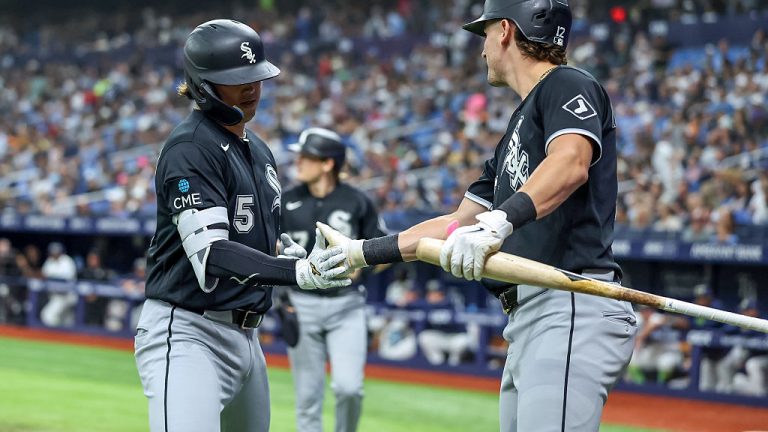
Munetaka Murakami stepped to the plate with the bases loaded and two outs in the sixth inning of Game 5 against the Cleveland Guardians. The Chicago White Sox trailed 2-0, but one swing could have changed the direction of their season.
Instead, Cleveland reliever Erik Sabrowski struck him out on five pitches. Chicago never mounted another serious threat and watched its season end with a 2-0 loss at Progressive Field.
Murakami was one of 21 White Sox hitters to strike out that night, setting an MLB record for a nine-inning game. Cleveland completed a three-game comeback after losing the first two games of the American League Division Series at home.
Two years removed from a 121-loss campaign, the White Sox finished 84-78 and reached October for the first time since 2021. They swept the Houston Astros in the Wild Card Series for their first postseason series victory since 2005 and came within one win of reaching the ALCS.
A Season That Changed Expectations
Chicago entered 2026 coming off another 102-loss season and still evaluating which young players would become part of its next competitive roster.
Few expected a 24-win improvement the following year, much less a meaningful division race that extended into the final weekend.
Chicago finished one game behind Cleveland in the AL Central and secured the American League’s third Wild Card spot. Its offense became one of the biggest surprises in baseball.
According to MLB’s final team figures, the White Sox led the American League with 776 runs scored and 589 walks. They also ranked third in the league with 211 home runs and a .726 OPS.
Miguel Vargas developed into one of Chicago’s most dependable hitters, finishing with 33 home runs and 101 walks. Munetaka Murakami hit 35 homers in his first major league season after signing a two-year contract in December. Colson Montgomery added another 31 despite an inconsistent year at the plate.
Chase Meidroth offered another kind of improvement. He batted .276 with a .350 on-base percentage, scored 90 runs and hit 16 homers after hitting five as a rookie in 2025.
Sam Antonacci became a regular in the lineup after his rapid rise through the minors, while Tristan Peters earned an All-Star selection in center field. Braden Montgomery made his major league debut in June, adding another young hitter to a team already competing for a playoff spot.
The pitching staff experienced a similar breakthrough with Sean Burke, who finished the regular season with a 3.34 ERA and 185 strikeouts across 172 1/3 innings. He emerged as the starter Chicago most trusted when October arrived.
Under Will Venable, Chicago remained competitive throughout the summer and never lost more than four consecutive regular-season games.
The Guardians Found the Swing-and-Miss
Chicago’s offense had been among the most productive in the American League, but its ability to generate runs depended heavily on power and drawing walks.
Guardians pitchers struck out 75 White Sox hitters across five ALDS games, the most ever in a best-of-five postseason series. Chicago struck out 52 times during the final three losses alone.
Cleveland’s staff, managed by former major league catcher Stephen Vogt, consistently challenged Chicago’s hitters with pitches they struggled to handle.
Gavin Williams struck out 12 hitters over 5 2/3 innings despite having thrown 18 pitches in relief two days earlier. Chicago managed one hit against him before Cleveland turned the game over to its bullpen.
Chicago entered the postseason with one of the highest strikeout rates in baseball. Cleveland had the pitching staff to exploit it.
Murakami and Colson Montgomery combined for 66 home runs during the regular season, but they also struck out 423 times. Both will need to improve their ability to handle high-level major league pitching without sacrificing the power that makes them valuable.
Some at-bats featured swings at elevated fastballs that appeared well above the zone. But it would be too simple to explain the collapse entirely through chasing.
“I thought it was less about chase and more about being attacked in the zone and swing and miss in the zone,” Venable told reporters after Game 5.
Cleveland consistently won those confrontations. Chicago’s hitters struggled to make contact even when they saw pitches in hittable areas.
Vargas drew 10 walks in seven postseason games, yet the hitters around him couldn’t consistently turn those baserunners into runs.
That should influence how the White Sox approach their lineup construction next season. Adding another hitter capable of putting quality pitches in play would help balance an offense that already has considerable power.
It would be an overreaction to dismantle the lineup that helped Chicago reach the postseason. Many of its most important hitters are still early in their careers and have room to improve.
The White Sox cannot assume their power will compensate for those weaknesses every time they face elite pitching.
The White Sox’s Pitching Plan Ran Out of Options
The offensive struggles were the biggest reason Chicago failed to advance, but the ALDS also demonstrated the limitations of its pitching staff.
Venable relied on an unconventional approach throughout the postseason, using openers and asking several relievers to handle multiple innings.
Grant Taylor recorded a four-inning save in Game 1 against Cleveland after Hagen Smith opened the contest. Burke then delivered 5 1/3 innings in relief during Game 2, helping Chicago take a 2-0 series lead.
Chicago issued 10 walks in Game 3 and surrendered nine runs. The following night, the White Sox carried a 4-3 lead into the sixth inning before the Guardians scored six runs and took control.
Anthony Kay struggled to begin the inning, and Taylor entered with traffic on the bases. The rookie could not record an out against six batters.
There are reasonable questions about individual pitching decisions, particularly the timing of Taylor’s appearance and how frequently certain arms were used.
Still, those decisions were influenced by a larger roster issue. Burke was the only pitcher Chicago consistently trusted to provide significant length against Cleveland.
The White Sox had acquired veteran Luis Castillo from Seattle at the trade deadline to address their need for innings. Instead, Castillo posted an 8.42 ERA in nine appearances with Chicago before landing on the injured list with a right shoulder impingement.
That left Venable relying heavily on the same group of pitchers during a demanding postseason schedule.
As the series continued, Cleveland repeatedly faced the relievers Venable trusted most. That familiarity was another challenge for a staff already short on dependable starting options.
Burke provided another strong performance in Game 5, allowing only two runs over five innings. Both came on José Ramírez’s fourth-inning home run.
Build Around the Core, But Add to It
Chicago has a competitive major league core, but general manager Chris Getz must decide how aggressively to supplement it.
Starting pitching should be the biggest priority.
Burke has earned a prominent place in the rotation following his breakout season. Davis Martin and Anthony Kay remain under contract, while Noah Schultz, Hagen Smith and David Sandlin give the organization additional options.
Castillo remains part of the rotation discussion and is owed $22.75 million in 2027. Chicago will have to account for that commitment without assuming he can provide the innings the club originally envisioned.
Adding another established starter would provide insurance against injuries or inconsistent development. It would also give Venable more flexibility when constructing a postseason pitching plan.
Sean Newcomb and Erick Fedde are among Chicago’s pending free agents. Newcomb was particularly valuable in a flexible pitching role, while Fedde helped stabilize Game 4 after Smith struggled with his command.
Taylor remains one of the most talented arms in the organization, but Chicago must also determine whether his long-term future is in the rotation or the bullpen.
Tanner McDougal offers additional organizational depth, while Drew Thorpe’s recovery from Tommy John surgery makes him another name to watch rather than a guaranteed solution.
Chicago also needs to find ways to improve its contact without sacrificing the power that helped carry the offense.
Vargas has established himself as a centerpiece of the lineup. Murakami remains under contract through 2027, making his second major league season particularly important. Colson Montgomery will enter another year with expectations shaped by his home run production and contact struggles.
Kyle Teel and Braden Montgomery also have room to grow after an injury-interrupted season for the former and an abbreviated first major league campaign for the latter.
Antonacci’s on-base ability and Meidroth’s improvement give the lineup different looks. Peters put together an All-Star season, and Getz added two-time Gold Glove winner Brenton Doyle at the deadline to complement him in center field.
That balance will be especially important with the club’s offseason decisions arriving ahead of a potential work stoppage following the expiration of the current collective bargaining agreement.
The White Sox Have No Room for Complacency in 2027
The White Sox and Guardians finished their 2026 meetings tied at nine wins apiece when the regular season and postseason are combined.
Chicago won the regular-season series 7-6. Cleveland won the division and came back to take the ALDS in five games.
They were competitive with the team that ultimately eliminated them, but Cleveland made the necessary adjustments and executed better when the season was on the line.
There is no guarantee Chicago will make another 24-win improvement next season. Young players can regress, injuries can alter a roster and the rest of the division will continue trying to improve.
The White Sox should be aiming for 90 wins and an AL Central title in 2027. That goal will require improvement from their young core and a willingness to address the roster’s weaknesses. Treating an 84-win playoff appearance as the finished product would invite the complacency this organization needs to avoid.
Chicago learned it can reach October. The offseason will show how seriously it intends to get past it.
Become a Member of Just Baseball
Subscribe and upgrade to go ad-free!
* Save 25% by subscribing annually.

Written by
Adrian White covers the Chicago White Sox for Just Baseball and FutureSox. He studies sports management at Florida Atlantic University and focuses on player development and…