
Chicago White Sox Arbitration Projections and Tender Decisions
A deep dive into the Chicago White Sox roster outlook, with projected arbitration salaries and tender decisions to be made this offseason.
Once a team comes up with its projected salary for all of its arbitration-eligible players, it will begin a tender analysis to simply determine: “Are we comfortable guaranteeing Player X this much money?”
If the answer is yes, the player will be tendered a contract prior to the mid-November Tender Deadline. Tendering a contract means the team offers the player a contract for the following season while retaining his rights, with the player’s salary either agreed to later or determined through the arbitration process.
If the answer is no, the player will be DFA’d/non-tendered. Once a player is non-tendered, he is removed from the 40-man roster and becomes a free agent immediately.
The other option a team has is to pre-tender a player, which is a contract agreed to before the Tender Deadline that takes the player out of the arbitration process. This is typically done when a team wants to keep a player, but only at a slightly discounted rate, or when it is a very obvious, typically small raise case that teams like to get out of the way.
This article dives into the market analysis of each case, showing the reasoning behind my leaguewide salary projections, before predicting the tender decision for each player.
All opinions in this article are my own, there was no non-public information used in my analysis.
Chicago White Sox Roster Outlook
40-MAN + 60-DAY IL (NON-FA): 46
PENDING FA + MUTUAL OPTIONS: 6
OPTIONS: None
R5 PROJECTED ADDITIONS: 4; William Bergolla Jr., Jaden Woods, Jeral Perez, Dylan Campbell
JOEY BART (5.020): $2,900,000 ($370k raise)
The Case: Bart totaled 128 PA with 4 HR and an 85 wRC+ before ending the season on the IL with a hand fracture.
Jake Rogers (2025, $410k raise) is the best comparison, with Rogers posting 124 PA and a 70 wRC+ as well as having the advantage by finishing the season healthy. Bart belongs slightly below Rogers and I project a $370k raise, bringing him to $2.9M.
Tender Prediction: I expect Bart to be a DFA/non-tender with Teel getting the lion’s share of the time at catcher. A backup catcher costs less in both dollars and risk through the minor-league free-agent market than Bart’s projected salary. There is an argument to tender him because of Teel’s injury history, but ultimately, due to Bart’s 5+ rights, I expect this to be a non-tender. Non-Tender.
HUASCAR BRAZOBAN (3.170): $1,975,000 ($925k raise)
The Case: Brazoban had a very solid season but is another example of middle relievers not getting high figures in the arbitration system. Brazoban pitced to a 2.96 ERA across 67 IP amassing 10 HLD.
Hoby Milner (2023, $1.025M raise) provides a clear ceiling after posting a handful more holds to the tune of a 1.82 ERA in similar bulk and coming from a very similar Arb1 salary.
Nick Mears (2025, $937k raise) is the best comparison coming from a very similar Arb1 salary and posting a similar season with comparable ERA. Mears recorded a few more holds and both Mears and Brazoban spent a similar amount of time on the IL. Mears’ slight holds advantage should result in Brazoban receiving a slightly smaller raise of $925k resulting in a $1.975M total salary.
Tender Prediction: Brazoban will be tendered a contract, and the case should settle without needing to go to a hearing. Tender.
BRENTON DOYLE (3.161): $3,625,000 ($525k raise)
The Case: Doyle totaled 223 PA with 6 HR, 14 SB and a 69 wRC+ while missing significant time with injury, getting traded at the deadline and continuing to provide elite center-field defense.
Brendan Rodgers (2023, $500k raise) is the primary comparison after totaling 192 PA with 4 HR and a 77 wRC+. Doyle’s PA, power, speed and defensive advantages support a slightly higher raise. I project a $525k raise, bringing him to $3.625M.
Tender Prediction: Doyle will be tendered a contract, and the case should settle without needing to go to a hearing. Tender.
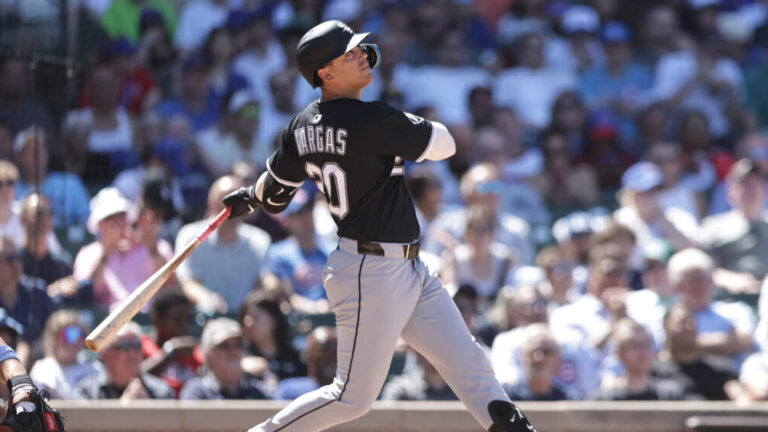
MIGUEL VARGAS (3.101): $4,000,000
The Case: Vargas enters arbitration off the back of one of the best platform seasons in recent memory, earning an All-Star selection while hitting 33 HR’s to the tune of a 134 wRC+.
Austin Riley (2021, $3.95M salary) provides the strongest comparison after also posting a 33 HR platform season with a 136 wRC+. The two also share a very similar pre-platform track record with one prior qualifying season and career wRC+ marks of 82 for Vargas and 86 for Riley, while Vargas holds some career PA bulk advantages even after extrapolating Riley’s shortened 2020 season.
Much of Vargas’ extra bulk came in seasons where he was optioned, while Riley entered as a Super Two with roughly two and three-quarters seasons of service, and both entered the market as 2x qualifiers. The career path and platform-year production are too similar to create much separation, and I project Vargas slightly above Riley at a $4.0M total salary.
Andy Pages (2026, $3.7M proj. salary) is a 2x qualifer that will try and use Vargas to drag him up the market. However, Pages lacks the true standout season that Vargas has and also comes with less career bulk.
Tender Prediction: Vargas will be tendered a contract. It is an interesting case due to his unique career path and the difference in bulk between him and Riley, which gives Vargas’ representatives room to get aggressive. I expect the case to settle, but there is legitimate hearing potential. Tender.
CHRIS MURPHY (3.053): $850,000
The Case: Murphy enters arbitration with 116 career IP across 76 appearances and 3 starts, but only 3 HLD and 2 SV with a 4.34 ERA. He threw 33.2 IP in his platform season across 33 appearances and 3 starts with 2 HLD, 1 SV and a 4.81 ERA, while also spending significant time off the active roster throughout his career.
J.T. Chargois (2022, $850k salary) provides a useful historical reference after throwing only 22.1 IP in his platform year with 3 HLD and no saves, but Chargois entered arbitration with 152.2 career IP and 27 HLD. Murphy has more platform bulk and a save, but Chargois’ career leverage advantage is enormous.
Hunter Harvey (2022, $870k salary) threw 39.1 IP with 6 HLD and a 2.52 ERA while entering arbitration with much less career bulk, but again had significantly more traditional leverage production.
Murphy’s starting experience and innings keep him from falling to the absolute bottom of the market, but neither his career nor platform season creates an argument to get above these cases. I project an $850k total salary.
Tender Prediction: Murphy will be tendered a contract, and the case should settle without needing to go to a hearing. Tender.
JORDAN LEASURE (2.162): $870,000
The Case: Leasure enters arbitration with 114.1 career IP and 35 combined SV+HLD, but his platform season was essentially destroyed by injury as he threw only 18.2 IP with 3 HLD and a 6.27 ERA.
José Quijada (2024, $840k salary) provides the best comparison with similar career bulk and leverage production while also entering arbitration off a very limited platform season. Quijada performed better when healthy, but the league-minimum increase since his case should push Leasure slightly above him. I project an $870k total salary.
Tender Prediction: Leasure will be tendered a contract, and the case should settle without needing to go to a hearing. Tender.

Written by
Zach Cioffi has seen the game of baseball from both sides of the business, specializing in arbitration, the CBA, contracts, and transactions, with additional professional experience…