
The Blue Jays’ Approach in Japan Can Only Mean Good Things
Kazuma Okamoto was a giant addition for the Blue Jays in 2026. If they want to contend in 2027, they must continue bringing in Japan's best.
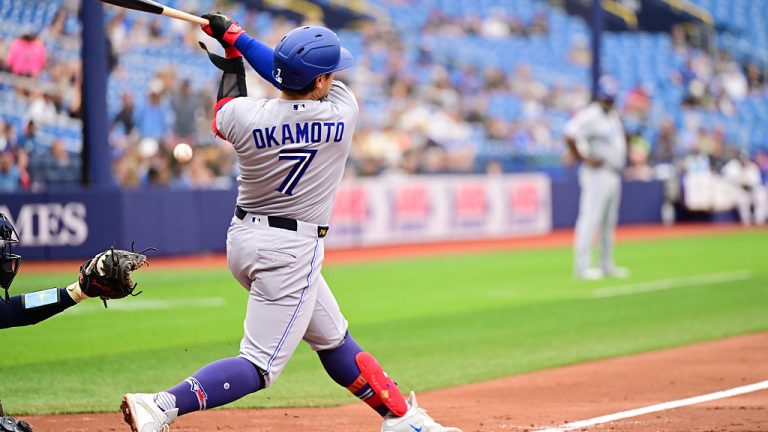
Kazuma Okamoto was a giant addition for the Toronto Blue Jays in 2026. If they want to contend in 2027, it’s time for Toronto to continue bringing in Japan’s best.
With no definitive start date to the 2027 MLB season (and a tentative lockout starting December 1st), I anticipate teams are going to attack the posting market strongly. For the Blue Jays, there are a couple of players who would make excellent additions to their roster.
During his end-of-season press conference, Mark Shapiro mentioned that the team would be sending a contingent to Japan to expand their presence in the area. While that seemingly pertains to business (and the overall growth of the team’s identity in the country), it has the bonus of scouting players from the area. By adding another player from Japan to their team, they could solidify themselves as a top-tier destination for foreign players.

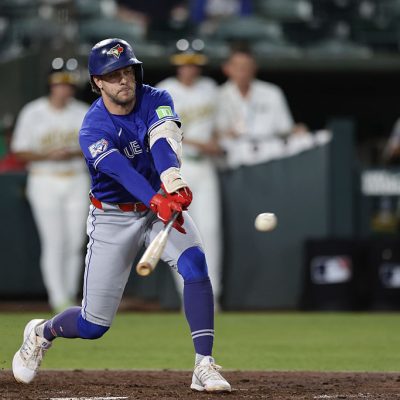
Adding One More Power Bat
Okamoto did one thing very well for the Jays: hitting for power. If they want to double down on power, Teruaki Sato is the perfect addition. Primarily a third baseman (a position that’s now obviously blocked), Sato has outfield experience, playing 18 games there last season. During the 2026 World Baseball Classic, he shifted to right field while Okamoto manned the hot corner; could that be where he ends up in 2026?
Sato’s stats from the past couple of seasons have been pretty remarkable. In 2025, his 40 home runs led NPB and were one of many reasons he won Central League MVP (putting together a slash line of .277/.345/.579 also helped). He continued his success into 2026, where he deposited 38 and improved offensively to the tune of a .314/.392/.622 line. While he didn’t earn the home run crown – he was second – Sato led the league in doubles, average, slugging%, OPS, wOBA, and wRC+.
The main detriment to adding Sato is he is very strikeout-heavy. Okamoto came into MLB with the “swings a lot” scouting report; Sato takes that to the extreme. Over his career, Sato has struck out at least 133 times every season; Okamoto never eclipsed 132. In 2026, Sato’s 158 strikeouts were the second most in the league, and his 26.6 K% tied for third-worst. So while he does walk quite a bit (he finished fourth in walks), he’ll definitely need to cut down on the Ks.
Looking at his scouting report, defensively Sato isn’t anything special and would be in the lineup for his bat, not his glove. He also bats left, meaning they’d be adding another bat to their seemingly endless supply of southpaw outfielders. If they’re comfortable with him in left field, it’d be a great move. Toronto finished dead last in MLB in homers in 2025, and desperately needs some power for their lineup. Sato might swing and miss a ton, but he’ll knock enough out of the park to balance it out.
Adding a Bat with MLB Experience
While the trip to Japan might aid in bringing players over from NPB, it could also help in signing a current free agent. Seiya Suzuki (as of a couple of days ago) is now a pending free agent after his five-year contract with the Chicago Cubs has come to an end. What Sato lacks in outfield experience, Suzuki brings, along with some definite oomph.
While he’s not going to hit as many home runs as Sato (Suzuki had 26 in 2026), he’s already established himself as a solid MLB hitter, putting together an excellent .270/.368/.473 line this season. Against all qualified hitters on the Jays this season, that would’ve put him second in average, first in OBP, and first in slugging. Those 26 home runs would’ve also been second on the team and 11 more than the next Blue Jay.
Another remarkable development has been his turnaround defensively. Toronto had a couple of players who were very evidently liabilities in the outfield last season, and a couple of years ago that would’ve been the scouting report on Suzuki as well. It got to the point that in 2025 he was primarily used as DH, appearing in 102 of his 151 games at the position.
Given the opportunity to be the every-day right fielder in 2026, Suzuki wasn’t just a league-average defender; he was a great one. After four years of a fielding value in the negatives, Suzuki was worth +8 in 2026, aided by his 5 OOA (90th percentile), +4 Arm Value (94th percentile) and 89.9 Arm Strength (85th percentile).
Now, obviously it’s hard to be a bad defender when Pete Crow-Armstrong catches everything; however, Suzuki would be going from an elite centre fielder in PCA to another very strong one in Brett Bateman, meaning he wouldn’t have a ton to worry about.
Suzuki would be another right-handed hitter, which isn’t necessarily a bad thing. It would likely shift either him or Addison Barger to left field and provide Anthony Santander with more regular at-bats as the DH (if he’s even a thing anymore). I’d anticipate Toronto being an immediate contender for Suzuki’s services, and likely the team to beat in terms of negotiations.
Adding a Starter with Flexibility
Toronto’s starting rotation currently consists of Dylan Cease, Jose Soriano, Trey Yesavage, and a whole lot of question marks. Adding an arm such as Kaima Taira or Hiromi Itoh would be a solid addition to the back of the rotation. That’s not to say there aren’t risks.
Tatsuya Imai was the only pitcher posted from NPB who signed with an MLB team in 2025, and his season wasn’t one that Houston Astros fans look at kindly. Before transitioning to the bullpen in August, he had an ugly 5.83 ERA over 15 starts, which included 40 walks over 58.2 innings. His numbers in the ‘pen were much better (2.00 ERA, lower WHIP, and SO/W); however, that’s likely not what the ‘Stros were looking for when they signed him to a three-year deal.
The year before had three pitchers who’ve had serious struggles (Tomoyuki Sugano, Shinnosuke Ogasawara, and Roki Sasaki), although Sasaki has shown stretches where he can be elite. While there have been flashes, Sasaki, like Imai, was moved to the bullpen at the end of the season, while Ogasawara is back in Japan. There’s hope that Itoh and Taira will provide more of an immediate impact.
While neither of the two is as tall as the average pitcher (Taira is 5-foot-8, Itoh 5-foot-9), they both possess the pitch mix to get hitters out. That’s not to say there aren’t warning signs. For Itoh, he’s coming off his first “down” season since 2023. While he won the Sawamura Award in 2025 as the league’s best pitcher, in 2026 he increased his ERA by 0.64, struck out 36 fewer batters, and increased his WHIP from 1.058 to 1.263. That’s not to say it was a bad season; his ERA was 3.18, and he struck out 159 batters, which was good for third in the league. However, NPB is definitely a more pitcher-friendly league.
Itoh isn’t going to blow you away with velocity (his fastball averages around 93 MPH), but instead relies on a pitch mix that includes splitters, cutters, sweepers, sliders, and curveballs to challenge batters. Importantly, he doesn’t walk a ton of hitters (34 bbs in 2026), but he struggled to limit contact (his 184 hits allowed led NPB by 35).
For Taira, the scouting report is way different. He’s built like a linebacker, and what he lacks in height he makes up for tenfold in velocity. Taira’s fastball averages in the high-90s, and at 26 is three years younger than Itoh. His main question is how he would be utilised.
Coming into 2026, Taira was viewed as one of the best relievers in NPB. In 2025, he went 31-for-35 in save opportunities for the Seibu Lions, and pitched to a 1.71 ERA. However, Seibu viewed him as a starter and transitioned him back into the rotation in 2026, and it worked out phenomenally.
In his first full season in the rotation since 2023, Taira posted a league-best 1.36 ERA and only allowed 95 hits over his 23 starts. There is caution, however. Along with the injury that moved him out of the rotation in 2024, Taira has missed time recently due to infectious disease protocols, along with a left calf strain and right forearm discomfort.
Still, Taira led NPB in ERA in 2026 and proved that he can excel no matter where he’s utilised. Toronto’s bullpen isn’t an area of concern, so if they’re convinced he can contribute to the rotation, he seems like he’d be an amazing addition. Unlike Itoh and Sato, who are almost certainly going to be posted, Taira’s status is still a bit iffy.
If he makes his way to MLB, he’ll be highly sought after, and for good reason.
The Importance of Addition
As of right now, the Los Angeles Dodgers seem to have the Japanese market on lock. I mean, it’s hard not to when you have Shohei Ohtani and Yoshinobu Yamamoto on your team. However, adding a major player to complement Okamoto would put Toronto right up there and only increase their market in the country. It’s never a bad thing to branch out, and making a splash in Japan would only improve morale going forward.
It’s also important to add that the Blue Jays have done their part in Japan already. Back in November of 2025, they put their logo on the canvas floor and ring posts of a WBC Bantamweight fight in Japan between Takuma Inoue and Tenshin Nasukawa. Unfortunately, it didn’t seem like they got league permission to do so, and they caught quite a bit of slack for it (apparently it was an unpaid sponsorship). I think adding another Japanese player to the roster might be a mildly easier move.
Become a Member of Just Baseball
Subscribe and upgrade to go ad-free!
* Save 25% by subscribing annually.

Written by
Ethan has been writing for Just Baseball since 2026, and is one of those people who never stops talking about sports. A graduate from the College…