
5 Things We Learned About the Blue Jays in 2026
Amid all the negatives, there were glimmers of hope for the Blue Jays' future. So, what can we expect from this franchise in the years to come?
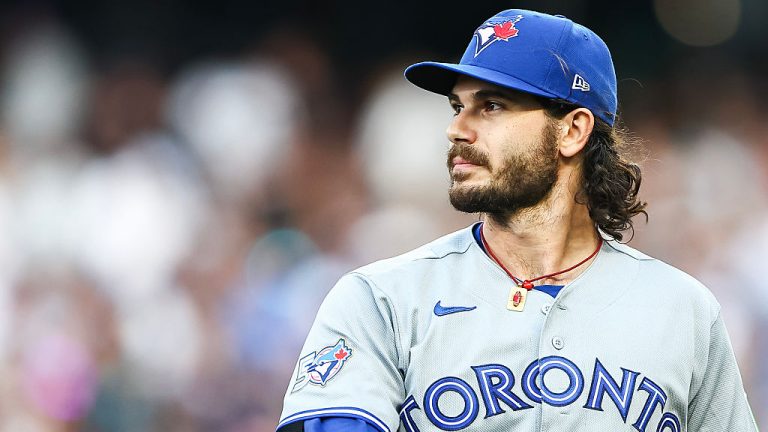
There’s no sugarcoating it: The 2026 season was nearly a disaster for the Toronto Blue Jays. After coming so close to the promised land in 2025, it was a step back in many aspects this season.
But amid all the negatives, there were glimmers of hope for the Blue Jays’ future. They worked their way back into the playoff picture toward the end of the season, and there’s reason to believe this team can bounce back in a big way in 2027.
So, what can we expect for this franchise in the years to come? Let’s dive into what we learned about this team in 2026.
1. Teams Need Power
Eight Toronto Blue Jays hit 10 or more home runs in 2025. That number dropped to four in 2026 (with two of them hitting exactly 10). That’s a problem. Vladimir Guerrero Jr.’s disappointing season has been well documented, but almost every single returning player in 2026 saw a dip in their slugging percentage from last season (the exception being Andres Gimenez, who raised his from .313 to .359).
Overall, the team hit 39 fewer homers this season (191 to 152), which put them smack dab in last place in the league (last year, they tied for 11th). Obviously, you can point fingers at certain players, but injury-riddled seasons for Alejandro Kirk, Addison Barger, George Springer, and Anthony Santander definitely took their toll.
Last offseason, the Jays brought in a power bat in Kazuma Okamoto, and I expect more of the same this winter. Okamoto was everything Toronto could have asked for and more, and without his 33 home runs, who knows how much worse the team could’ve been. What’s crazy is that 33 home runs is the most a Blue Jay has hit in a season since Guerrero. and Marcus Semien each hit 40+ in 2021. I think Toronto wants to improve on that in 2027.
There are a couple of intriguing names available as free agents this offseason, and Toronto has already been linked to a couple of them. If they really wanted to make a splash in the Japanese market, one or both of Seiya Suzuki and Teruaki Sato could provide that extra oomph.
Sato has hit 30+ home runs and recorded 100+ RBIs in consecutive seasons with the Hanshin Tigers, while Suzuki has hit 20+ homers in four consecutive seasons for the Chicago Cubs. Additionally, Suzuki’s OPS (.841) would’ve led the Jays by a considerable margin (among qualified hitters, Okamoto’s .762 OPS led the team).
2. Teams Can Never Have Too Many Starters
Going into this season, one of the most common questions was, “How the heck are the Blue Jays going to use all of their starters?” Well, at year-end, their IL consisted of Shane Bieber, Dylan Cease, Jose Berrios, Cody Ponce, Patrick Corbin, Jameson Taillon, Bowden Francis, and Jake Bloss. That’s eight starting pitchers (four of whom pitched in one or fewer games for the Blue Jays).
Over the past two seasons, Toronto has used a lot of pitchers to start games (25 of them total), but this year (especially toward the end of the season), it became evident that there was a real need for another impactful arm. Of the starting pitchers who made their team debut in 2026, only Dylan Cease (5.5) and Jameson Taillon (0.2) put up a WAR above 0. Obviously, they made a big swing in adding Jose Soriano at the deadline, but it became obvious that, in case of an emergency, their backup plans were limited.
While Toronto does have a couple of strong pitching prospects (Nolan Perry, Daniel Guerra, and Johnny King as the standouts), it seems unlikely that any of them would make an immediate impact. They also have a ton of starters who are free agents (Max Scherzer, Corbin, Taillon, Bieber). As of right now, their 2027 starting rotation consists of Cease, Soriano, Yesavage, and a whole lot of question marks.
Looking at the free-agent class, there’s one player who would make Toronto an immediate contender (Tarik Skubal) and a lot of names that would help bolster the back of the rotation. If not Skubal, adding one or two pitchers from a group that includes Dustin May, Foster Griffin, and Clay Holmes would significantly improve morale.
It’s not just major league options that need to be improved. Toronto cycled through CJ Van Eyk, Lazaro Estrada, Chad Dallas, Simeon Woods Richardson, John Klein, Michael Lorenzen, Austin Voth, and Josh Fleming in an attempt to gain some innings. No one from that group stood out all that much, so I anticipate a slew of minor league deals for starters with a little more success.
3. There Might Not Be a Better Catching Duo in the League
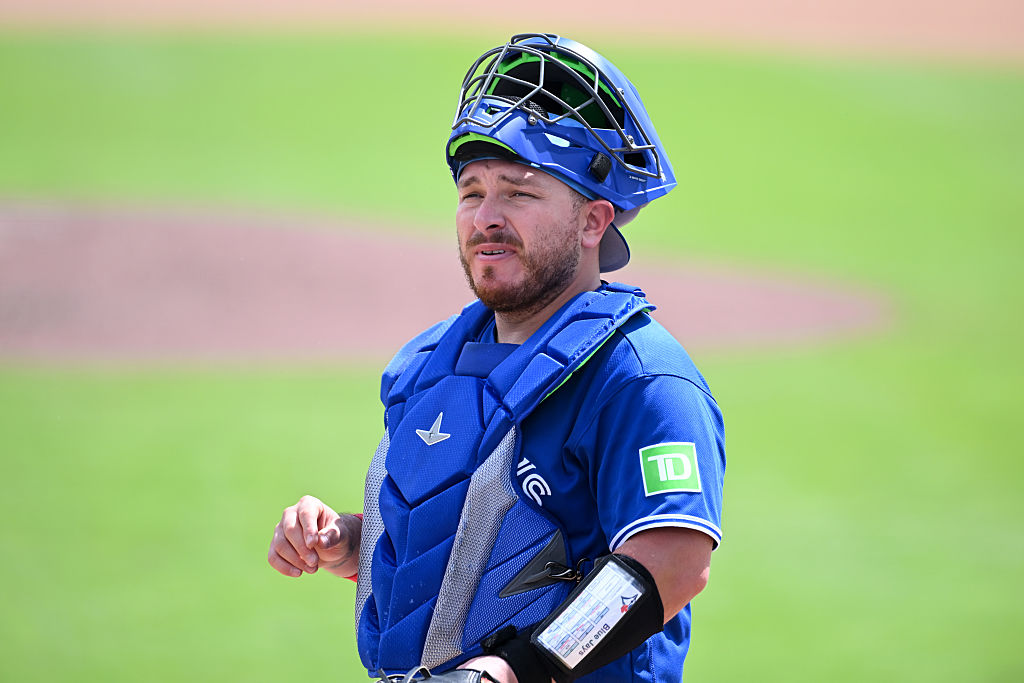
It was expected that Tyler Heineman would fall back down to earth offensively after 2025, and unfortunately, he did. However, what few expected was the emergence of Brandon Valenzuela, whose strong play earned him the backup spot in late May.
After Alejandro was placed on the 60-day IL on April 4th, the eyes turned to the rookie catcher. Acquired at the 2025 trade deadline, the scouting report on Valenzuela was a solid defender with some pop. But Valenzuela wasn’t just a solid defender; he was an exceptional one. In his 91 games with Toronto, he was worth +12 Fielding Run Value, second-best in MLB among catchers. That was thanks to his Caught Stealing Above Average (+8, 2nd in MLB), Framing Runs (+7, 2nd in MLB), and Pop Time (1.88 secs, 9th in MLB).
Offensively, he wasn’t incredible; however, he did mash nine home runs, putting together a slash line of .226/.311/.377. A lot of his struggles came against lefty pitchers, as he put up a disappointing line of .194/.304/.358 off of them. Offense isn’t incredibly important for backup catchers, but knowing that you can slot him into the lineup when Kirk needs a day off and not be overly worried is a definite plus.
Speaking of Alejandro Kirk, once he returned to health in the latter part of the season, he was one of a few really strong performers. While he was activated from the IL on June 12th, it took a couple of weeks for the offense to return. But from July on, he was back to being a weapon at the plate. Kirk hit .305/.385/.446 from July 1st onwards and showed off his “elite” speed by stealing another base (if you blinked, you might’ve missed him).
Defense has never been an issue for Kirk, and that was true yet again this year. While he might not have top-of-the-league Pop Time, he was the best blocker in MLB (15 blocks above average) and finished tied with Valenzuela for 7 Catcher Framing Runs. Altogether, he had a Fielding Run Value slightly behind Valenzuela (+10) but still 5th in the league.
That’s +22 Runs behind the plate for the duo, +5 higher than the next-best combo, who spent the whole year on one team (Dillon Dingler and Eduardo Valencia combined for +17 for Detroit, 15 of which came from Dingler).
4. The Bullpen is Elite
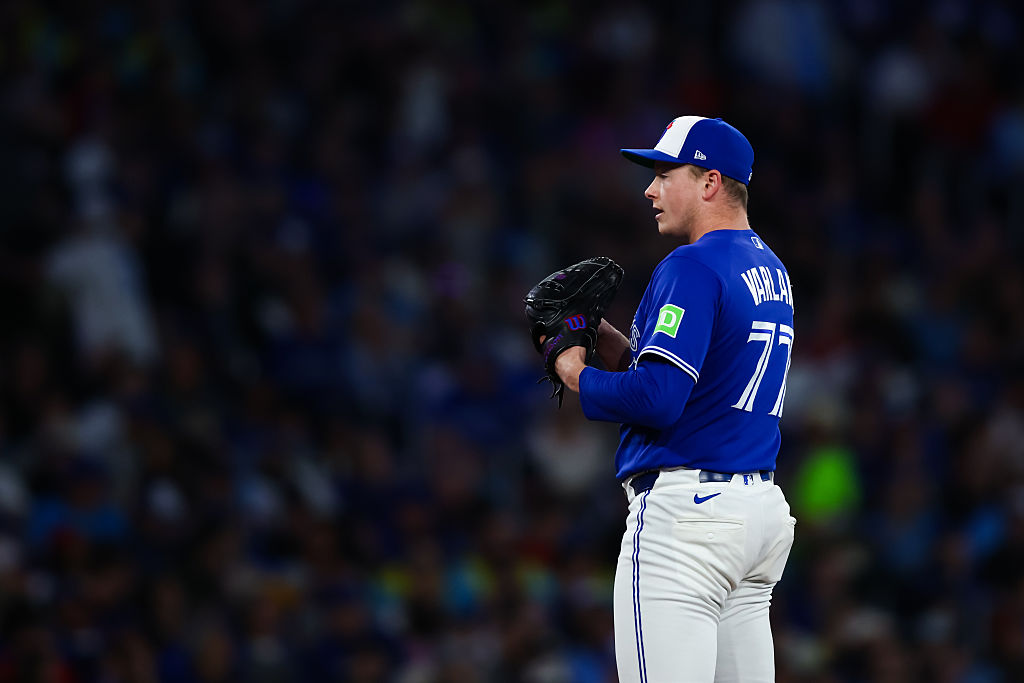
It’s funny, every season it seems like the Blue Jays rotate around a kind of cycle. Season removed, it seems like they can never have all three of starting pitching, relief pitching, and offensive sustainability. This year (when healthy), the starting rotation was still somewhat strong, the bullpen was fantastic, and the offense floundered.
When I say the bullpen was fantastic, I mean it with my full chest. Management has done an absolutely incredible job over the past two seasons bringing in several high-impact arms to the bullpen, and that came out in full force this season. Their 1-2-3 punch of Spencer Miles, Tyler Rogers, and Louis Varland is arguably the best 7th, 8th, 9th inning combo in the league, and that’s not even mentioning the other arms.
Those three showed why Toronto’s bullpen is arguably the best in baseball. Varland has done everything and more to earn Reliever of the Year in the AL (1.27 ERA, 35/37 on saves, 11.2 SO9), but Rogers (1.77 ERA, 33 holds) and Miles (2.63 ERA, 1.71 as a reliever) never really caused fans to feel afraid late in games.
Arguably the most remarkable was Miles. Picked up in the Rule 5 Draft by Toronto, the rookie fired 95.2 innings for the Jays this season after throwing a total of 14.2 innings in the minors since 2022. Miles started the season in low leverage and finished the year as the No. 3 option out of the ‘pen. Kudos to him and the Jays’ scouting department.
It’s also important to highlight the other pitchers who made the group so dominant. Braydon Fisher and Mason Fluharty (who led MLB in appearances) both rarely faltered for Toronto, and late-season acquisition Paul Sewald did very well in his limited action for the Jays.
Some early-season struggles from Jeff Hoffman and Brendon Little notwithstanding, it became evident very early on that Toronto’s bullpen would be hard to come back against. The big problem was teams weren’t coming back late because they were already winning (it seems like every game they were down 3-1 late).
5. Nothing is Guaranteed
Toronto entered 2026 as World Series contenders, and they finished below .500. You can blame one thing or the other, but as a whole, the team failed to live up to the magic of last season.
Yes, the returning players had worse seasons, but the newbies brought some immediate impact. Along with Okamoto, Valenzuela, and Miles, rookies like Brett Bateman, Charles McAdoo, Jose Rodriguez, Brendan Cellucci, and Ricky Tiedemann impressed in their limited action. While it was heartbreaking seeing the Jays trade Kevin Gausman, Bateman specifically seems like he has the potential to be the starting center fielder of the future for Toronto (in limited action, he was worth 2.2 WAR, aided by his +4 Fielding Run Value and +5 Batting Run Value).
But that’s the thing: You can’t predict anything until the season starts. There isn’t a soul on the planet who thought Vladdy would hit one home run at home in 2026. Missing Addison Barger and Anthony Santander for the entire season was incredibly unlikely when you were previewing the team in January.
Jays fans spent the entire season waiting for that inevitable turnaround, but it never happened. In 2025, it was when July hit, but every time they’d get ever closer to that elusive .500 record, they’d fall back down the standings. If they want to contend next season (if there is one), they’ll not only need improvements from their current roster, but a slew of new additions.
With a lockout (more than likely) coming December 1st, we’ll have to see just how aggressive Toronto is. They’ve got hitters returning from injury (Addison Barger, Anthony Santander… hopefully), and a ton of questions in terms of starting pitching. Whether they make some early splashes or wait until normalcy returns, I think it’s fair to say the 2027 Blue Jays will be a very different team. Hopefully in a good way.
Become a Member of Just Baseball
Subscribe and upgrade to go ad-free!
* Save 25% by subscribing annually.

Written by
Ethan has been writing for Just Baseball since 2026, and is one of those people who never stops talking about sports. A graduate from the College…