
Where Does Drew Thorpe Fit in the White Sox Rotation?
Thorpe has pitched well at Triple-A, but the White Sox will give him at least one more rehab start as they try to solve their rotation puzzle.
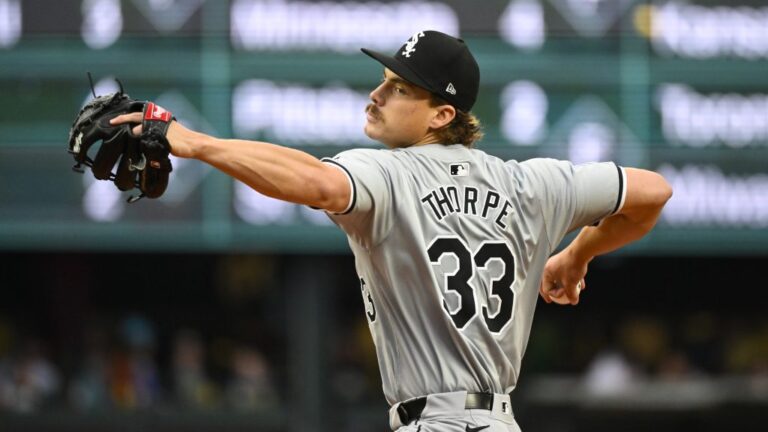
The White Sox spent much of August trying to cover innings at the back of their rotation, but September could bring a different problem.
Drew Thorpe will make his next Triple-A rehab start Wednesday after missing his scheduled turn Sunday. With Davis Martin expected back in Chicago’s rotation the same day, the team may soon have more rotation options than spots.
The South Siders enter September at 72-65 with a three-game lead over Cleveland in the AL Central. As they try to secure their first division title since 2021, there is little room for evaluation starts down the stretch.
Thorpe could soon become part of the rotation puzzle. The 25-year-old had been scheduled to make his eighth rehab appearance and fourth for Triple-A Charlotte on Sunday, but Shane Murphy started in his place. Scott Merkin reported Monday that Thorpe will instead start Wednesday for Charlotte. The White Sox have not announced why his start was pushed back three days.
Thorpe has not pitched in the majors since July 31, 2024. His rookie season ended after surgery to shave down a bone spur in his right elbow, and setbacks the following spring led to Tommy John surgery that wiped out his entire 2025 season.
He returned to game action in July and eventually reached Charlotte, where he worked up to 87 pitches while leaning heavily on the changeup that helped make him the centerpiece of the Dylan Cease trade.
Before Sunday’s change, MLB.com had identified Thorpe as a pitcher who remained in play to help the White Sox during September. His workload is back near a starting level, leaving a more important question about what version of Thorpe Chicago could be getting back.
Thorpe’s Fastball Looks Different
Thorpe made nine starts as a rookie in 2024 and finished with a 5.48 ERA across 44 1/3 innings. His changeup already looked capable of getting major league hitters out, producing a 37.9% whiff rate and a +5 run value on Statcast.
The fastball was the bigger issue. Thorpe averaged 91.0 mph with the pitch, while hitters slugged .566 against it and missed on only 7.7% of their swings. Statcast graded the four-seamer at -6 runs.
With the changeup already established, the fastball was the pitch Thorpe needed to improve. A slightly harder four-seamer with enough carry to stay above barrels could force hitters to respect the upper part of the zone, making it harder to gear their approach toward an 81 mph changeup moving in a different direction.
His Triple-A starts have offered some evidence that the pitch may be improving.
Charlotte Has Been About the Changeup
Thorpe’s rehab began July 18 in the Arizona Complex League before stops with High-A Winston-Salem and Double-A Birmingham. He reached Charlotte on August 12 and allowed one earned run over five innings in his Triple-A debut, giving up three hits with six strikeouts and no walks. He threw 52 of 76 pitches for strikes.
The changeup immediately looked familiar, generating eight whiffs on 17 swings. His four-seamer averaged 90.8 mph and reached 93.2, with individual pitches also flashing more vertical carry than the version Chicago saw during his rookie season.
One week later, Thorpe allowed two earned runs over five innings against Scranton/Wilkes-Barre, striking out six and walking two on 83 pitches.
The box score did not fully reflect how often Thorpe missed bats. He generated 15 whiffs, the most by any Triple-A pitcher that day. Eleven came on only 15 swings against the changeup.
The fastball reached 94 mph and produced three whiffs of its own. One came against Anthony Volpe at the top of Thorpe’s velocity range.
The 94 mph reading drew attention, but some of the pitches below that number may have been more meaningful. Several four-seamers between 92-93 mph reached 19-20 inches of induced vertical break. One came in at 92.9 mph with 20 inches of IVB and only two inches of arm-side movement.
Induced vertical break measures how much a pitch resists gravity because of spin, so a high-IVB fastball stays on plane longer than hitters expect. That pairs well with Thorpe’s changeup, which arrives roughly 10 mph slower with more arm-side movement and has more time for gravity to pull it toward the bottom of the zone.
That is why the 94 mph reading is less important than whether Thorpe can repeatedly throw credible fastballs.
Topping out at 94 mph would be a bonus, but Thorpe’s fastball only needs to be effective enough to prevent hitters from selling out and keep them off balance.
Changeup Held Up
Thorpe’s fastball backed up against Memphis on August 25. His four-seamer averaged 90.6 mph and topped out at 92.7, though it still carried roughly 18 inches of induced vertical break.
He allowed six hits and two earned runs over 4 2/3 innings with one walk and three strikeouts. Thorpe also reached 87 pitches, his highest total of the rehab assignment.
Once again, the strikeout total did not capture how often Thorpe missed bats. He generated 11 whiffs, including nine on the changeup, and all three strikeouts ended with the pitch.
He threw 40 changeups among his 87 pitches. Memphis hitters swung at 22 and missed nine. They also produced only one hard-hit ball on 18 balls in play, across all pitches. The four-seamer generated just one whiff, another reminder that improved shape alone will not turn it into a swing-and-miss pitch.
Across three Triple-A starts, Thorpe has thrown 14 2/3 innings with 15 strikeouts and three walks while allowing five earned runs. His changeup has generated 28 whiffs on 54 swings, a 52% whiff rate.
The sample is still too small to say Thorpe is returning with a meaningfully different fastball, especially against Triple-A hitters. The changeup has missed bats in each outing, while the four-seamer has flashed more carry and occasional velocity than Thorpe showed during his first major league stint.
Reaching 87 pitches in his previous outing already answered much of the workload question. Wednesday will provide another look at Thorpe’s stuff after an eight-day layoff.
Martin Is Returning to the Rotation
Thorpe is not the only starter nearing a return.
Davis Martin landed on the 15-day injured list August 14 after a blister on his right middle finger affected his grip against Cincinnati. He made a rehab start Thursday and worked five scoreless innings for Charlotte, allowing one hit and one walk with five strikeouts on 59 pitches. Forty went for strikes.
Martin walked the first batter he faced before settling in and finishing only one over the minimum. His lone hit allowed was a fourth-inning double.
The outing was efficient, though his top-end velocity remained below where it was earlier in the season. As Jim Margalus noted at Sox Machine, Martin threw only two pitches at 95 mph or harder. When he was at his best earlier this year, he reached 95-97 more frequently and used that extra velocity to help the rest of his arsenal play up.
His command had also slipped before the injured list stint. Martin opened the year with a 2.00 ERA through 11 starts, striking out 71 and walking 14. Beginning June 2, he posted a 7.06 ERA over his next 13 starts with 40 strikeouts and 25 walks. His season ERA climbed to 4.32 before the blister sent him to the injured list.
Martin has since rejoined the White Sox. James Fegan reported Monday that he is expected to be activated from the injured list Wednesday and start against the Astros. With Martin headed back to the rotation, Thorpe becomes the next arm Chicago may have to fit into the mix.
How Thorpe Fits Into the Rotation
Chicago’s rotation for the series in Houston is now largely set.
Anthony Kay started Monday, and Sean Burke is lined up for tonight. Martin is expected to return from the injured list Wednesday and start against the Astros, with Luis Castillo scheduled for Thursday.
Thorpe will also pitch Wednesday, but for Charlotte. That removes him from the immediate rotation picture and pushes the more interesting question beyond the Houston series.
Erick Fedde and José Urquidy offer the most flexibility because both have already worked outside a traditional rotation role. Urquidy covered five innings in relief Sunday during the series finale in Minnesota, while Fedde moved between starting and bulk work throughout August.
If Thorpe eventually joins the rotation with Martin already back, Fedde and Urquidy could both remain in multi-inning roles. That would leave Kay, Burke, Martin, Castillo and Thorpe as the five traditional starters without requiring Chicago to carry a six-man rotation.
However, this is a projected rotation based on recent usage and the current roster construction, rather than anything the White Sox have announced.
The schedule could provide a natural decision point after Thorpe’s next start. Chicago is off September 7 before opening a three-game series against Pittsburgh on the 8th. If Wednesday proves to be Thorpe’s final rehab outing, a start against the Pirates would put him on five days of rest.
The White Sox have not indicated that Thorpe will return against Pittsburgh, but the off day would give them room to rearrange the rotation without asking anyone to pitch on short rest.
Rosters expand from 26 to 28 players today, and Chicago has both additional spots accounted for. Tanner McDougal, who has been working in relief, will be activated as the additional pitcher. Tommy Pham is expected to join the active roster as the additional position player after being acquired from Philadelphia.
McDougal is already on the 40-man roster, while Pham will require a corresponding transaction. Thorpe presents a separate question. He remains on the 60-day injured list and will need a 40-man spot when he is reinstated.
McDougal’s addition also brings Chicago to the expanded-roster limit of 14 pitchers. Martin’s expected activation Wednesday will therefore require another pitching move before the White Sox have to address Thorpe’s eventual return.
More Roster Decisions for the White Sox
Teel Is Working His Way Back
The White Sox could also get another position player back this week.
Kyle Teel began his latest rehab assignment with Charlotte on August 25. He took another step Sunday by catching all nine innings in a game for the first time since suffering his left ankle sprain, while going 3-for-4 with a double and two RBIs.
Teel said afterward that his ankle was feeling good. White Sox hitting director Ryan Fuller also told the Chicago Sun-Times that Teel is feeling good physically and compared the rehab assignment to another spring training as he works to regain his timing.
A Grade 2 right hamstring strain suffered while playing for Team Italy in the World Baseball Classic disrupted his spring. He later sprained his right LCL in May before the high left ankle sprain sent him back to the injured list in July.
Teel has been clear about what he wants next.
“My goal is to be here as soon as I can,” Teel told MLB.com. “And then it’s to play in October. It starts with September.”
Teel’s return does not appear to be tied directly to roster expansion. Merkin reported Monday that he still has more building up to do with Charlotte as he works his way back from the ankle injury.
Pham is expected to take Chicago’s additional position-player spot Tuesday. The White Sox added him to provide another right-handed bat against left-handed pitching after Everson Pereira and Austin Hays were designated for assignment.
Pham also brings postseason experience, having hit .315/.331/.492 with six home runs in 37 career playoff games. Manager Will Venable said the White Sox will look to find at-bats for him against left-handed pitching and value his experience in meaningful games down the stretch.
His return also creates an unusual reunion. Pham and Erick Fedde were traded to St. Louis in the three-team deal that brought Miguel Vargas to Chicago in 2024. All three are now teammates on a White Sox club fighting for the division two years later.
That leaves Jake Rogers and Drew Romo as the likely catching tandem for the immediate future. When Teel is ready, Chicago will need to make another active roster move to bring him back.
Bonemer Is Already Looking Toward 2027
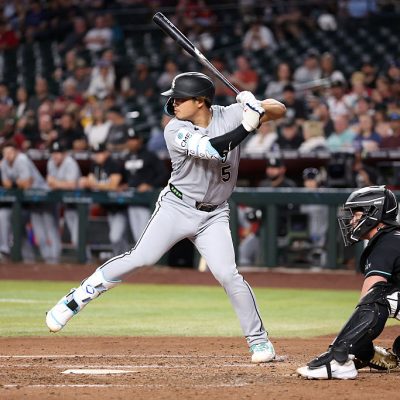
Caleb Bonemer has spent the final weeks of his breakout season getting work in center field. The 20-year-old enters September with 35 home runs and a .944 OPS between High-A and Double-A.
Assistant general manager Josh Barfield told MLB.com that the White Sox view the outfield work as another option for an athletic player who is getting closer to the majors, rather than a move away from the infield.
The experiment comes as Bonemer continues to answer questions with his bat. He has handled the jump to Double-A at 20 years old, while the question of his long-term defensive home remains less settled. Third base remains an option, but additional time in the outfield could open another path to regular playing time.
Bonemer is expected to continue playing center through Birmingham’s season finale on September 13. From there, the White Sox could send him to Triple-A Charlotte for a brief stint before he joins Glendale in the Arizona Fall League, where he will continue working in both the infield and outfield.
A September callup would probably require an unusual set of circumstances. Bonemer is not on the 40-man roster and does not have an obvious everyday role with the current club.
He has done enough offensively to put himself on the doorstep. The next step is finding the defensive home that best clears his path to Chicago in 2027.
The White Sox Are Nearing a Decision Point on Thorpe
Thorpe’s next step is set. He will start Wednesday for Charlotte, eight days after reaching 87 pitches in his previous outing.
With his arm stretched out enough to start, the focus shifts to how his stuff looks after the layoff. Another strong outing would leave the White Sox with a clearer picture of what he could offer during the stretch run.
What comes next should provide the best indication yet of how soon Thorpe will factor into Chicago’s rotation.
Become a Member of Just Baseball
Subscribe and upgrade to go ad-free!
* Save 25% by subscribing annually.

Written by
Adrian White covers the Chicago White Sox for Just Baseball and FutureSox. He studies sports management at Florida Atlantic University and focuses on player development and…