
Top 5 Standout Prospect Returns at the MLB Trade Deadline
Getting the most out of trade assets at the deadline is easier said than done. Here are 5 deals where teams did a great job extracting value.
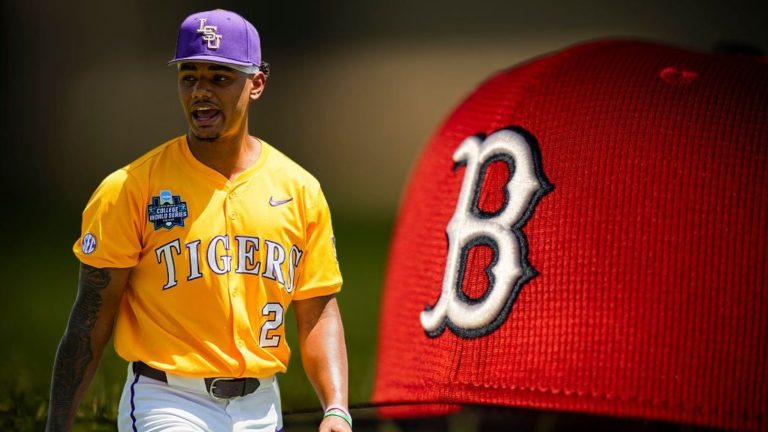
As is the case with every season, a flurry of deals came in at the trade deadline that could make it easy for some to get buried.
From the blockbuster Adley Rutschman deal with the Red Sox to some more under-the-radar swaps like the Dustin May and JoJo trade to Milwaukee, my goal is to highlight the prospect returns that I think selling teams really maximized at the deadline.
This is not to say that the buying teams “overpaid” or made some sort of mistake, but rather more so that the sellers just played their hands well.
1. Orioles Trade C Adley Rutschman to Red Sox for RHP Anthony Eyanson, RHP Kyson Witherspoon, OF Enddy Azocar, C Carlos Narvaez and a PTBNL
Hard to start anywhere else other than the haul that the O’s netted for Rutschman.
Switch-hitting backstops with Rutschman’s defensive chops are not easy to come by, and to pull a deal off within the division for a player with control through 2027 was never going to be cheap.
The Red Sox sorely needed catching help, and Craig Breslow was clearly willing to fork up what was required to help keep his surging team running into October.
Anthony Eyanson is the headliner, a breakout arm who the Red Sox snagged just a little over a year ago in the third round. There was plenty of buzz around Eyanson heading into the season, boasting a bit of an uptick in velocity and an improved arsenal that has mowed through High-A and Double-A hitters to the tune of a 1.69 ERA.
He’s a natural supinator, meaning he cuts most everything he throws, creating a cut-ride action on his fastball that helps him dodge barrels and sets the tone for his secondaries.
The cutter, plus gyro slider and downer curveball tunnel really well off of his heater. Comfortably inside of our top 100 prospects, Eyanson is a high-probability big-league starter with middle-rotation upside.
The natural progression would be to segue into another right-hander in Kyson Witherspoon, who was selected 62 picks ahead of Eyanson last year, but Enddy Azocar is the second-best player in the deal to me. Azocar is a candidate to crack our top 100 prospect update in the coming weeks thanks to his plus raw power that has come with a palatable amount of whiff at High-A as a 19-year-old.
Azocar has already exceeded 113 MPH in the exit velocity department with a 90th percentile exit velocity north of 107 MPH. The jury is still out on whether he can stick in center field, but he is a good athlete who should earn plenty of runway out there.
Now to Witherspoon, the Red Sox first-rounder has been a disappointment in his first pro season. The team tried to work with him to clean up his stabby arm action, which has only resulted in more challenges command-wise. It’s still an intriguing five-pitch mix. The fastballs sit in the mid 90s, but are flat; he hedges that with a quality cutter-slider combination and a changeup that flashes.
Witherspoon will need to find more consistency and repeatability with his arm timing and delivery, but the soon-to-be 22-year-old is a fun project for the Orioles to take on.
2. Cardinals Trade RHP Dustin May and LHP JoJo Romero to Brewers for OF Josiah Ragsdale and OF Alexander Frias
For the second straight year, Dustin May is moved at the deadline for a surprising return. Surely, the effective JoJo Romero helped push this deal across the finish line for the Cardinals to net the prospects they wanted from the Brewers, but if there’s one thing Chaim Bloom can do, it’s build up a farm system, and we are seeing him do that in St. Louis already.
Alexander Frias is a high-ceiling, physically projectable outfielder who made a mockery of the Arizona Complex League by hitting .441/.518/.678 in 32 games before earning a promotion to Low-A, where he has held his own. Given his longer levers, the swing can have a little too much slack at times, likely coinciding with his aggressive nature in the box.
That said, Frias is 18 years old until March of next year, already showcasing above-average raw power with considerable room for more.
Josiah Ragsdale is another hitting development masterclass from the Brewers who took the 2025 seventh-rounder from a deep contact, slappy hitter to a legitimate power threat, which could be lethal when combined with his plus speed and defensive ability in center field.
Ragsdale’s quality of contact floor is high, averaging 91.5 MPH in the exit velocity department with a launch angle of 14.5 degrees.
As a result, Ragsdale has launched 19 homers in 86 games at the time of the trade, more than he hit in 167 games between his three years of college and pro debut last year. The increased damage has come with some more punch outs, but the contact rate sits at a palatable 75%, with his passivity at times contributing to the 26% strikeout rate on the season.
It’s great to see the Brewers go for it, and even with these two high-upside prospects departing, they possess the best system in baseball. At the same time, Frias and Ragsdale immediately jump into the Cardinals’ top five position player prospects.
3. Giants Acquire RHP Ramon Marquez and RHP Marty Gair in Exchange for Luis Arraez and Caleb Killian
Rental bats rarely fetch the return that fans of the selling team hope, but when you have the top rental bat on the market, and you tack on five-plus years of control of a useful reliever in Caleb Killian, and a breakout prospect like Ramon Marquez becomes attainable.
Slated to debut on our top 100 prospect update, Marquez has been one of the more impressive arms at the lower levels this season. His fastball has jumped a tick and a half, averaging just above 95 MPH, setting up what is one of the best changeups in the minor leagues.
The cambio averages 13 MPH of velocity separation with 17 inches of arm side, really putting the brakes on from the heater. Opponents have hit below .100 against the pitch with a 67% whiff rate. Yes, you read that right.
He also has an upper 80s gyro slider that has performed like a strong third pitch as it has ticked up this year. The 20-year-old has struck out 93 compared to just 19 walks in 59 innings.
Gair is a lower-level relief arm, but he has stuff that can play in a big league bullpen with more consistency. The fastball averages 98 MPH with plus carry, which has expectedly overwhelmed inexperienced hitters, but he leans on it 80% of the time. With refinement of his secondaries, Gair could be a quality relief option at the highest level.
4. Orioles Trade to Twins Dean Kremer for Jhomnardo Reyes
A smaller deal that most people likely and understandably ignored, maybe outside of the two fanbases involved, I found the return of intriguing outfield prospect Jhomnardo Reyes for a struggling Dean Kremer–albeit with another year of control after this one–a bit surprising.
That’s not to say it was a bad trade for the Twins, as Kremer has a track record of being a serviceable starter and is still trying to find his footing after coming off of the IL at the start of July.
The 18-year-old Reyes stood out in the Florida Complex League, flashing some intriguing power potential with good bat speed and a knack for pulling the ball in the air. He has posted a max exit velocity of 110 MPH; it’s just a matter of getting his A swing off more consistently and growing into his projectable 6-foot-3, 185-pound frame.
Reyes may slow as he fills, but he’s presently at least an average runner with a plus arm that should give him the potential to be a quality defender in a corner.
5. Mets Trade RHP Clay Holmes and OF Tyrone Taylor for INF Jefferson Rojas
It’s hard to sell a two big leaguers for one prospect deal as maximizing value, but in this case I think the Mets did a good job essentially holding out until the Cubs caved on the steep ask.
With Holmes coming back off of injury and Taylor’s value somewhat limited as a platoon bat–albeit a very good one–packaging the two rentals together to get a top 100 caliber prospect is typically an idea that does not come to fruition.
The Cubs have pushed Rojas aggressively with promotions, starting him at High-A in his age-19 season in 2024 and reaching Double-A in his age-20 season in 2025.
In his second look at Double-A as a 21-year-old this season (he was still 20 on Opening Day), Rojas has really settled in, adding some strength and finding more comfort in the box to get his A swing off more consistently as opposed to the more handsy swing he could fall into when he was battling more experienced pitching.
Rojas will likely slide off of short to second or third base, but his well-above-average feel to hit paired with above-average bat speed and solid production as one of the younger players at each stop make him an intriguing bat to add into the organization for the Mets.
If Rojas can shore up his tendency to pull off of breaking balls, he will project as a plus hitter with average power, though at 21 years old until next April, he has plenty of time to grow into more strength.
Other Notable Returns
Angels Return for Jose Soriano: How refreshing was it to see the Angels front office actually operating and following a process?
Soriano made a leap this season, and the Angels cashed in by way of a top 30 prospect in baseball in Arjun Nimmala as part of a three-prospect package. Nimmala has made progress of his own when healthy this season, seeing his raw power leap well into the plus territory with an approach that has really improved as he has made the leap to Double-A in his age-20 season.
Right-hander Angel Rivero is a fun flier as well, as the 19-year-old has turned some heads in the Florida Complex League with his feel to spin the baseball and heater that features some sneaky life. Eddie Micheletti Jr. is a fine throw-in as well as an above-average bat-to-ball corner outfielder who has had a nice season at Double-A in his age-24 season.
Nationals Return for Luis Garcia Jr.: The return did not feature extremely highly rated prospects, but Paul Toboni has taken the quantity approach on several of his trades since taking over in Washington, and this is another good example of that.
Garica has been awesome this season, but ultimately is a bulk platoon bat with one of the highest chase rates in the game and will likely cost north of $10 million in his final year of arbitration.
The Nationals need all of the arms they can get, and with the offensive pieces they already have at the big league level, arms that can help them sooner rather than later are ideal, even if they’re relievers.
Right-hander Yovanny Cruz recently debuted for the Yankees and immediately becomes one of the Nationals’ most intriguing relievers with leverage stuff.
Ben Grable also boasts a standout upper 90s heater and slider that can play late in games, and he is close to big league ready as well, already striking out bats in droves at the Double-A level.
Jack Cebert is the lone starter in this deal, and while he’s a late-round, older arm with iffy surface-level numbers this season, the right-hander gets plus extension from a below-average release height, setting up an interesting five-pitch mix.
Become a Member of Just Baseball
Subscribe and upgrade to go ad-free!
* Save 25% by subscribing annually.

Written by
Aram Leighton is the Co-Founder and Executive Editor for Just Baseball. A Syracuse University grad, Aram is one of the hosts of the Just Baseball Show…