
Konnor Griffin Is Evolving Before Our Very Eyes
Savvy swing adjustments have helped Griffin look like one of the best hitters in the majors since his 20th birthday.
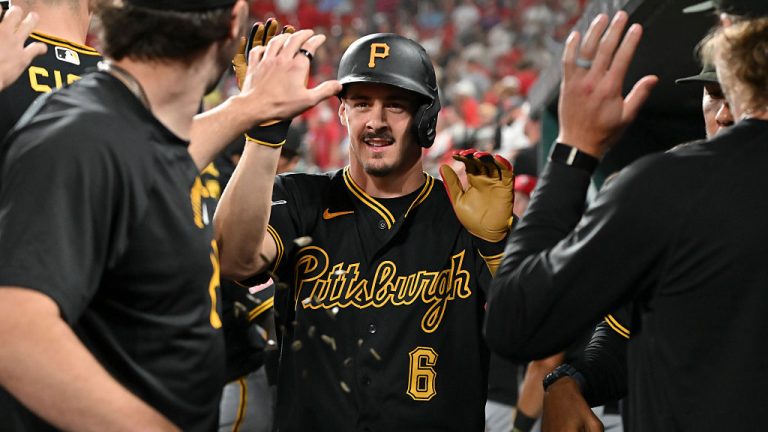
Before this year’s home opener at PNC Park in Pittsburgh, the Pirates made the move their fanbase had been anxiously awaiting ever since spring training: Konnor Griffin was on his way to the show for his major league debut in front of a sold-out crowd that would immediately embrace him.
Griffin would go on to go 1-for-4 in his MLB debut, recording a plethora of firsts along the way, such as his first hit and his first extra-base hit simultaneously. Nearly right after his first game on a big league diamond, Griffin would ink a nine-year, $140 million pre-arb extension that made him the highest-paid player in Pirates history.
Although the 19-year-old was seemingly on cloud nine, the reality of the challenging adjustment to the big leagues struck right away. Between his major league debut and the day before his 20th birthday, Griffin slashed .182/.247/.242 with just three extra-base hits, a strikeout rate over 30%, and a wRC+ of only 38.
Despite a poor start to his big league career, everything changed for Griffin the day he left his teenage years in the rearview mirror. The tweaks he had made at the plate had finally paid off, as he slugged his first big league homer and kicked off one of the hottest stretches of his career.
In fact, Griffin has been one of the best hitters in the sport since his birthday, as he’s reaching the potential he had flashed in the minor leagues.
In every sense of the expression, Griffin is evolving right before our very eyes. It’s been a tremendous stretch for the now-20-year-old, and we’re seeing a glimpse of the truly special talent Griffin can be when he’s playing at his best.
The deeper story is something much bigger than a change in age, though. Griffin has made several important tweaks at the plate, and his numbers reflect these changes quite well. Griffin’s sheer adjustability is shining yet again, as this is one of the best traits a player can have.
Griffin’s Swing Adjustments
Before fully diving into the numbers, we first have to evaluate the swing changes Griffin has made up to this point. His evolution has been a direct result of these changes, as they’ve completely transformed what he’s able to do at the plate and what his offensive ceiling may look like in the near future. Albeit small, these changes have been deeply impactful.
The two swings we’ll be evaluating in this breakdown produced vastly different results. On the left is a swing and a miss Griffin had against the Rays on a triple-digit heater back on April 17. The swing on the right is a double Griffin hit off the top of the wall against the Cincinnati Reds on May 3.
Beginning with his stance, the differences in Griffin’s swing are immediately evident. The first thing that jumps out to me is his weight distribution in his setup:
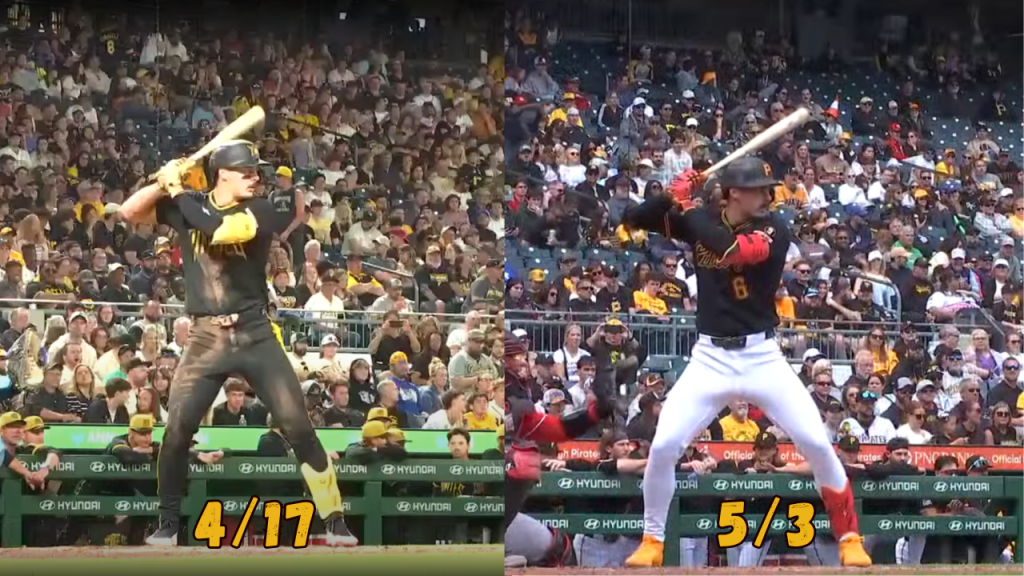
On the left, Griffin’s weight is far more stacked on the back side, allowing his front foot to act almost more like a kickstand. On the right, Griffin’s weight is far more evenly distributed, allowing his weight to be spread out in a 50/50 manner rather than 70/30.
On top of that, Griffin’s bat position is quite different as well. During his swing on the left, his barrel was tipped more over his shoulder and behind his head, which created a far less efficient bat path that we’ll dive into in a few still frames from now. On the right, Griffin’s barrel is tipped more towards the pitcher and closer to being out in front of his body, which is the starter kit for a cleaner bat path that allows him to get straight to the baseball.
Next, these differences become even more exaggerated at the beginning of Griffin’s load:
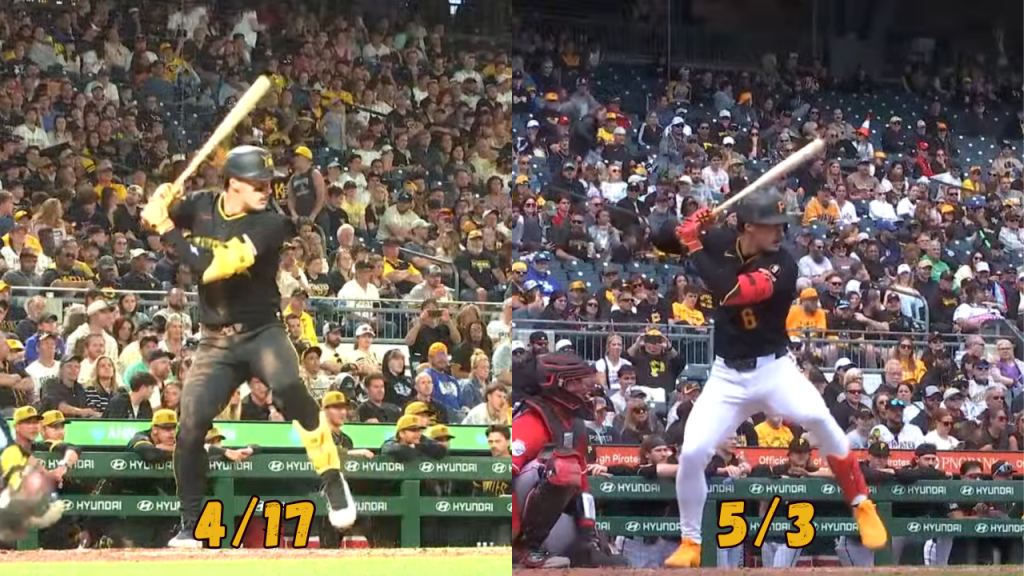
On the left, Griffin begins to load into his back side even further than he had from the beginning, allowing for a weight distribution that reflects a split closer to 80/20, or a number even further.
Because of this, he was stuck on his back side in a manner that didn’t allow him to properly stride forward, and this same move caused him to routinely be late on heaters, a topic that we’ll come back to shortly.
In his new and improved swing, Griffin honestly doesn’t appear to load much more than 55/45 on his back side, which allows him to be far less stuck on his back half. By extension, he then has more flexibility in getting his “A-swing” off more consistently, since he’s not nearly as stuck on his right side.
At the same time, the difference in Griffin’s barrel position is abundantly clear here. On the left, he uses a slight barrel tip, which makes it tougher to work straight to the baseball, as he almost has to drag his barrel through the entirety of the swing.
On the right, this isn’t the case, as Griffin’s barrel remains loaded from his initial setup, allowing for a much cleaner path that works straight to the baseball and avoids any type of “barrel drag.”
On top of this, his leg kick is also a bit smaller, which is very important for his development. This has helped him get his front foot down earlier, allowing him to be even more on time than he had been initially.
The next frame I want to take a closer look at is once Griffin begins to stride a little bit further. Here, once again, his adjustments and initial inefficiencies stand out even more:
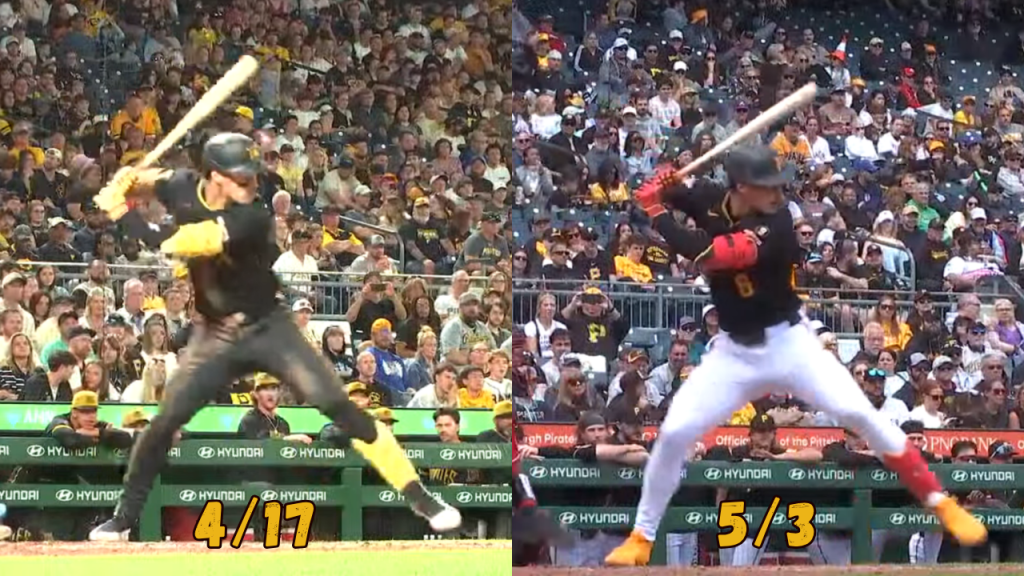
This time, I want to begin by breaking down his bat position first. On the left, Griffin’s barrel is far above his head, and there’s a lot of space between his hands and his upper body. This is where you begin to see the separation that creates the “barrel drag” I previously mentioned, and this move is exactly where he began to get beat against four seamers.
With this part of his swing working behind him in such an extreme manner, he had no opportunity to catch up to high velocity since the only way he could work through the strike zone was to drag his barrel behind him.
On the right, this path is much cleaner. His hands are much tighter, and they’re able to stay a little higher and more connected than before. With this change, Griffin is no longer in a position where he’s dragging the back side of his body through the zone, but instead working straight down to the baseball, allowing him to catch up to velocity better than ever before.
Going a step further, the difference in his weight distribution is quite clear. On the left, Griffin is still far more stuck on his back side, even as he strides forward. On the right, although Griffin is still working behind his front side, he’s doing so effectively, and he’s no longer completely compromised by being stuck.
The next still frame I wanted to focus on is when Griffin actually lands, and this is one of the key moments where you’re really able to see where his previous mechanical inefficiencies were harming him:
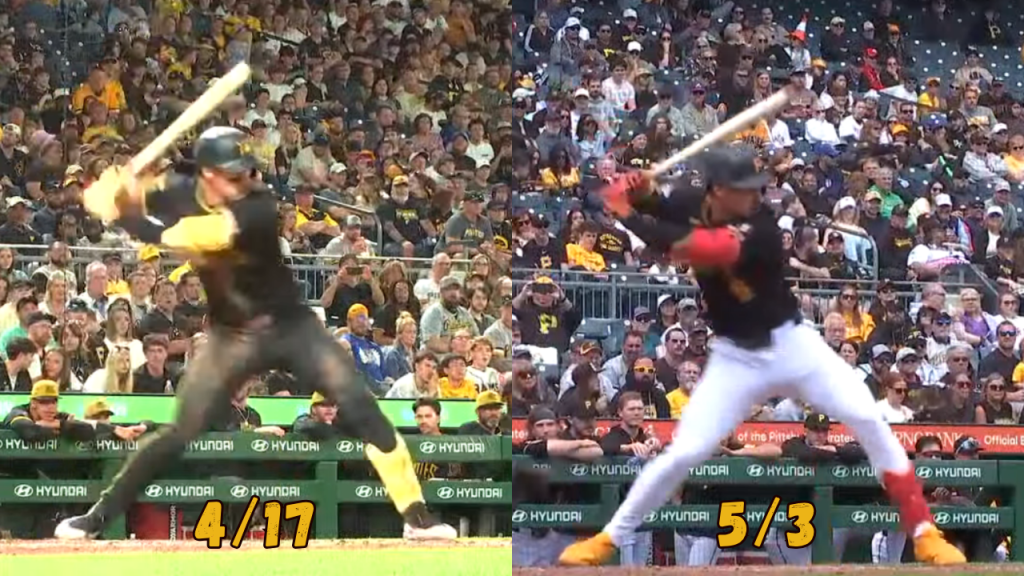
Here, Griffin’s back side begins to collapse completely. His hands begin to drop and drag behind him extremely, and his weight is arguably more unevenly distributed than at any moment yet. You’re able to see the beginning of his barrel dragging behind him, as this is the only way he could get it through the zone.
Fast forward to May 3, and it’s completely different. Griffin’s hands remain up, his barrel has barely moved, and it’s still in a slot that’s quick to the baseball and cuts out the ineffective extra length it had previously.
As for his weight, although Griffin lands a little earlier and more on the front side in this particular swing, he’s no longer stuck, and he’s able to work behind the baseball without the rest of his swing collapsing.
Moving to the next piece of the swing, Griffin’s point of contact:
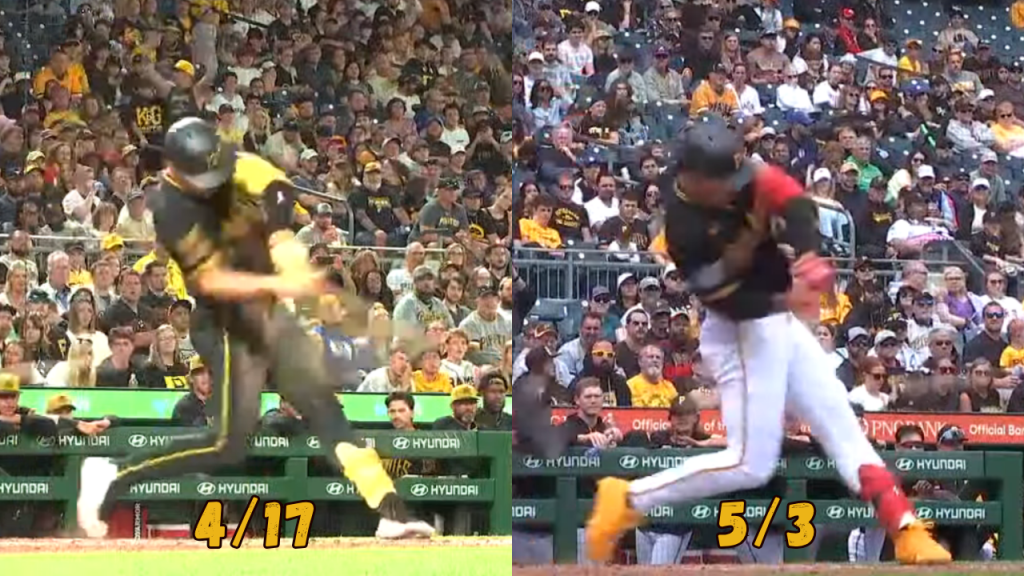
While his mechanical changes are a little less noticeable here than in the rest of the swing, there are still some very important takeaways.
For starters, Griffin’s weight distribution being more even in the swing on the right has had a strong effect on his contact point. On the right, Griffin is a lot more stacked directly over his center of mass, which allows him to keep his head more still, and behind the baseball.
In fact, this is one of the key giveaways to me that Griffin is working behind the baseball correctly, as opposed to being stuck on the back side.
Another key giveaway is the fact that Griffin looks like he has more space here, and although compact, he’s compact in a good way. In other words, on the left, he is moving so tightly that it almost seems as though he’s smushed, rather than keeping a tight turn with more space to work.
This next still frame is likely where the least is visible, but the changes that are seen here are very important:
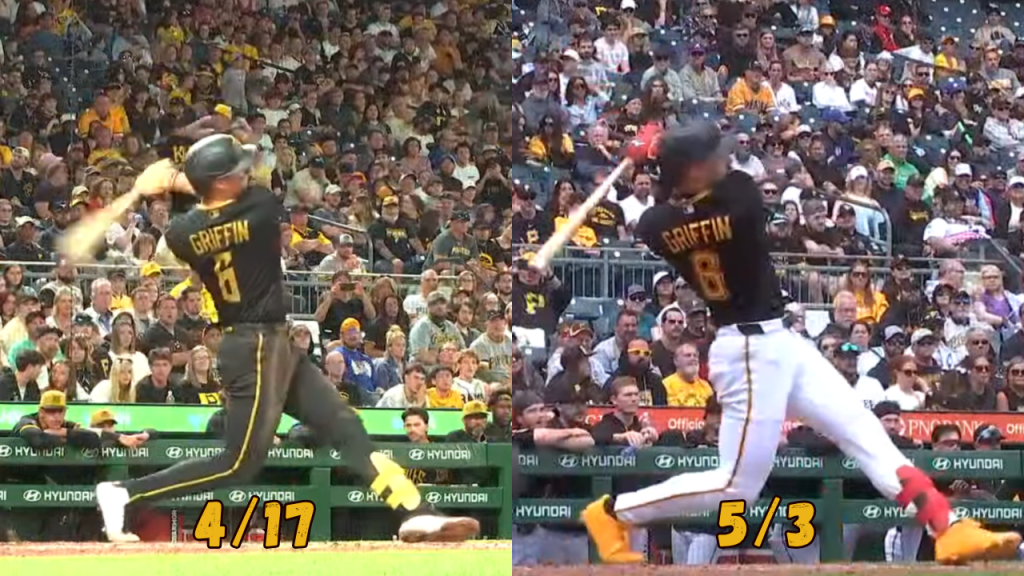
For example, on the right, Griffin finishes in a near flawless position, with his front leg fully straight, and his torso over his back leg. It’s a much straighter and stronger position focused on the center of his mass, which also shows how much stronger he’s able to be throughout the entirety of the swing.
Also, Griffin is still angled more towards center field, which continues to show a stronger control over himself and his swing. On the left, Griffin is falling off more towards the pull side, as his head is pulled towards third base with the rest of his body.
Finally, now that we’ve evaluated the entirety of his swing development, I’d like to introduce a third frame into the picture. This swing is from April 22, the first day I noticed that Griffin appeared to be toying around with staying more grounded and putting an emphasis on his barrel position.
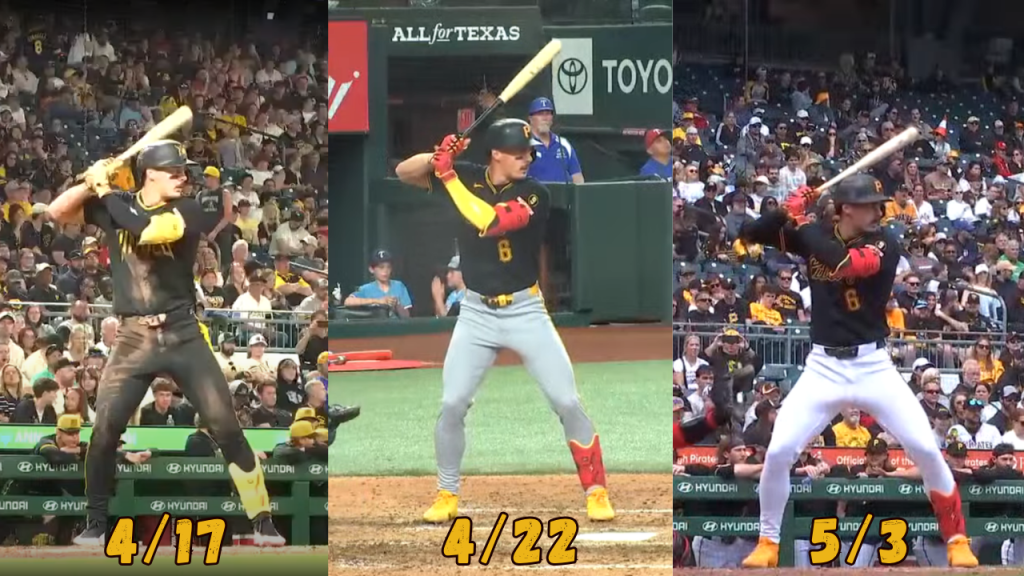
The reason I decided to include this frame in addition to the other two swings was to show that this was a process for Griffin. This type of adjustment didn’t happen overnight, and this speaks volumes to his adjustability and work ethic. He didn’t try to change things in just one or two games, but he let himself get more comfortable, slowly working towards a new and improved swing.
Keep in mind, Griffin was barely 20 years old when this swing adjustment was completed. This level of successful adjustability in such a timely manner at the major league level is almost unheard of, especially for someone of his age. Griffin’s evolution is truly mind-boggling.
With Griffin now in a position where he’s able to work behind the baseball effectively, get his front foot down on time, and work from the ground up, he’s been seeing tremendous results at the plate.
His success is the result of far more than a birthday, but the process of optimizing his swing over the course of a few weeks of hard work.
What Do the Numbers Say?
As I previously mentioned, since Griffin turned 20 years old, he’s been incredibly comfortable at the plate and one of the best hitters in baseball. The game on April 24 was the turning point of his rookie campaign, and a lot of his successes begin to make even more sense after understanding the adjustments he’s made at the plate.
For starters, since his 20th birthday, Griffin has slashed an astounding .344/.390/.521 with three homers, and a 154 wRC+, which is a night-and-day difference from how he was hitting early on.
As a reference, between his major league debut and the day before his 20th birthday, Griffin slashed .182/.247/.242 with just three extra-base hits, a strikeout rate over 30%, and a wRC+ of just 38.
One of Griffin’s biggest weaknesses was his ability to hit fastballs, which we established was a result of his mechanical inefficiencies in the batter’s box. With Griffin being stuck on his back side and having a bigger leg kick, there was no way he could get his front foot down on time to hit high velocity.
However, since tinkering with his swing, he’s grown tremendously against fastballs in general, and especially four-seamers.
In the time before his birthday, Griffin hadn’t recorded a hit against a major league four-seam fastball, while also striking out eight times against four-seamers. This also included a brutal average exit velocity of 85.4 mph, as he struggled to put any real barrel on the baseball. After slugging his first big league home run against a four-seamer, it has been a completely different story.
Since hitting that home run, Griffin has recorded six hits against four-seamers, including four extra-base hits. On top of this, he’s slashing a ridiculous .353/.476/.765 against them with a 1.241 OPS, which shows how much better he’s done against four-seamers because of his swing changes.
Not to mention, Griffin raised his average exit velocity against them by over 2.0 mph, now sitting at 87.6 mph since his birthday. Arguably, the best part of this improvement is that there’s still a lot of room for growth, meaning this might not even be the best performance we’ll see Griffin register against four-seamers.
Against all types of heaters, Griffin has raised his OPS by more than 350 points, now sitting at 1.139 since his birthday, as opposed to .788 before. His exit velocity numbers have also seen a similar jump, rising by about 2.0 mph following his legendary birthday performance.
Zooming out once again, Griffin’s success has gone far beyond his newfound ability to hit fastballs. His average exit velocity since his birthday has jumped from 86.5 mph to 88.8 mph, showing how much harder he’s hitting the baseball. His plate discipline has improved, too, as his strikeout rate has decreased and his walk rate has increased.
Also, with Griffin performing better at the plate, he looks freer in the rest of his game. He’s gone 7-for-8 on stolen base attempts in this span, and although OAA hasn’t loved him defensively so far this season, he’s certainly passed the eye test, making numerous unreal defensive plays.
Overall, with Griffin taking these strides offensively, the numbers fully support the idea that his swing changes have had an incredibly positive effect on his game. Even though he’s just 44 games into his major league career, there’s a whole different level of player revealing itself, as he’s evolving right before our eyes.
How Much Better Can Konnor Griffin Actually Get?
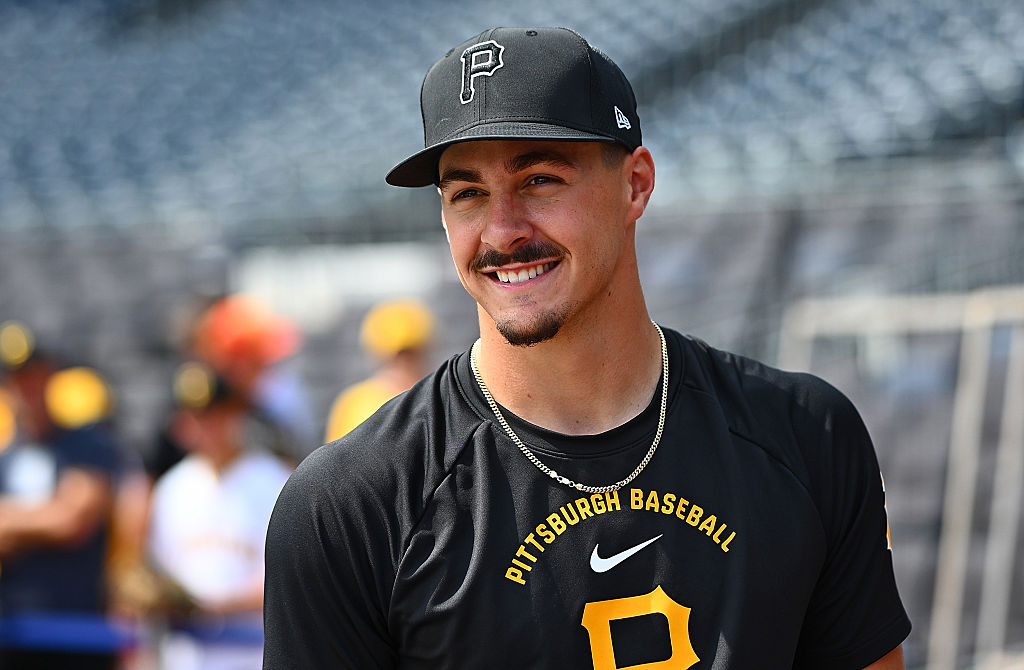
Seeing the strides Griffin has made after only 44 games at the big league level, we’re left with one final question: How much better can he actually get?
With his sheer adjustability, athleticism, and the ability to continuously tinker with his swing, I truly believe the sky is the limit for the 20-year-old shortstop. He has the strength to eventually reach a ceiling close to Bobby Witt Jr., especially if he continues to tap into his power in the coming months.
Since his 20th birthday, Griffin has posted a 154 wRC+, and despite this, it still feels like there’s another level of offensive upside he can unlock at the plate.
To put in perspective how absurd this is, only seven qualified hitters posted a 145 wRC+ of better last season, meaning Griffin genuinely has the ceiling to be the best shortstop in baseball. In fact, none of those seven players were shortstops, supporting this idea even more.
At the end of the day, only time will answer this question. But, in his current state, Griffin has already shown the potential to be a generational shortstop talent, capable of being one of the best players in Pittsburgh sports history. Talents like Griffin don’t come around often, and we should cherish every second of being able to watch him be challenged, grow, and learn how to reach his full potential.
Become a Member of Just Baseball
Subscribe and upgrade to go ad-free!
* Save 25% by subscribing annually.

Written by
Jay Staph, a huge baseball fan and stat nerd, founded and ran his own baseball writing website, BSBWrites, at just 16-years-old. With focal points around prospects,…