
Four Pre-Arb Extensions That’d Make Sense for Both Sides
Pre-arbitration extensions can be amazing for MLB organizations when executed properly. Here are four candidates for early-career paydays.

Pre-arbitration extensions are one of the most powerful tools small- and mid-market teams have to create surplus value. When executed correctly, they allow teams to lock in cost certainty during peak production years, preserve roster flexibility, and, in some cases, turn risk into a tradeable asset rather than a sunk cost.
When executed poorly, they do the opposite — converting volatile players into illiquid contracts before a performance floor has been established.
With that distinction in mind, here are four players who stand out as strong candidates for pre-arbitration extensions, not because they are risk-free, but because their profiles, aging curves, and contract structures allow teams to manage that risk intelligently.
Brice Turang (Milwaukee Brewers)
Proposed Extension: 6 years, $75 million
Club Option: Year 7 at $15 million
Brice Turang is the type of player whose value is often underestimated in public discourse and carefully protected in front offices. His profile is defense-forward, speed-driven, and highly positionally valuable — all traits that tend to age less gracefully than power, but also provide a high early-career floor.
Turang has already produced multiple strong WAR seasons despite a below-average offensive profile (career 88 wRC+), largely on the back of elite defense and baserunning. A tangible swing change in 2025 — marked by increased bat speed and improved attack angles — pushed him into a new tier, resulting in a 4+ WAR season.
The key here isn’t projecting Turang as a perennial All-Star bat. It’s recognizing that his contract prices in defensive and athletic risk rather than ignoring it.
At $12.5 million AAV with no guaranteed decline years, Milwaukee would be paying market value for a high-floor regular while preserving trade flexibility. If Turang’s offense regresses, the contract remains movable. If the bat holds, the club option becomes surplus-positive.
This is exactly how teams should approach defense-driven middle infielders: pay for what they are, not what you hope they become.
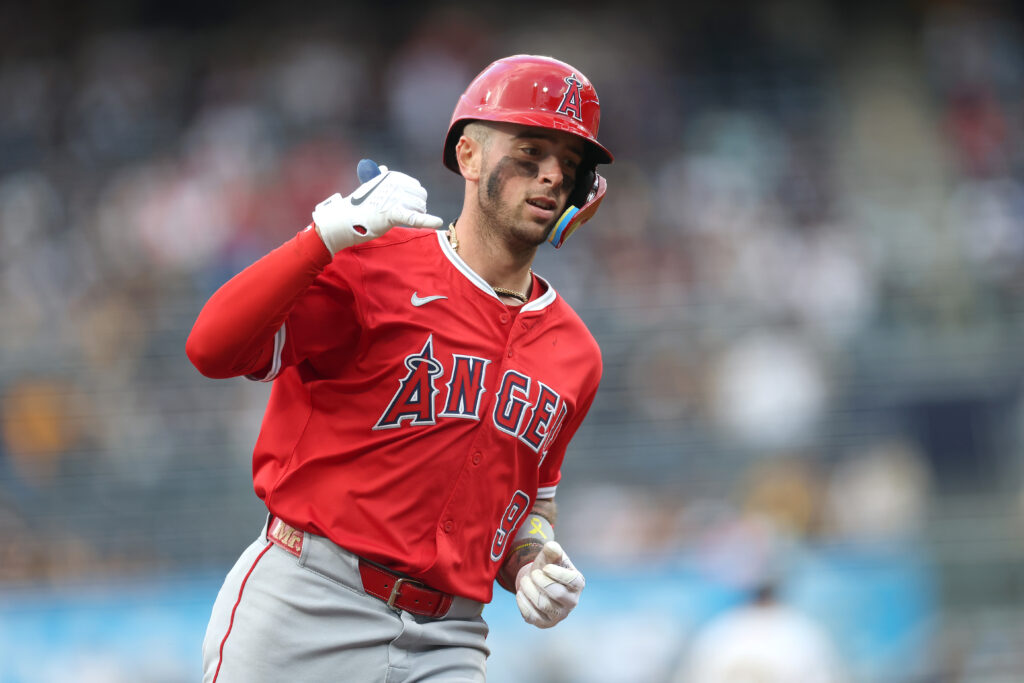
Zach Neto (Los Angeles Angels)
Proposed Extension: 6 years, $100 million
Zach Neto represents a different class of pre-arb extension candidate: an ascending bat at a premium position whose offensive growth is beginning to outpace his defensive profile.
Neto’s 2025 season (3.1 fWAR in 128 games) was driven by a meaningful jump in exit velocities while maintaining excellent launch angles — a combination that materially improved his slugging profile. Even if his long-term home ends up being third base rather than shortstop, the bat is increasingly likely to carry the profile.
The Angels’ context matters here. Post-Mike Trout, the organization lacks a clear offensive identity. Neto is one of the few players on the roster whose age, pedigree, and trajectory suggest star-level upside.
At roughly $16–17 million AAV, this deal prices Neto as a strong everyday regular with upside, not a finished superstar. That matters. If he takes another step forward, the contract quickly becomes team-friendly. If he settles in as a 3–4 WAR bat-first infielder, the deal still aligns with market rates.
This is a case where paying earlier rather than cheaper may be the only way to keep a cornerstone player long-term.
Gavin Williams (Cleveland Guardians)
Proposed Extension: 6 years, $90 million
Club Options: Years 7–8 at $20 million each
Pitcher extensions are notoriously risky, but not all risk is equal. The key is how the contract handles downside, not whether downside exists.
Gavin Williams has the kind of front-line arsenal teams are willing to build around: two elite breaking balls that suppress quality of contact, a mid-to-upper-90s fastball with extreme extension from a low release slot, and the physical frame to carry innings.
The structure here is everything.
A $15 million AAV through age 31 is aggressive but manageable. More importantly, the most dangerous years (ages 32–33) are club options, not guarantees. That preserves Cleveland’s flexibility while still allowing them to capture surplus value if Williams ages well.
If Williams becomes a true No. 1 or No. 2 starter, a 30-year-old arm at $20 million annually is one of the most movable contracts in baseball. If injuries intervene, the Guardians aren’t buried.
This is how small-market teams should extend pitchers: stage the risk, don’t eliminate it.
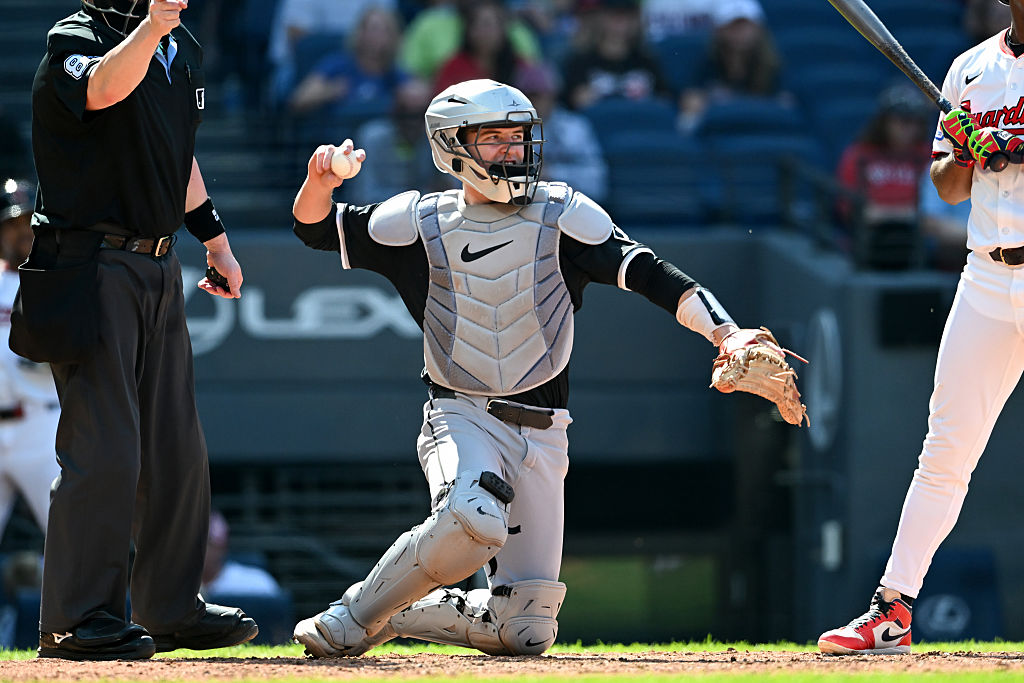
Kyle Teel (Chicago White Sox)
Proposed Extension: 9 years, $72 million
Club Option: After Year 4
Player Options: Years 8 and 9
Catchers are the most volatile demographic in baseball, which is precisely why Kyle Teel stands out as a strong pre-arbitration extension candidate when the contract is structured correctly.
Teel’s value is not exclusively tied to staying behind the plate. While his receiving and game-calling give him a viable path to remaining a catcher long-term, his offensive profile travels. In 2025, Teel emerged as an elite air-pull hitter, pairing above-average contact ability with the type of batted-ball distribution that consistently produces extra-base damage. That matters — air pull contact is one of the most stable indicators of sustainable power production at the big league level.
Even if Teel eventually moves off catcher, the bat profiles comfortably elsewhere. A realistic outcome has him producing roughly 80–85% of Willson Contreras’ offensive value, which is more than sufficient for him to remain a productive regular at a corner or DH-adjacent role. In other words, catcher is a bonus outcome, not a requirement for the contract to work.
The structure reflects that reality. Early guarantees protect Teel during the most physically demanding and developmentally volatile years of his career, while the club option after Year 4 gives Chicago an information-based decision point once his long-term defensive home is clearer. Player options late in the deal preserve upside if Teel establishes himself as a cornerstone bat.
For the White Sox, this is a rare opportunity to lock in a middle-of-the-order offensive profile at a controlled cost without overcommitting to a position that historically carries elevated attrition risk. The downside outcome remains playable. The upside outcome becomes foundational.

Written by