
The New York Mets’ Starting Rotation WILL Kill Their Season
While the New York Mets are still clinging to their playoff hopes, it is hard to envision them making a run with the state of their rotation.
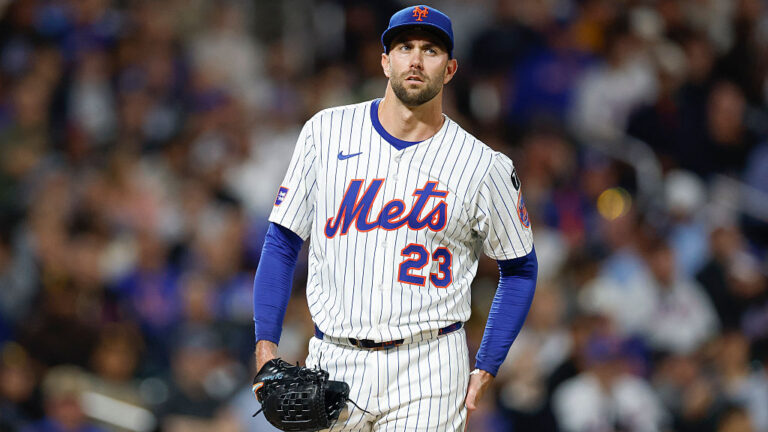
Entering play on September 25th, the New York Mets still control their fate for the 2025 season. Holding onto a one-game lead and an NL Wild Card race that should not nearly be this narrow, the Mets can win their final four games and make the playoffs.
As the old saying goes, “once you are in, anything can happen!”. But as the clock ticks louder and louder on the end drawing near to the Mets’ season, it is hard to view the current problems this roster faces and envision a path through October to winning the World Series.
Even the greatest of optimists has to concede that something has been broken with this team for months now, and the Mets are running out of options to fix it.
Remember, this was a season that began with the New York Mets holding the best record in baseball as late as June 12th at 45-24, 21 games over .500 through 69 games.
Since June 12th, the Mets are 17 games under .500, going 36-53 over their last 89 games as they have spiraled nearly out of a NL playoff race they once led. The June 12th date is significant for the Mets, because that is when their rotation was dealt its first big blow.
Kodai Senga hurt his hamstring leaping for an errant throw by Pete Alonso as he tried to cover first. Senga completed the play, but doing so landed him on the Injured List and started a series of dominoes that has cratered a once-promising season.
Hard To Ignore the Mets Injuries
Even before the season started, the New York Mets were dealt a couple of big blows, as their two biggest offseason signings to bolster their rotation each hit the IL. Frankie Montas went down with a lat strain, while Sean Manaea went down with an oblique injury.
The Mets choose to stay internal to fortify their rotation, relying on Tylor Megill and Griffin Canning to round out a rotation that included Kodai Senga, David Peterson, and converted reliever Clay Holmes.
Those five starters made 13 turns of the rotation together, with none of them pitching to an ERA over 4.00. Senga led the pack with a 1.47 ERA, but Peterson and Holmes each pitched to sub-3.00 ERAs as well (2.49 and 2.95, respectively).
Canning was maybe the rotation’s biggest surprise, pitching to a 3.22 ERA across his first 13 starts, and Megill was posting career-best numbers with a 3.77 ERA and 84 strikeouts in 64 2/3 innings pitched.
Prospect Blade Tidwell made a spot start and pitched behind an opener a few times, while Paul Blackburn got one spot start as well, but the Mets’ rotation was largely comprised of the same five names, and they led the Mets to an MLB-best 2.79 ERA at the time of Senga’s injury.
Two days after Senga went down with his injury, Megill had a rough start and ended up on the IL with elbow soreness. He made a bid to return after rest and rehab, but never made it back and just went under the knife for Tommy John surgery this week.
The Mets tried to fill the hole in their rotation with Paul Blackburn and Frankie Montas returned from the IL, but neither pitcher found much success. Not even two full weeks later, the Mets lost another starter when Griffin Canning tore his Achilles mid-start on June 26th.
Blackburn dealt with various ailments and was eventually DFA’d. Montas made nine appearances (seven starts) and pitched to a 6.28 ERA before going to the IL with elbow soreness.
He too would require Tommy John surgery, making the Mets’ two-year, $34 million investment in him all but a sunk cost at this point.
Luckily for the Mets, they built a cushion that kept them comfortably in playoff position all the way through the All-Star break, and Senga and Manaea both returned off the IL right before it to offer a glimmer of hope for a second-half resurgence.
Why Didn’t the Mets Address Their Rotation at the Deadline?
If you look at the Mets’ starting rotation right now, while their season is clinging to life support, you might wonder why the front office never acted to correct this issue. Particularly at the trade deadline.
Operating in hindsight, clearly David Stearns and the Mets front office should have addressed their rotation at the deadline, but if you look back, their decision not to was not unfounded.
David Peterson was a first-time All-Star, still routinely posting quality starts and sitting with a 2.83 ERA through 20 starts. Again, Senga and Manaea had both returned from the IL and had each given reasons for the Mets to be optimistic that they could lead a rotation.
For Senga, it was his first 13 starts when he pitched to a 1.47 ERA. He came off the IL and immediately pitched four scoreless innings upon his return right before the break.
In two starts after the break, Senga did allow eight runs in eight innings pitched, but he had earned the benefit of the doubt to think he was merely shaking off the rust of a month on the IL.
Manaea did not have the same first half of the season of sample to go off of, but he was pitching better than Senga at the time of the deadline.
The left-hander allowed only four runs across his first 17 1/3 innings pitched, giving up one run apiece in his first four appearances. He allowed only 11 hits and four walks, with 22 strikeouts, sporting a very solid 0.87 WHIP and 11.42 K/9.
Manaea was up to 86 pitches in his final start before the deadline and had made it through five innings in each of his last two starts. With Senga, there was at least an inkling that he was not the same pitcher, but Manaea looked primed for a big second half.
With Manaea and Senga back in the fold, and Peterson in place, the Mets had the makings of a solid playoff rotation. They also had Clay Holmes going well enough, with Megill still aiming for a return, Montas and Blackburn still on the roster, and more importantly, prospects waiting in the wings.
At a trade market where not many starting pitchers were dealt, the Mets deemed the cost to address their rotation as too much and focused their efforts on building out a bullpen instead.
In retrospect, those moves have not worked out great either, particularly the addition of Ryan Helsley, but focusing on the rotation, there was not much the Mets could have done. The two starters they could have gotten that would be helping them right now are Merrill Kelly and Shane Bieber.
Bieber was coming off Tommy John surgery, presenting his own question marks, especially since he has a $16 million player option for 2026 that comes with a $4 million buyout as a kicker. The only hang-up on Kelly is that he was a rental, and maybe questioning his ceiling.
The Mets would love to have either pitcher in the rotation right now, but expecting that top prospects Nolan McLean, Brandon Sproat, and Jonah Tong were enough insurance for their rotation was not a crazy assumption to make at the time.
What the Mets didn’t count on, is things falling apart for all of their veteran starters post-deadline.
What Happened to the Mets Veteran Arms?
Since the trade deadline, the New York Mets starting rotation has collectively pitched to a 5.73 ERA. Only the Colorado Rockies, the Los Angeles Angels and the Washington Nationals have been worse.
What is crazy about that stat is that it is accounting for rookie Nolan McLean, who has been the lone saving grace for this rotation, pitching to a 1.27 ERA across his first seven big league starts.
The veterans in the rotation are the culprits for the Mets struggles, with Manaea sporting a 7.82 ERA across his eight starts, Peterson pitching to a 7.74 ERA across his 10 starts and Senga pitching to a 6.18 ERA across six starts before being optioned down to Triple-A to try to get back on track.
Clay Holmes has been the best of the veterans, pitching to a 4.25 ERA in 10 appearances post-deadline, as he continues to be effective, albeit without pitching very deep in games.
It is due to these struggles that the Mets started to turn to their top prospects, first promoting McLean, then Jonah Tong (after just two starts in Triple-A) and then finally Brandon Sproat.
While the kids have fared better overall than the veterans, the expectation was never that all three of them would be in line to make a playoff start.
Last night, Tong pitched in a huge game for the Mets against the Cubs, and he did not make it out of the third inning. As bad as that was, it was an improvement over what Peterson had done the night before, recording just four outs before he was pulled from Tuesday night’s game.
With little hope of getting any contributions from Senga, who last pitched in a live BP session on Tuesday and the reports are that it is, “just not clicking“, along with the struggles of Peterson and Manaea, the Mets are running out of options.
How Long Can the Kids Prolong the Mets Season?
Today, Nolan McLean will take the mound for his eighth big league start. The 24-year-old has started his career on a record-setting pace, and is lining up to start Game 1 of a potential Wild Card round if the Mets are able to punch their ticket.
If McLean does start Game 1, he will be doing so on four days rest. Not atypical for most big league veterans, but in the minor leagues prospects rarely pitch more than once a week, and are typically on a schedule where they pitch every six days.
In his young big league career, the Mets have kept McLean on five days rest for all but one of his starts.
Today will make the second time he has been asked to go on “regular” rest, and the Mets are either doing so to line him up for Game 1 on four days rest or Game 2 on what is regular rest for McLean.
The Mets clearly trust McLean at this point and rightfully so, but the learning curve of the big leagues can catch up to him at any time, and McLean will also have blown past his inning total of last year by 40 after this last regular season start.
It is fair to wonder how much they can rely on McLean to make a deep playoff run, but there is no doubting the fact that he is their best starting pitcher by a mile right now.
Next after McLean is Brandon Sproat, who went six innings in each of his first two starts, before giving up four runs in four innings of work his last time out. Sproat has looked more polished than Tong, but he’d only be making his fifth big league start if the Mets hand him the ball in October.
Tong was arguably the most dominant pitcher in the minor leagues this season, but he is still just 22 years old, and clearly has some developing left before he’s ready to turn over big league lineups two and three times over.
If the Mets are going to make a run come October, they can’t expect the three kids to take them there. They can trust McLean, and they can maybe get some contributions from Sproat and Tong, but really, this team will need Manaea and Peterson to figure things out, or they are cooked.
Now there is a chance we can look back at this article a month from now and laugh at it after the Mets have made a deep playoff run. But considering the state of their rotation, it feels like an impossible mountain for this team to climb.
The Mets have to make the playoffs first, and then they have to figure out how to get 27 outs with a lead twice against the Dodgers, and three times against the Phillies if they are going to end up back in the NLCS for the second-straight year.
It could happen, but the Mets are going to need some of their arms to flip a switch that may not be there at this point.
Ultimately, this team has been dying a slow death ever since Senga leaped in the air for that high throw by Pete Alonso all the way back in the middle of June.
Every band-aid they have tried to put over that wounded rotation has failed to cover up for a rotation that was likely never talented enough in the first place.

Written by
Ryan Finkelstein has led editorial for Just Baseball since 2021 and officially became the Editor-in-Chief in 2025. He also hosts Locked On Mets, the No. 1…