
A Deeper Look at the Yankees Re-Signing Cody Bellinger
We take a closer look at Cody Bellinger's new contract, the remaining offseason plan, and team outlook, including where some key Yankees prospects fit in...or don't fit in.
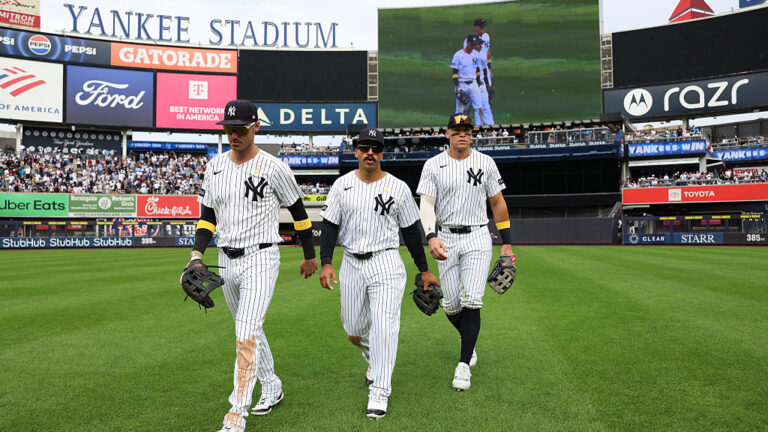
The long-awaited standoff between the New York Yankees and Cody Bellinger finally came to a close this week. Bellinger signed a five-year deal to return to New York and don the pinstripes for the foreseeable future.
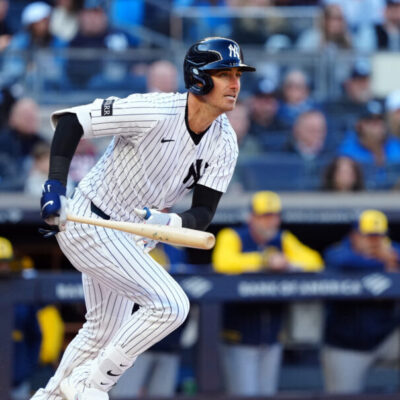
Bellinger, whom the Yankees acquired for Cody Poteet last offseason, had a fantastic first year in the Bronx and was arguably the second-best bat in the lineup behind the reigning MVP, Aaron Judge. He appeared in the lineup almost every day, playing in 152 games and clubbing 29 home runs, both marking the most since his 2019 MVP campaign.
He posted a .272/.334/.480 slash line with a .813 OPS while also being a versatile and stellar defender, playing all three outfield positions as well as cleaning up first base when needed. Bellinger also logged a 5.1 WAR, the second-highest season mark of his career.
While Bellinger’s re-signing is positive news for the Yankees, most people anticipated this outcome throughout the offseason. Now, many Yankee fans have already turned their focus to what will be the next move after the roster continues to look familiar.
The Yankees’ signing raises more questions about what’s the next step in the offseason plan and the future of some key prospects waiting for a full run.
Today, we will take a closer look at the contract itself, how the signing impacts the offseason plan, and the team outlook so far, including where some key Yankees prospects fit in…or don’t fit in.
Contract Discussion
Bellinger inked a five-year, $162.5 million contract to return to New York. The deal earns him $32.5 million over the first two years, plus he earns a cool $20 million signing bonus, totaling around $85 million across those first two years.
The rest of the contract details include a full no-trade clause and opt-outs after years two and three, giving Bellinger the chance to hit the market again in just a couple of years at age 32.
If Bellinger were to opt in and stay with the deal after year two, he is set to make $25.8 million in years three and four while receiving a small bump to $25.9 million in the final year of the deal.
Although the total value of the contract is lower than some recent high Average Annual Value (AAV) short-term contracts, such as Kyle Tucker’s, the AAV of $32.5 million still ranks Bellinger among the elite, making him the fifth-highest paid outfielder in baseball.
MLB’s super agent, Scott Boras, represents Bellinger and has been adamant about their desire for a seven-year deal. The Yankees were pretty much in consensus that they would not commit to Bellinger for any more than five years, even having reports that they would walk away from bidding after putting their best offer on the table.
All these developments sparked a competition to see who would give in first, and in the end, the Yankees got Bellinger on the desired five-year deal.
The signing has the early showings for a win-win type of deal. The Yankees were able to avoid the longer contract duration that was initially expected, while Bellinger receives a substantial salary and retains the option to enter the free agent market in a few years if he chooses.
The signing does officially put the Yankees over the luxury tax threshold and almost certainly means there will not be any more large contracts added to the books unless things change.
Even though the signing may put an end to any major contracts being added, barring any changes in the front office tone, I believe this deal was very much needed for this team to even compete for a championship in 2026.
Bellinger is a key piece in several aspects; from protecting Judge’s spot in the lineup to providing elite defense, his presence was more than needed back in the clubhouse.
With all that being said, it’s hard to imagine a world where Bellinger signed elsewhere. We would be talking about another “Plan B” offseason from the Yankees and Brian Cashman after losing Juan Soto last year.
Bellinger brings more than just his play on the field; he’s bringing a familiarity and stability to a lineup that desperately needs it after seeing multiple different players hit ahead of and behind Judge recently.
Lingering Questions
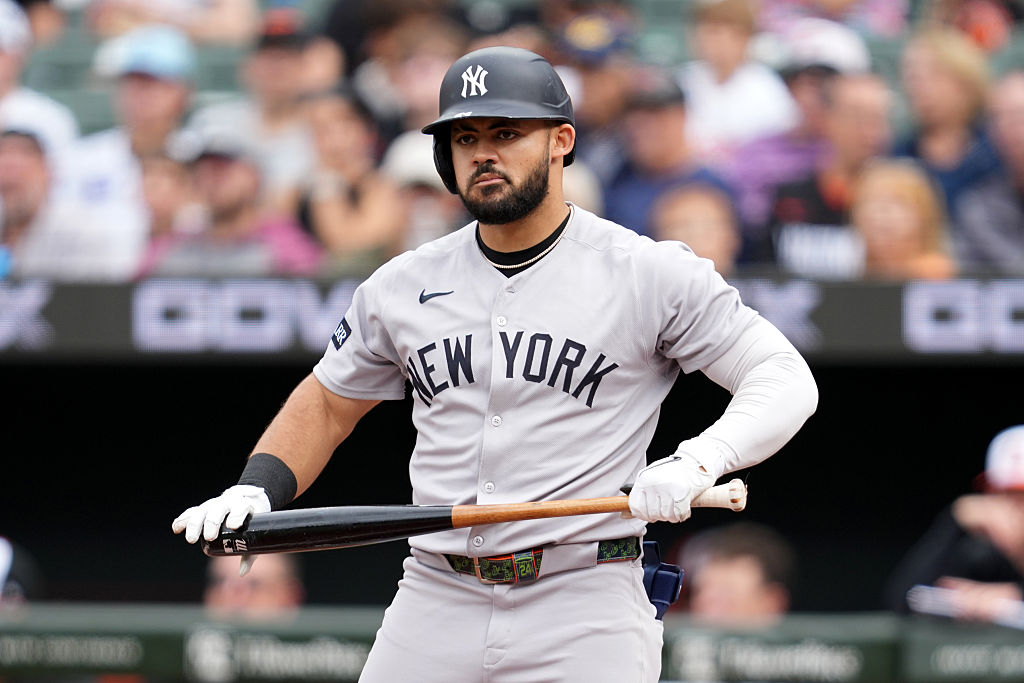
With Bellinger set to man the outfield for the next couple of years, questions about how some key outfield prospects fit in the scheme of things are starting to boil up even more.
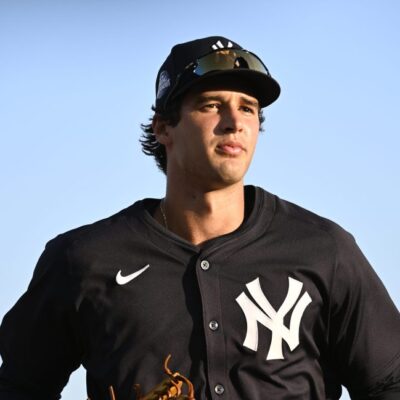
It’s almost hard to call him a prospect still, but switch-hitting outfielder Jasson Domínguez has had mixed results across parts of three seasons in New York. Domínguez has yet to play 162 total games since his debut in 2023, but in his time playing, he has left some questions about what his future looks like as a big leaguer.
The Yankees had Domínguez as the fourth outfield option after Trent Grisham put up a breakout campaign last season. He would usually play in a couple of games a week, depending on matchups, but he saw his role dwindle as things got closer to the postseason. Domínguez only took 17 at-bats in September and one at-bat in the entirety of the postseason.
One of the big reasons for Domínguez’s early issues in the majors would be his defensive struggles. Originally thought to be an above-average defender who could play multiple outfield spots, he has shown below-average ability in the early goings of his career.
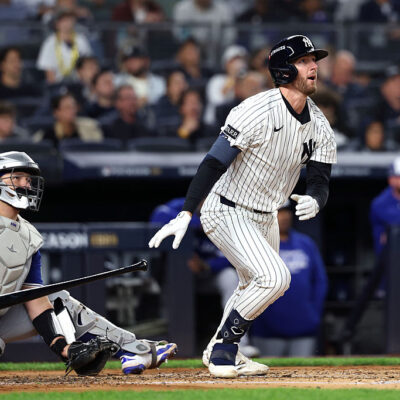
Domínguez has really struggled figuring out left field in the major leagues, posting a -9 Fielding Run Value (FRV) and a -7 Defensive Runs Saved (DRS) across 100 games at the position in 2025. He also logged a -10 Outs Above Average (OAA), which puts him right near the bottom of the league at his position and overall defensively.
The other large reason for Domínguez’s limited role is the Yankees’ distrust of his ability to hit from the right side at the major league level. A noted switch-hitter, he has struggled in limited at-bats as a right-handed hitter.
In 2025, Domínguez only took 93 at-bats as a righty, where he sported a lowly .204 batting average and a 63 wRC+ compared to 288 at-bats as a lefty, where he posted a .274 batting average and a 116 wRC+.
The left-handed batter’s box is also where Domínguez launched nine of his ten home runs last season, including a walk-off shot against the Texas Rangers last May.
He has clearly shown the upside from the left side, providing more confidence, power, and general contact ability. There comes a point in his hitting development where he either has to ditch the switch-hitting or get an opportunity to play every day and get better from his right side, almost through being thrown into the fire.
However, the Yankees are not currently in a position to see Domínguez develop in the majors when they are in win-now mode.
Many of the team’s main superstars are getting older, and the championship window is starting to close, leaving questions about Domínguez’s immediate future on the team.
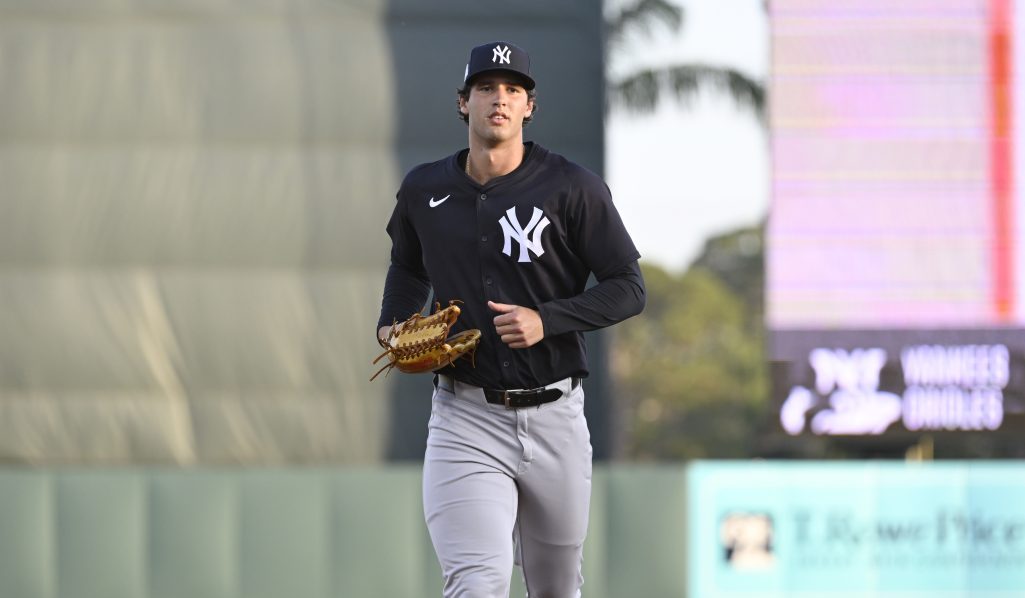
The other outfield prospect would be slugging prospect Spencer Jones. The 2022 first-round pick was looking to make his major league debut last season after an incredible stretch in the minors but never got the call, as the Yankees needed more pitching down the final stretch.
The Yankees have long talked about and awaited Jones’s lefty power in New York. Last year in the Minors, Jones smacked 35 home runs while posting a .571 slugging percentage and a 153 wRC+.
Jones has also shown that he can be much more than a home run bat, swiping 29 bags last season, 25 in 2024, and posting a career-high 43 stolen bases in 2023. The 6-foot-7-inch Vanderbilt product can also be a solid defensive option, mostly roaming centerfield in the minors.
With Bellinger staying in New York, Jones’s shot at making the opening day roster has gone down a bit, and his chance of getting traded has gone up a bit. If he does not get the chance to play almost every day, the Yankees should look to float his name in trade talks in efforts to improve this year’s team.
I don’t really see the Yankees bringing Jones onto the big league roster as a platoon bat or bench bat. When the Yankees call him up, I anticipate it’s to give him a chance to play every day or close to it.
Jones’s future with the Yankees and general situation is a little less pressing than Domínguez’s, but his power in the minors is getting hard to deny. The Yankees can keep him in Triple-A at the start of the year to work on his high strikeout numbers, and then he’ll be the first to get called up if an outfielder or Giancarlo Stanton gets hurt.
Given the hype and power of Jones, the Yankees will have to carefully consider which outfielder to retain in the organization or potentially use as a trade chip to bolster the roster.
Final Thoughts
Although we are just a couple of weeks away from spring training, it almost feels like the quiet Yankees offseason has finally started with the first main domino falling.
Even with the team’s first big signing in free agency, it still leaves the roster looking eerily similar to one that was trounced in last year’s postseason by the division rival Toronto Blue Jays in the ALDS. It’s difficult to forget that the pitching staff gave up 34 runs in four games against the Jays.
Along with the aforementioned desire not to significantly add to the payroll, trades have become the main focus for improving the rest of the roster, such as much-needed pitching additions.
Outfielders like Jones and Domínguez may become more expendable and, as a result, could be available in trade talks, potentially being moved as part of a significant deal for a key starter or reliever.
The Yankees have also made it clear over the course of the offseason that they aim to be a more balanced lineup and not too left-handed, further pushing the point that both prospect outfielders could be moved with Bellinger re-signing.
The Yankees front office has some very big roster decisions to make in the final two months of the offseason, possibly moving on from some of their former top prospects after locking down Bellinger.

Written by
Originally from Rochester, New York, Cai Rogers graduated from the University of Oregon with degrees in Advertising and Sports Business. Cai is a Lifelong Yankee fan…