
All the Best Pitchers Cost Draft Picks in This Year’s Free Agent Class
If you look at the top of the free agent market for starting pitchers, you will find that all the best arms come qualifying offers attached.
 | |
| | 
If there is one thing that every team needs this time of year, it is starting pitching. Good starting pitching is hard to come by, which is why teams pay a premium to add it each year in free agency.
A good No. 4 starter that hits the market these days can expect at least $10 million, and some get paid well north of $15 million. When we get to the top of the market, with the best free agency has to offer, we are looking at salaries that start at $20 million a year and only scale up from there.
When teams try to sign top starting pitchers this year, there is an additional premium they will be forced to pay. And that premium is the draft pick compensation that comes with signing a free agent who has been tendered a qualifying offer.
Of the 13 players who received qualifying offers last week, seven were starting pitchers. These represent the best pitchers available on the market.
It is not uncommon for the top free agent starting pitchers to receive qualifying offers, but the difference this year is the lack of alternative options, as the market falls off drastically once we get beyond the seven starters who got the QO.
Which Free Agent Starting Pitchers Got the Qualifying Offer?
This year’s free agent class is interesting, because many of the top arms had either down years, or dealt with injuries that held them back in 2025.
Nevertheless, if there is a potential for a pitcher to be a 1-3 starter in 2026, most teams are going to relent and give a qualifying offer, because a one-year, $22.025 million deal is basically the market for a good starting pitcher anyway.
By tagging your free agent with a QO, you are accomplishing three things.
- For one, if they leave, obviously, you get draft pick compensation.
- If they take the offer, you get the benefit of a top arm on a one-year deal.
- If they don’t take it, their market may be suppressed, and you have a better chance to re-sign them to a multi-year deal.
Here are the free agent starting pitchers who received a qualifying offer last week.
- LHP Framber Valdez, Houston Astros
- LHP Ranger Suarez, Philadelphia Phillies
- LHP Shota Imanaga, Chicago Cubs
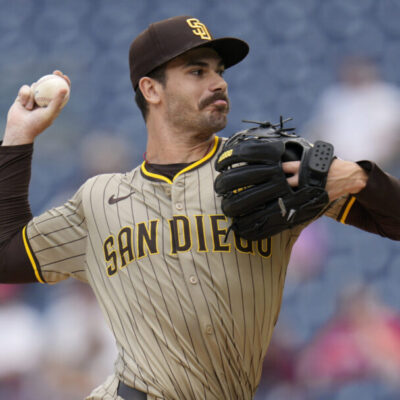
- RHP Dylan Cease, San Diego Padres
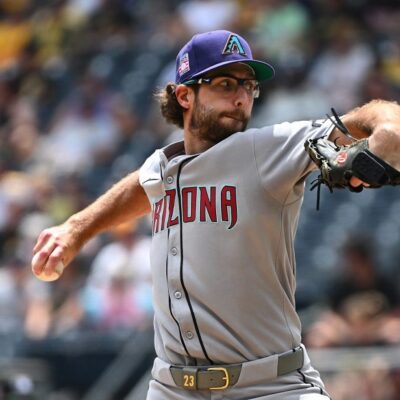
- RHP Zac Gallen, Arizona Diamondbacks
- RHP Michael King, San Diego Padres
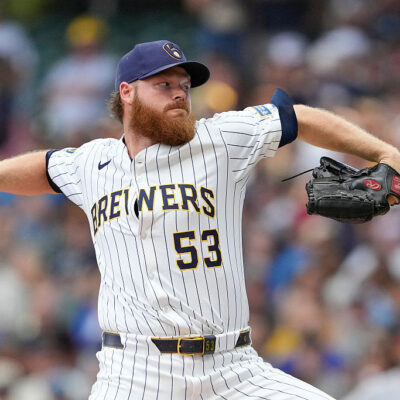
- RHP Brandon Woodruff, Milwaukee Brewers
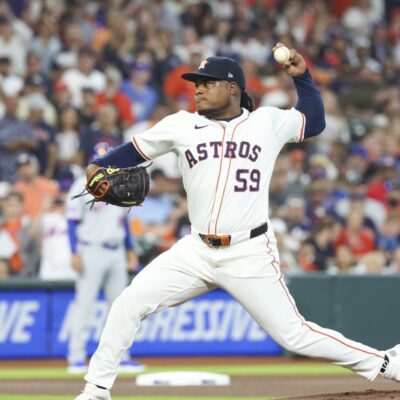
When we look at this year’s free agent class, Framber Valdez stands out as the pitcher who is coming off the best platform year, who has also been the most consistent over the last few seasons.
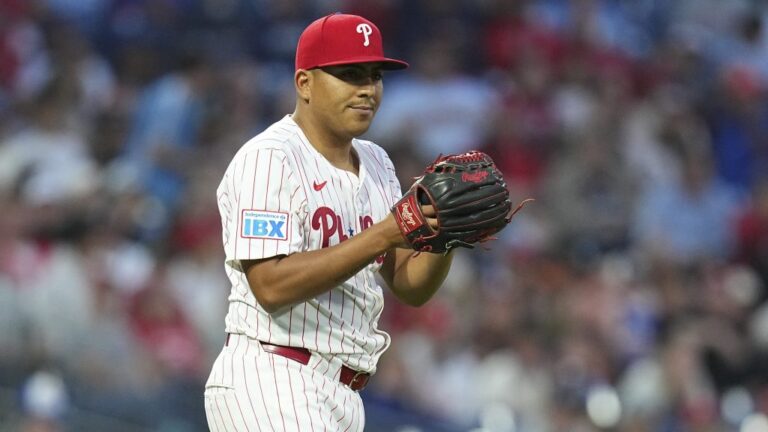
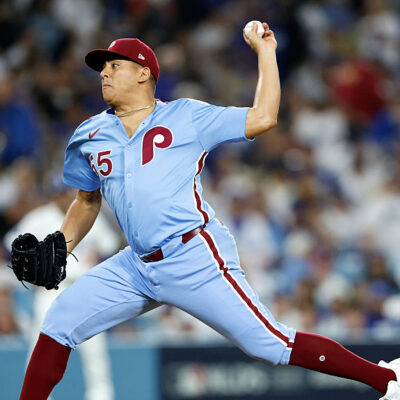
Outside of Framber, Ranger Suarez is the next-best left-handed starting pitcher available, coming off a strong season where he posted a 3.20 ERA in nearly 160 innings pitched. Suarez has a career 3.38 ERA, having been a consistent starter for the Phillies for years now.
Another consistent lefty who has hit free agency is Shota Imanaga, who had his three-year, $57 million club option declined by the Cubs. Imanaga then held a $15 million player option, which he declined, only to get tagged with the $22.025 million qualifying offer.
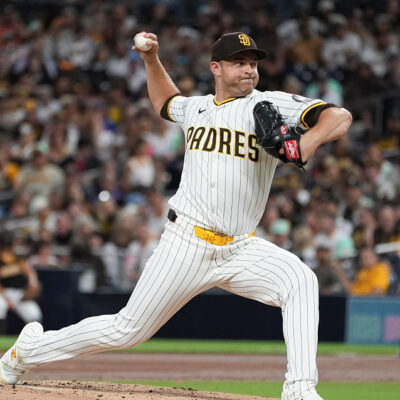
When it comes to right-handers, Scott Boras clients Dylan Cease and Zac Gallen are at the top of the market, coming off another season where they racked up innings, albeit with inflated ERAs.
The underlying data would suggest that Cease has the better stuff and will likely enjoy a healthier market, but both have been durable frontline guys for years now.
Michael King flashed ace upside in 2024, but dealt with injuries in 2025. Meanwhile, Brandon Woodruff lost his 2024 season rehabbing from shoulder surgery, and then missed half of the season in 2025 with nagging injuries.
Both King and Woodruff enter the market as intriguing bounce-back candidates. The only problem is that they have a qualifying offer that could hold down their markets.
Who Is Most Likely to Accept the Qualifying Offer?
Of the seven starting pitchers who were tendered the qualifying offer, two stand out as potential candidates to accept the one-year deal.
First, you have Brandon Woodruff, who is coming off a season where he only made 12 starts. Those starts were very good, as he pitched to a 3.20 ERA and still struck out 11.6 batters per nine.
Still, Woodruff probably won’t do much better than a two-year pillow contract if he signs a deal in the open market. Woodruff has spent his entire career with the Brewers, so if he values coming back, he can just use the qualifying offer as his pillow contract instead.
Sure, having the security of a 1+1 would be ideal for Woodruff, but with the qualifying offer attached, he might struggle to find a two-year deal with an AAV as high as the $22.025 million he has on the table now.
He can just take the money, spend one final year in Milwaukee rebuilding his value, then sign a high AAV multi-year deal next season.
The other free agent who may jump at signing the qualifying offer is Shota Imanaga.
Imanaga already got an additional $7.025 million simply by turning down his player option and then getting tendered the QO. If he wants to stay where he has been comfortable with the Cubs, Imanaga can just opt into this deal, then hit free agency again next year without being saddled with the QO, and hopefully coming off a stronger season.
Notable Free Agents Without a Qualifying Offer
One thing that has made this year’s free agent class unique is the lack of top starting pitchers who were moved at the trade deadline.
When an impending free agent is moved at the deadline, this frees them from the shackles of a qualifying offer, as their new team is not allowed to tender them one. At this year’s deadline, there were only two prominent starters who were dealt. Shane Bieber and Merrill Kelly.
This is one of the reasons why Bieber’s decision to pick up a $16 million player option was so shocking, besides the fact that he would have collected a $4 million buyout if he did opt out.
Bieber was going to be sitting pretty in this free agent market as the one potential frontline arm that a team could sign without giving up draft capital. Instead, that top slot now belongs to Kelly, who is coming off a great season, but may be limited to a two or three-year deal at 37 years old.
If teams are looking for a younger option, Lucas Giolito is coming off a strong first season after Tommy John surgery, but a flexor tendon issue cost him the end of his season, and will cast some doubts over the 31-year-old free agent.
Tyler Mahle is another 31-year-old starter who is hitting the market without a qualifying offer due to his injury concerns. After missing most of the 2023 and 2024 seasons recovering from Tommy John surgery, Mahle has been dealing with a sore shoulder.
The shoulder put a halt to his TJ comeback at the end of 2024, then limited him to 16 starts in 2025.
When Mahle was on the mound he was very effective, pitching to 2.16 ERA. But teams are going to be wary of guaranteeing him much money beyond the 2026 season.
Finally, we get to the veteran starters who are perfect for teams with a need for middle-of-the-rotation help, and some veteran leadership. Chris Bassitt and Jose Quintana continue to find ways to get it done and remain consistent arms who can be counted on every fifth day.
Meanwhile, Max Scherzer and Justin Verlander have been a bit more boom-or-bust over the last few seasons.
Scherzer proved he could still get outs in the biggest of moments in October, and appears eager to pitch at least one more season. Verlander has long said he wanted to pitch until he was 45, which would conceivably give him three more seasons to chase down those final 34 wins to get to 300.
Unlikely he gets there, but it will be fun to watch Verlander try. Hopefully he can land on a really good team this offseason, that can help him stumble into a few more victories than what he mustered pitching for the San Francisco Giants in 2025.
Are the Top Starters Worth the Draft Picks?
The interesting thing about the market for starting pitching is that teams either have to fork up prospects in a trade to land a top starter, or they have to hand out a big contract plus give up draft picks if they want to add an arm through free agency.
This is why developing your own starting pitching is so imperative for teams to find sustainable success, because the premium you have to pay to land arms on the open market is immense.
At the end of the day, teams need to add top arms if they want to be competitive. If the price you have to pay is a couple of draft picks to land the arm you think can take you to the next level, that is a price most teams are going to be willing to pay.
Then again, some teams value that draft capital too much, and will not touch players who have been tagged with the QO, regardless of their needs. With the CBA expiring after this season, a lot of attention will be paid to how the QO impacts the free agent market for these top starters.
If these free agents are forced to take more team-friendly deals due to their market getting suppressed by QO, it is only going to create further discourse around the presence of a qualifying offer in the pending lockout.
Shane Bieber’s exit from the market was the first big surprise of the offseason, but there are likely plenty more in store, with a free agent class that comes with a lot of question marks.
Written by
Ryan Finkelstein has led editorial for Just Baseball since 2021 and officially became the Editor-in-Chief in 2025. He also hosts Locked On Mets, the No. 1…