
What Jeff Kent’s Hall of Fame Induction Means for Hopeful Second Basemen
After being elected to the Hall of Fame on Sunday, Jeff Kent's induction should have a trickle-down effect on future Hall of Fame candidacies.
 | |
| | 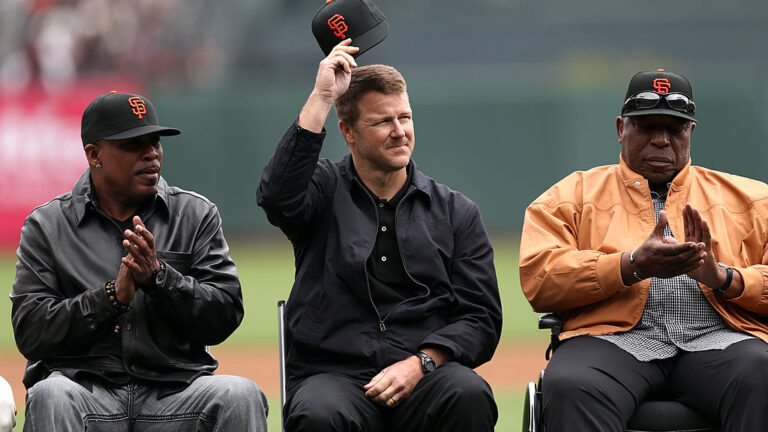
On Sunday, the Veteran’s Committee voted to induct second baseman Jeff Kent into the Baseball Hall of Fame in July 2026.
Across 2,298 games, Kent slashed .290/.356/.500 with a 123 wRC+ and the all-time record for home runs at second base with 377. Moreover, he was a five-time All-Star, four-time Silver Slugger, and the National League’s Most Valuable Player in 2000.
His résumé speaks for itself. The blend of power and bat-to-ball was foreign to the position during his career. While definitely a hit-over-defensive middle infielder, he exceeded the 50 wins above replacement threshold it seems needed for serious Hall of Fame consideration.
Ironically, though, the Baseball Writers Association of America (BBWAA) didn’t vote him in despite 10 years of eligibility. The same writers who deemed him the best player in the league at one point didn’t think his résumé was up to snuff for Hall of Fame enshrinement.
And yet, his induction should have a trickle-down effect on future Hall of Fame candidacies. Better yet, it should have such impact on current candidacies.
On the current Hall of Fame ballot rests two second basemen with fascinating cases for Cooperstown: Chase Utley and Dustin Pedroia. Both have similar pros and cons lists to Kent’s on-field résumé; the pros list getting longer with this recent development.
Let’s take Kent and stand him next to the longtime Phillie and Red Sox greats and compare cases.
Chase Utley
Regardless of Kent’s induction, Utley should be a Hall of Famer for several reasons, but that’s an argument for another day.
Utley doesn’t hold the counting stats Kent does, largely on account of playing over 300 fewer games. But he’s within striking distance of his wOBA, wRC+, and on-base percentage. He also outpaced Kent in defensive value on FanGraphs, 106.3 to 1.2, and in baserunning runs 71.9 to -19.8.
This results in Utley amassing more career WAR than the newest Baseball Hall of Famer, whether you prefer FanGraphs or Baseball Reference.
Utley also made more All-Star teams than Kent and won the same four Silver Sluggers, all while playing half his career in the same era. Sure, Kent has the MVP really elevating his résumé, but Utley has a World Series title to his credit.
Also, Kent wasn’t even the most valuable Giant in terms of wins above replacement in 2000; Utley ties him with three finishes in the top eight for voting.
Utley is a rare breed of second baseman in the sense there wasn’t a weakness to his game. His 259 home runs feel light for a Hall of Fame résumé, but even that is top 10 all-time for second basemen. Additionally, he’s one of just six second basemen to hit 250 homers and steal 150 bases in his career.
Dustin Pedroia
It’s hard to see a true pathway to Cooperstown for Pedroia in large part to an injury-riddled career. But it’s hard to deny he was at that caliber when he played at even a shell of himself.
Comparing Kent and Pedroia’s cases, they’re uniquely similar in terms of awards, but the former Giant shreds him in volume. That said, Pedroia made one fewer All-Star Game, also won an MVP award, and was a Rookie of the year winner in 2007.
The 5-foot-9 second baseman also won two World Series to Kent’s zero, added four Gold Gloves to Kent’s zero, and even chipped in a Silver Slugger Award in 2008.
Volume wise, Pedroia comes up over 700 games short of Kent, so the counting stat disparity follows suit. But like Utley, Pedroia stole significantly more bases in addition to having a higher on-base percentage and batting average.
But where Pedroia stands out as a case that strengthens with Kent’s induction is measuring peak-for-peak.
Looking at WAR7, a metric on Baseball Reference that measures a players best seven-year stretch in value, Pedroia outpaced Kent at 40.9 to 35.8. For his career, he was a 5.6 rWAR player per 162 games played whereas Kent paced at 3.9.
From 2007 to 2016, Pedroia slashed .303/.368/.447 with a 118 wRC+ and the ninth-most fWAR among position players. He even outpaced Utley in that span.
Longevity is definitely a part of the equation, of course. Unfortunately, Pedroia retired after the 2020 season, but only played nine games from 2018 through 2020 as he battled a knee injury. Consequently, he was effectively out of baseball at 33 years old, while Kent played through his age-40 campaign.
Final Thoughts
Before Sunday, the average second baseman in the Hall of Fame amassed 67.1 fWAR in his career. Kent ranks 14th among Hall of Fame second baseman in fWAR, bringing the average down to 66.6 fWAR.
While both Utley and Pedroia come below that threshold, that doesn’t mean as much as it did Sunday morning.
Value wise, Utley’s 61.5 fWAR looks much more Cooperstown-worthy now. Résumé wise, Pedroia’s looks much more Cooperstown-worthy. It seems unlikely the Baseball Writers will induct the latter despite a career .299 average and .805 OPS with elite defense, but it’s grown increasingly harder to deny the former.
Time will tell if Kent is the only one giving a speech in Cooperstown next July. But this induction could, and should, change how we view Hall of Fame cases moving forward; especially at second base.
Written by