
Cubs Take a Big Swing, Trade for Marlins’ Edward Cabrera
The Cubs wanted to add an arm to their rotation. Edward Cabrera could be the impact starter they've been looking for.
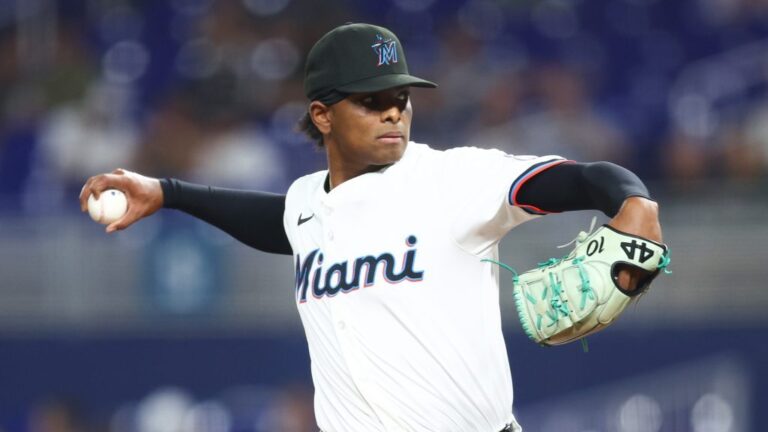
Edward Cabrera may very well be the impact arm the Chicago Cubs have been looking for.
The Cubs and the Miami Marlins completed a deal Wednesday that brings Cabrera, a 27-year-old right-hander, to the North Side. In exchange, Chicago sent Owen Caissie — the No. 1 prospect in its system and No. 41 in baseball, per Just Baseball’s Top 100 — as well as minor league infielders Cristian Hernandez and Edgardo De Leon to Miami.
The Cubs already had talent in their rotation but had been looking to add more. Potential free agent targets like Dylan Cease, Michael King and Tatsuya Imai signed elsewhere, and though there are still strong arms on the market, a trade for a controllable starter was always a possibility. And now they’ve linked up with the Marlins to get it done.
Cabrera is a hard-throwing righty, finishing in the 87th percentile in fastball velocity in 2025 (96.9 mph, per Statcast). However, neither his four-seamer nor his sinker got great results last season — at least according to Statcast Run Value, by which they had marks of -6 and -7, respectively.
Instead, during his breakout 2025 campaign, his secondary offerings are what really stood out. His most-thrown pitch was a changeup (5 RV) that, incredibly, also averaged 94.2 mph. His two breaking balls are a curveball (7 RV) and slider (3 RV) that had whiff rates of 45.2% and 43.7%, respectively.
Cabrera had his best season as a big leaguer last year. He had career highs in starts (26), innings (137.2) and strikeouts (150). He lowered his ERA considerably from 4.95 in 2024 to 3.53 in 2025. His 3.83 FIP and 2.0 fWAR also represented career bests, as did his 8.3% walk rate (paired with a solidly-above-league-average 25.8% strikeout rate) and 3.13 strikeout-to-walk ratio.
Beyond what he brings on the field, Cabrera is a nice fit for the Cubs financially.
According to RosterResource, Chicago currently sits slightly more than $34 million below the first luxury tax threshold. With the reputation of a team not willing to spend as high as some of their big-market peers, the Cubs’ acquiring a rotation piece from the top of the free agent pool was no guarantee. That surely would’ve also limited where they could spend in other areas.
But Cabrera is a different story. He comes with plenty of club control, having three more arbitration-eligible seasons. MLB Trade Rumors projects his salary this year to be $3.7 million. It’s a move that allows Chicago to continue pursuing additions in other areas (like an impact bat, perhaps?).
Of course, Cabrera doesn’t come with zero question marks. His walk rates were a problem before 2025, and he needs to prove the command improvements can continue.
He’s also had some injury issues since debuting in 2021, including multiple IL stints due to throwing-shoulder ailments. He missed the first three weeks of last September with a right elbow sprain, though he did return to make two more starts.
The injury history presents risks. The fact that he hasn’t yet proven he can reach his projected ceiling presents risks, too.
But that ceiling is real. Whether from watching him pitch or digging into the numbers, you can see it. Reaching it is a different story, but there is a lot of upside in that arm.
The Cubs clearly believe in his potential. At 27, he might only just be scratching the surface of the starter he can be. Perhaps getting him into their infrastructure will help him unlock it.
How Adding Cabrera Impacts Chicago’s Rotation
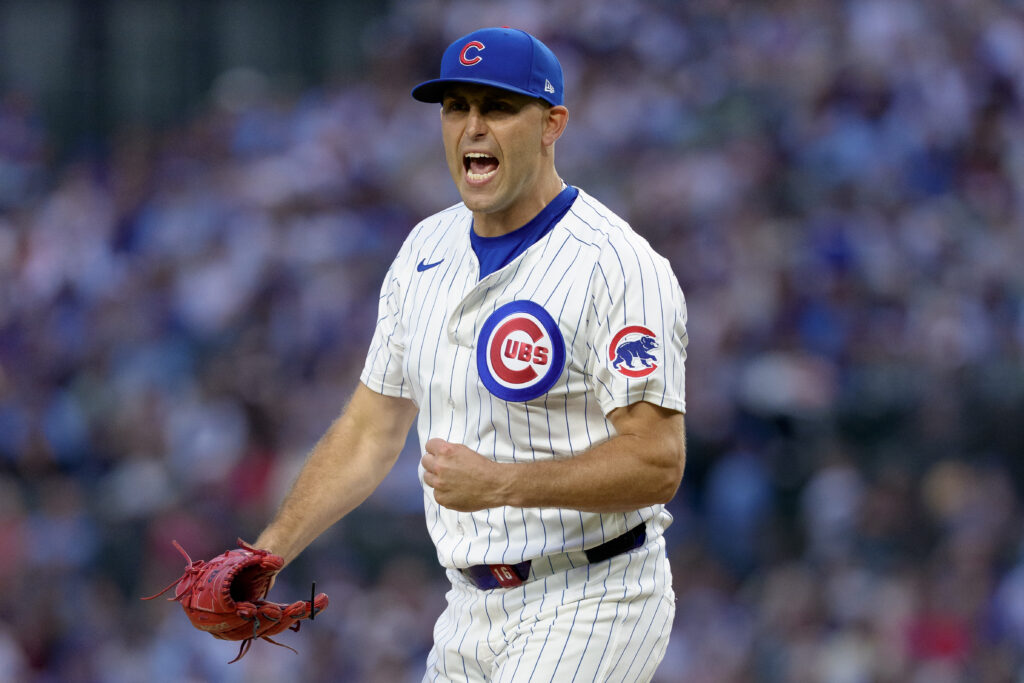
Cabrera will slot into the Cubs’ rotation, which, while not featuring ace-level arms, is strong depth-wise.
- Cade Horton, the National League Rookie of the Year runner-up, returns looking to build on a strong debut season and put a rib injury, which prematurely ended his rookie year, behind him.
- Matthew Boyd is back after earning his first All-Star nod last summer. It was also his first healthy season in years, so he’ll look to keep that availability going.
- Shota Imanaga is still in Chicago after accepting his qualifying offer. He’ll look to rebound from a rough second half and return to his 2024 All-Star form.
- Jameson Taillon missed roughly two months of 2025 due to injury, but when he was on the mound, he provided a lot of quality innings.
Assuming health, that’s likely Chicago’s rotation to begin the season in some order. Cabrera could even be in line to start on Opening Day.
This would mean Colin Rea moves back into a long relief role, though he’d be one of the first options to step back in should a need arise. Behind him, Javier Assad, Ben Brown and Jordan Wicks present more depth options.
Jaxon Wiggins, Just Baseball’s No. 3 Cubs prospect and No. 71 overall, had a strong season across three levels in 2025, and he should be on the radar, too.
That doesn’t even include Justin Steele. Elbow surgery last April cost him the rest of the season, and it’s unclear when he might return. However, he was Chicago’s top starter between 2022-24, and it’s possible he can return to pitching near the level he was at during that stretch. That would provide a big boost for the top of the rotation.
Injuries can and usually do disrupt any team’s pitching plans. We saw that happen for the Cubs throughout last season. But again, they already had solid rotation depth, and now adding Cabrera potentially provides even more impact at the top.
How Dealing Caissie Impacts the Cubs’ Lineup
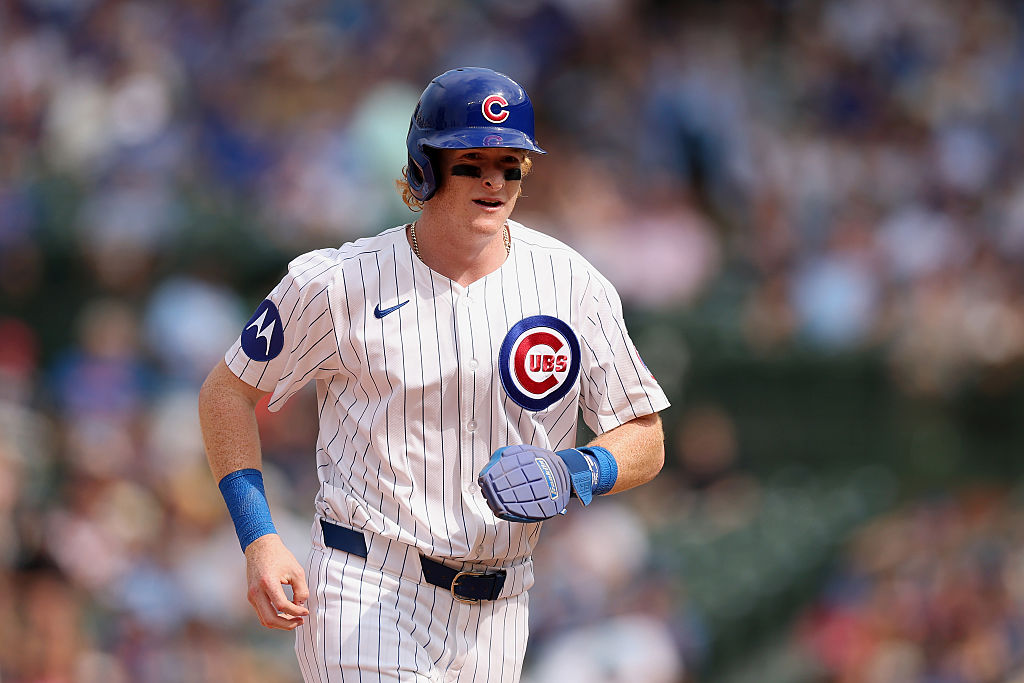
On the flip side, acquiring Cabrera also means parting ways with one of the best prospects in baseball — particularly when it comes to power.
Caissie didn’t have a spectacular debut. Across 27 plate appearances over 12 games, he hit .192 with a .568 OPS. He’s crushed minor league pitching, though, and he hit 63 home runs in the minors across 2023-25. Though he does strike out at a rather high clip, he offsets that by recording high walk rates.
Losing Caissie in the Cabrera trade means losing an enticing hitting prospect. However, it does help clear up a position player puzzle.
Caissie and Seiya Suzuki on their own could’ve made it work with right field and designated hitter open. Add Kevin Alcántara and Moisés Ballesteros into that mix, though, and there would’ve been fewer at-bats to go around.
With Caissie now in Miami, Alcántara can spend more time in right field (splitting time with Suzuki) while still serving as Pete Crow-Armstrong’s primary backup in center, and there will be more opportunities for Ballesteros at DH.
Of course, the Cubs taking the money saved by bringing in Cabrera and using it to acquire an impact bat could bring more lineup questions (though that would certainly be a good problem to have).
For now, dealing Caissie — despite that meaning potentially parting ways with a future big league slugger — opens up more playing time in right field and at DH, and he’s also the main piece that brings an impact arm to Chicago.

Written by
Baseball writer and podcaster. Baseball Writers Association of America (BBWAA) member. Past stops include CHGO Sports, MLB.com and more. Chicago is my home ballpark.