
The Top 20 Teams in World Baseball Classic History: 10 to 1
Across six iterations of the World Baseball Classic, more than 100 individual teams have competed in the tournament. These were the very best.
 | |
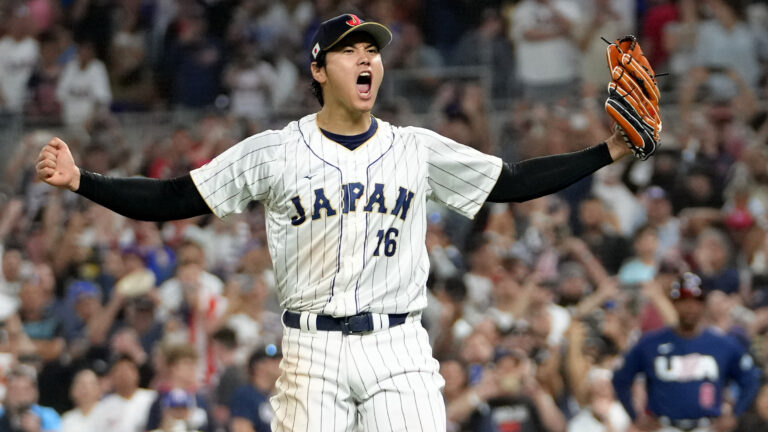
| | 
This is the second installment of Just Baseball’s two-part series ranking the top 20 teams in World Baseball Classic history. The first installment (20-11) came out last week, and today, I’m moving on to the top 10.
As a refresher, here are some of the criteria I used while putting this list together.
- National Impact: This is an overlooked but important one. Extra points were given to a team that was the best in their country’s WBC history and helped set the stage for future WBC performances. The best team in Italian or Mexican history, for instance, is going to get the edge over the sixth-best team in Japanese or American history.
- Performance/Run Differential: How far did you advance in the tournament, and did you dominate the competition or just squeak by?
- Roster Construction: How much talent was on your roster, and were your best players in the prime of their careers?
- Strength of Schedule: Did you face the tournament’s other top teams in pool play or in the championship round?
10. 2006 South Korea
- Record: 6-1
- Result: Lost Semifinal to Japan
- Run Differential: +12
Key Performers:
- Seung Yuop Lee (1B): 8-for-24, 5 HR, 10 RBI, 4 BB, 1.372 OPS
- Jong Beom Lee (CF): 10-for-25, 6 2B, 3 RBI, 1.104 OPS
- Chan Ho Park (RHP): 4 G, 1 GS, 10 IP, 7 H, 0 ER, 0 BB, 8 K
- Jae Weong Seo (RHP): 3 G, 3 GS, 14.0 IP, 7 H, 1 R, 3 BB, 8 K
- Dae-Sung Koo (LHP): 5 G, 8 IP, 6 H, 1 R,1 BB, 3 K
In a tournament that was expected to be dominated by teams loaded with current and future MLB stars like Japan, the United States and the Dominican Republic, it was South Korea that overmatched the competition over the first two rounds.
They allowed just three runs in a three-game romp through Pool A, highlighted by an upset 3-2 victory over Japan to secure the top seed in the second round of pool play.
The scene would shift to Los Angeles for the next three games, but the result remained the same. After defeating Mexico 2-1 in the opener, they shocked the United States with an easy 7-3 victory, highlighted by first baseman Seung Youp Lee’s fifth homer of the tournament.
The win secured South Korea a spot in the semifinals, but that didn’t stop them from dealing Japan a potentially devastating loss two days later, as Chan Ho Park dominated the Japanese lineup over five scoreless innings in a 2-1 nailbiter.
Unfortunately for South Korea, a Mexico upset of the United States would send Japan to the semifinals, setting up a third contest between the two rival nations in the semifinals.
Much like the first two showdowns, pitching dominated over the first half of the game, as Koji Uehara and Jae Weong Seo traded zeros through the first five innings. Yet after a nearly flawless tournament up to this point, the South Korean bullpen finally collapsed, allowing home runs to Kosuke Fukudome and Hitoshi Tamura in a five-run seventh inning.
South Korea would go down quietly over the next three innings, and Japan would go on to win the inaugural World Baseball Classic title in a victory over Cuba.
One bad game, however, does not completely erase a dominant run through pool play, which gives this team the slight edge over the 2009 runner-ups as the best team in South Korean World Baseball Classic history.
9. 2006 Japan
- Record: 5-3
- Result: Won Title
- Run Differential: +39
Key Performers:
- Ichiro Suzuki (RF): 12-for-33, 2B, 1 HR, 5 RBI, 4 BB, 4 SB, .932 OPS
- Nobuhiko Matsunaka (DH): 13-for-30, 4 2B, 2 RBI, 4 BB, 1.095 OPS
- Tsuyoshi Nishioka (2B): 11-for-31, 1 3B, 2 HR, 8 RBI, 6 BB, 5 SB, 1.060 OPS
- Hitoshi Tamura (LF): 7-for-27, 1 HR, 5 RBI, 2 BB, 1.049 OPS
- Koji Uehara (RHP): 3 G, 3 GS, 17 IP, `17 H, 3 R, 0 BB, 16 K
- Daisuke Matsuzaka (RHP): 3 G, 3 GS, 13.0 IP, 8 H, 2 ER, 3 BB, 10 K
- Shunsuke Watanabe (RHP): 3 G, 2 GS, 13.2 IP, 8 H, 4 H, 3 ER, 2 BB, 6 K
The only title winner to have three defeats to their name, Japan’s first two rounds were defined by inconsistency.
Playing in front of the home crowd in the Tokyo Dome, they scored a combined 32 runs in victories over Chinese Taipei and China but had to settle for second place in their Pool after a 3-2 defeat to South Korea.
Things got even more precarious in the second round of pool play, as a pair of one-run losses to the United States and South Korea left them on the brink of elimination.
To advance to the semifinals, Japan would need an already-eliminated Mexico team to upset the United States, a proposition that seemed so unlikely that the club packed for a flight back to Tokyo.
Yet in a stunning turn of events, eight different Mexican pitchers held a star-studded United States lineup to just 3 hits in a 2-1 victory that eliminated the Americans and sent Japan to San Diego.
Gifted a second chance, Japan finally played up to their potential. They got their revenge on South Korea with a decisive 6-0 victory, highlighted by three hits from Ichiro Suzuki and seven shutout innings from future Red Sox postseason legend Koji Uehara
This set up a finals matchup against a Cuba team that had just knocked off the Dominican Republic, but Japan made it clear early on that this would be a very different contest. They knocked out Cuban starter Vicyohandri Odelín with four runs in the first, then tacked on two more in the fifth on an infield single and a sacrifice fly.
Meanwhile, tournament MVP Daisuke Matsuzaka turned in his third great start in two weeks, holding the Cuban offense to just one run over four innings while striking out five.
And though Cuba was able to cut the lead to one against the Japanese bullpen, a four-run ninth inning put the game out of reach and secured Japan the first-ever WBC title.
8. 2026 United States
- Record: 5-2
- Result: Lost to Venezuela in Finals
- Run Differential: +20
Key Performers:
- Kyle Schwarber (DH): 8-for-25, HR, 3 RBI, 6 BB, .909 OPS
- Brice Turang (2B): 8-for-22, 4 2B, 0 HR, 5 RBI, 2 SB, .936 OPS
- Gunnar Henderson (3B): 6-for-15, 1 2B, 2 HR, 4 RBI, 1.267 OPS
- Roman Anthony (LF): 7-for-25, 2 HR, 7 RBI, 5 BB, .920 OPS
- Paul Skenes (RHP): 2 GS, 8.1 IP, 7 H, 1 R, 1 BB, 9 K
- Logan Webb (RHP): 2 GS, 8.2 IP, 5 H, 1 R, 1 BB, 11 K
- Mason Miller (RHP): 4 G, 4.0 IP, 0 H, 0 R, 2 BB, 10 K, 2 SV
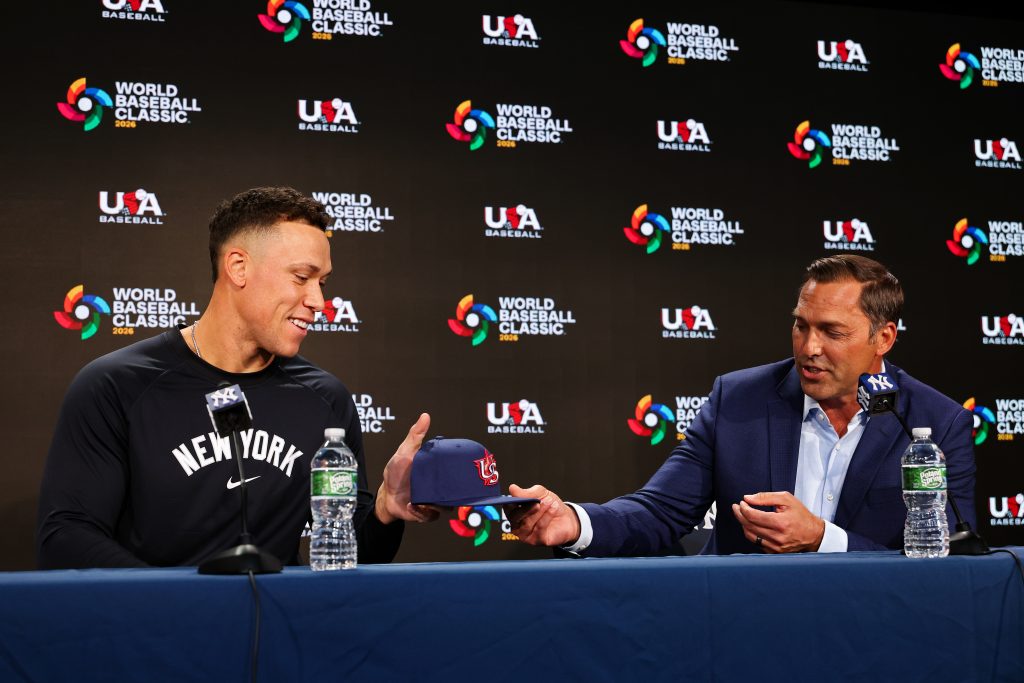
After years of failing to recruit the top MLB stars, the United States finally built a team that truly represented the best the country has to offer. The lineup was a stark improvement over the previous five iterations of the team, as former MVPs Aaron Judge and Bryce Harper finally made their Team USA debutsas well as emerging superstars Gunnar Henderson and Roman Anthony.
The real difference, however, came in the starting rotation. Three years after running out Merrill Kelly, Lance Lynn and Adam Wainwright, the U.S. was able to recruit both reigning Cy Young winners in Tarik Skubal and Paul Skenes, an established workhorse in Logan Webb and one of the best young pitchers in the game in Nolan McLean.
With an unprecedented level of talent on the roster, the United States performance throughout the tournament’s first five games could only be qualified as disappointing. Their pool play run included a too-close-for-comfort victory over Mexico and a shocking upset at the hands of Italy, and they were barely able to squeak by Canada in the quarterfinals.
As uninspiring as it may have been, the US was still able to navigate their way to a five-star matchup against the Dominican Republic in the semifinals. Though their offense once again came up small aside from a pair of solo shots from Henderson and Anthony, Skenes and five different U.S. pitchers combined to hold an all-time DR lineup to just one run.
All the United States needed to silence the critics was one more victory over Venezuela in the championship game, but their bats once again failed to deliver.
Eduardo Rodriguez carved them up for four shutout innings, and though a Bryce Harper eight-inning homer knotted the game at two, Eugenio Suárez put Venezuela ahead for good with an RBI double in the ninth to clinch their first-ever title.
The sheer volume of talent on the United States roster undoubtedly earns them a spot within the top 10, but placing them inside the top five feels a bit too rich for a team that slashed just .250/.368/.428 throughout the tournament and came up small in the biggest moments.
7. 2009 Japan
- Record: 7-2
- Result: Won Title
- Run Differential: +34
Key Performers:
- Shuichi Murata (3B): 8-for-25, 2 HR, 7 RBI, .939 OPS
- Kenji Johjima (C): 10-for-30, 1 2B, 1 HR, 4 RBI, .820 OPS
- Ichiro Suzuki (RF): 12-for-44, 2 2B, 1 3B, 5 RBI, .637 OPS
- Yu Darvish (RHP): 5 G, 2 GS, 13.0 IP, 7 H, 4 R (3 ER), 6 BB, 20 K
- Hisashi Iwakuma (RHP): 4 G, 3 GS, 20.0 IP, 12 H, 3 ER, 6 BB, 15 K
- Daisuke Matsuzuka (RHP): 3 G, 3 GS, 14.2 IP, 14 H, 4 ER, 5 BB, 13 K
Three years after winning the inaugural WBC title, Japan came back locked and loaded for a repeat performance in 2009.
Tournament MVP Daisuke Matsuzuka was back to lead a stacked pitching staff that lost 2006 hero Koji Uehara but added future MLB stars Hisashi Iwakuma and Yu Darvish.
The offense was also filled with MLB talent, as Nori Aoki, Kenji Johjima and Akinori Iwakuma added depth to a lineup that was once again centered around the incomparable Ichiro Suzuki.
Because of the way the tournament was set up, Japan would play four of its seven games against South Korea, routing them in the first matchup before dropping two of the next three contests.
Despite those two losses, Japan breezed through the other three games in pool play by a 15-0 margin, earning them home-field advantage in a semifinal matchup against the United States.
Though they had dropped three of their first seven games in the tournament, the Americans still posed a legitimate threat to Japan, but a five-run fourth inning against Roy Oswalt and another strong performance from Daisuke Matsuzaka allowed them to breeze to a 9-4 game.
This set up an incredible fifth contest against South Korea for the WBC title, and the rubber match proved to be the best game yet.
The teams traded blows into the bottom of the ninth, where Japan would hand the ball to Darvish, clinging to a 3-2 lead. A pair of one-out walks put the tying and winning runs on base, and though Darvish buckled down to strike out Shin-Soo Choo, Bum Ho Lee would follow with a single up the middle to bring home Lee and tie the score at 3.
The game would head into extras, where Japan would put together a rally of their own, advancing runners to second and third with two outs. That’s when Ichiro, quiet all tournament, would finally deliver the big hit, lining a single into center field to score both Iwamura and Seiichi Uchikawa to give Japan a 5-3 lead they would not relinquish.
While the 2009 Japanese championship team gets the edge over the 2006 team that suffered three defeats during their title run, their largely unremarkable offense (which included just four home runs in 9 games) prevents them from cracking the top five alongside the other title teams.
6. 2017 Puerto Rico
- Record: 7-1
- Finish: Lost Title Game to United States
- Run Differential: +29
Key Performers:
- Carlos Correa (3B): 8-for-24, 1 2B, 3 HR, 9 RBI, 10 BB, 1.250 OPS
- Francisco Lindor (SS): 10-for-27, 1 2B, 2 HR, 4 RBI, 1.049 OPS
- Yaider Molina (C): 8-for-24, 2 HR, 6 RBI, .916 OPS
- Javier Báez (2B): 8-for-7, 1 2B, 1 HR, 5 RBI, .789 OPS
- Seth Lugo (RHP): 3 GS, 15 IP, 11 IP, 7 ER, 5 BB, 12 K
- Edwin Díaz (RHP): 4 G, 5.1 IP, 2 H, 2 ER, 4 BB, 9 K, 2 SV
- Joe Colon (RHP): 4 G, 5 IP, 2 H, 0 R, 1 BB, 4 K
If this tournament were just about electricity and entertainment value, this Puerto Rican squad might rank at the top of the list. The 2017 World Baseball Classic came at the perfect time for Puerto Rico to showcase their young talent, as Carlos Correa, Francisco Lindor and Javier Báez were all entering their primes as perennial All-Stars.
The heart of the team, however, was catcher Yadier Molina, the future Hall-of-Fame catcher coming off one of the best offensive seasons of his career.
With Molina leading the pitching staff and a deep lineup that also included Eddie Rosario and a 40-year-old Carlos Beltrán, Puerto Rico rampaged through Pool D, outscoring their opponents by a 29-7 margin and hitting seven home runs in 3 games.
This set up a star-studded quarterfinal matchup against the Dominican Republic, where Molina would once again take the stage.
He kept DR off the board in the first by tagging Jean Segura out at home off the assist from Eddie Rosario, added a key insurance run with a solo shot in the seventh, and erased a Nelson Cruz stolen base attempt on a throw so clean that Báez didn’t even have to look as he applied the tag.
They would grab another signature win over the United States later, jumping on United States starter Marcus Stroman for four runs in the first inning and holding on for a 6-5 win.
A 13-run, 17-hit barrage against Venezuela would send Puerto Rico to the semifinal game against the Netherlands, a game that would once again go down in WBC lore.
Once again, it would be Molina grabbing the early headlines in the first inning, picking off Andrelton Simmons at second and back-picking Jurickson Profar at first as he celebrated a single.
Those pick-offs proved to be critical, as Wladimir Balentin would follow with a two-run homer to give the Netherlands an early 2-0 lead that could have been a lot worse
Correa would respond in the bottom of the first with a two-run shot of his own, and T.J. Rivera would tack on a solo shot of the game in the second inning. The star of the game, however, would be the Puerto Rico bullpen, as six different relievers combined to allow just one run over 8.1 innings.
The biggest performance of them came from Edwin Díaz, as he struck out the side in the tenth inning and navigated a pair of ghost runners in the eleventh. The offense would finally break through in the bottom of the eleventh, using a Molina sacrifice bunt and a Rosario sacrifice fly to score Correa and send Puerto Rico to their first-ever championship game.
If Puerto Rico had been able to finish the job in the championship game, they would have a strong argument for the best WBC team of all time. Unfortunately, their rematch against the United States proved to be no contest, as they mustered just three hits in an 8-0 defeat.
Despite a disappointing end, this team will still go down as one of the most memorable and fun teams in the history of the WBC, more than earning itself a spot high on this list.
5. 2017 United States
- Record: 6-2
- Finish: Won Title
- Run Differential: +20
Key Performers:
- Eric Hosmer (1B): 10-for-26, 3 2B, 1 HR, 5 RBI, 4 BB, 1.115 OPS
- Brandon Crawford (SS): 10-for-26, 3 2B, 1 3B, 6 RBI, 1.006 OPS
- Buster Posey (C): 4-for-15, 2 HR, 4 RBI, .980 OPS
- Marcus Stroman (RHP): 3 GS, 15.1 IP, 12 H, 4 R, 2 BB, 9 K
- Danny Duffy (LHP): 2 G, 8 IP, 8 H, 2 R (1 ER), 1 BB, 8 K
- Sam Dyson (RHP): 5 G, 6 IP, 0 H, 0 R, 0 BB, 4 K
- Luke Gregerson (RHP): 4 G, 4 IP, 0 H, 0 R, 1 BB, 3 K, 3 SV
Of all the rosters that the United States has put together, it is fairly surprising that this is the one that ended up winning the title.
A number of key position players declined to participate in the event, including both 2016 (Kris Bryant and Mike Trout) and 2015 (Bryce Harper and Josh Donaldson) MVP award winners, as well as the 2016 American League runner-up, Mookie Betts.
The absence of Clayton Kershaw, Max Scherzer, Justin Verlander, Chris Sale and other star American pitchers led to Marcus Stroman, who was coming off a 4.37 ERA, becoming the de facto ace.
There was certainly still talent on the United States roster, as Giancarlo Stanton was just a month away from winning his first MVP award and Christian Yelich, Nolan Arenado and Andrew McCutchen were squarely in their prime, yet they weren’t the juggernaut they could have been, and that was quickly made evident in pool play.
After sneaking by Colombia 3-2 in the opener, the U.S blew a late 5-0 lead to the Dominican Republic, with Nelson Cruz delivering the big blow with a three-run shot off Andrew Miller.
The U.S would fall once again in the second round of pool play, as a late rally against Edwin Díaz came up just short in a 6-5 defeat that put them on the brink of elimination.
Unlike so many other United States WBC teams, however, this 2017 was at its best when it mattered most. They would get their revenge against the Dominican Republic in a heart-pounding 4-2 victory, highlighted by a two-run Giancarlo Stanton laser beam and Adam Jones robbing a potential game-tying home run against teammate Manny Machado.
The scene would shift to Los Angeles for a showdown against Japan. This time, it was the pitching staff that would lead the way, holding the Japanese offense to just four hits in a hard-fought 2-1 victory.
It wouldn’t be until the championship game against Puerto Rico that the United States offense finally broke through. A two-run Ian Kinsler homer set the tone for an 8-run, 13-hit attack, while Stroman would bounce back from a rough first outing against Puerto Rico to allow just one hit over six scoreless innings.
While this United States wasn’t quite as dominant or star-studded as some of the teams ahead of them in the ranking, the gauntlet they went through on their way to the championship gives them the edge over each of Japan’s first two title teams.
4. 2026 Dominican Republic
- Record: 6-1
- Result: Lost Semifinal to the United States
- Run Differential: +40
Key Performers:
- Vladimir Guerrero Jr. (1B): 8-for-18, 3 2B, 2 HR, 8 RBI, 1.420 OPS
- Fernando Tatis Jr. (RF): 7-for 16, 2 HR, 11 RBI, 6 BB, 1.404 OPS
- Junior Caminero (DH): 7-for-20, 1 2B, 3 HR, 7 RBI, 1.259 OPS
- Juan Soto (LF): 6-for-23, 2 HR, 4 RBI, 5 BB, .915 OPS
- Luis Severino (RHP): 2 GS, 7.1 IP, 8 H, 2 R, 1 BB, 11 K
- Brayan Bello (RHP): 1 GS, 5 IP, 1 H, 1 R, 0 BB, 7 K
- Albert Abreu (RHP): 4 G, 4 IP, 1 H, 0 R, 1 BB, 7 K
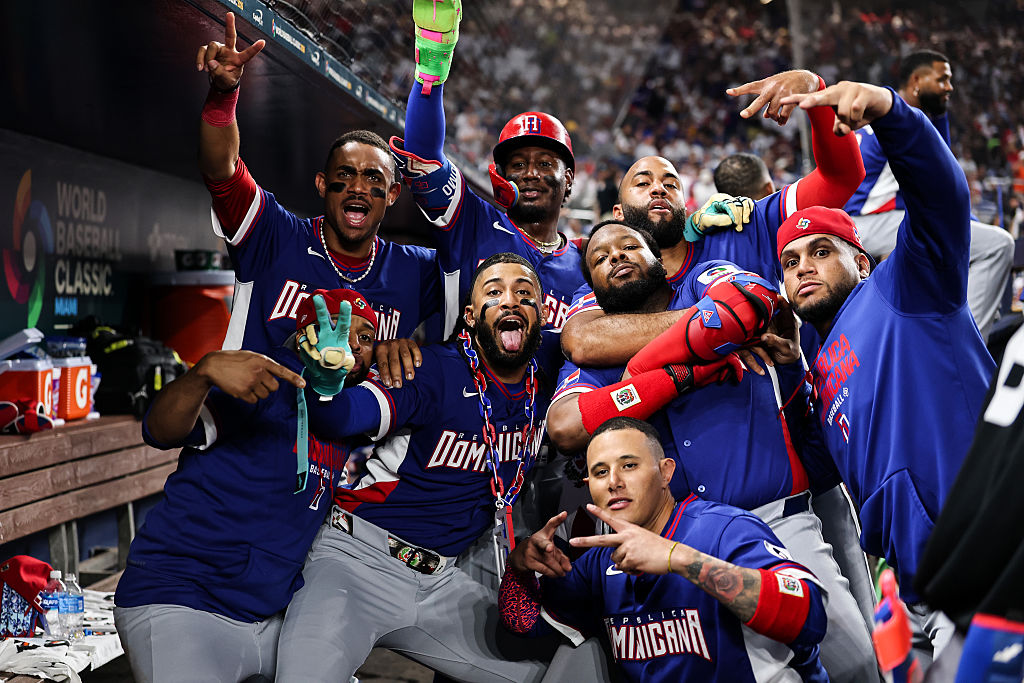
Ranking this Dominican Republic team was a complicated task. Through five games, they were the most dominant team in the history of the WBC, outscoring their opponents by nearly seven runs a game, even with the mercy rule in place.
Their lineup read like an All-Star team, and, unlike many of the best United States squads, they were all squarely in the middle of their prime. They set a record with 15 home runs as a team, led by three titanic shots from Tampa Bay Rays superstar Junior Caminero.
Yet much like the 2006 squad, this stacked team wasn’t able to finish the job. While it’s true they had one of the toughest matchups imaginable against American ace Paul Skenes, it wasn’t like they didn’t have their chances.
Trailing 2-1 in the bottom of the fifth, the DR knocked Paul Skenes out of the game with back-to-back singles only to watch Juan Soto, arguably their best hitter, bounce into an inning-ending double play against reliever Tyler Rogers.
They would get an even better chance in the bottom of the seventh, as an Austin Wells double and a Geraldo Perdomo single put runners on the corners with one out for the top of the order. Once again, the U.S. buckled down, as David Bednar struck out Fernando Tatis Jr. and Ketel Marte to stop the rally in its tracks.
The Dominicans would get one more chance in the bottom of the ninth against Mason Miller, advancing Julio Rodríguez all the way to third with two outs.
After working the count full, it looked like Perdomo had worked a walk when he took a slider that appeared to be well below the zone, but home plate Cory Blaser rung him up anyway, ending both the game and the Dominican Republic’s title hopes.
All in all, despite holding the United States to a pair of solo shots, a 2-for-9 performance with runners in scoring position doomed the Dominicans, a stunning output for an offense that seemed like it could do no wrong through the first five games.
Their rampage through pool play and the quarterfinals, including handing eventual champion Venezuela their only loss of the tournament, lands them inside the top five of this list, but the Dominican Republic’s inability to capture the ultimate prize is a significant stain on their legacy.
3. 2026 Venezuela
- Record: 6-1
- Result: Won Title
- Run Differential: +20
Key Performers:
- Ronald Acuña Jr.: (RF) 5-for-18, 1 2B, 2 HR, 3 RBI, 3 BB, 1.125 OPS
- Makiel García (3B): 10-for-26 2 2B, 1 HR, 7 RBI, 3 2B, .970 OPS
- Luis Arráez (1B): 8-for-26, 4 2B, 2 HR, 10 RBI, 1.059 OPS
- Wilyer Abreu (LF): 6-for-24, 2 HR, 7 RBI, 4 BB, .845 OPS
- Emmanuel De Jesus (LHP): 2 G, 1 GS, 7.2 IP, 3 H, 1 R, 1 BB, 11 K
- Danny Palencia (RHP): 5 G, 5.0 IP, 0 H, 0 R, 1 BB, 9 K, SV
- Ángel Zerpa (LHP): 6 G, 5.1 IP, 3 H, 0 R, 2 BB, 8 K
- Andrés Machado (RHP): 6 G, 6.1 IP, 5 H, 2 R, 1 BB, 10 K
Constantly overshadowed by their Latin American rivals in the Dominican Republic and Puerto Rico, Venezuela proved in 2023 that they were a force to be reckoned with, running the table in the pool play and pushing the United States to the limit in the quarterfinals.
Though they wouldn’t have the services of country icon Jose Altuve, Venezuela came back with an even better squad in 2026. 2023 National League MVP Ronald Acuña Jr. headlined a lineup that, while light on other superstars, featured eight other above-average MLB players and at least three more waiting on the bench.
The biggest difference, however, came in the bullpen, whose lack of depth came back to haunt them in the loss to the US. The additions of Cubs closer Danny Palencia, Mariners set-up man Eduard Bazardo, and Brewers left-handed specialist Ángel Zerpa gave them three late-inning options surpassing anything they had last year.
No matter how manager Omar Lopez juggled the lineup, it seemed like Venezuela could do no wrong through their first three games, outscoring the Netherlands, Nicaragua and Israel by a combined 21-5 margin.
This set up a must-see showdown against the Dominican Republic, a game that would decide the top seed in the next round. Though they tagged former Cy Young winner Sandy Alcántara for three runs in three innings, Venezuela would become the latest team unable to slow down the Dominican offense, and a late rally came up just short in a 7-5 loss.
Instead of getting to play 2-2 South Korea, Venezuela was matched up against the defending champion Japan in the semifinals, and it looked like they would be headed for another quarterfinal exit when the lethal Japanese offense jumped ace Ranger Suarez for five runs in just 2 ⅓ innings.
Yet in what would become the defining game of their championship run, Venezuela would rally against Japan’s bullpen. Makiel García cut the lead to one with a two-run homer in the fifth, and Wilyer Abreu would send the crowd into a frenzy with an upper-deck three-run shot in the seventh.
Unlike their quarterfinal matchup against the United States in 2023, Venezuela’s bullpen would make the comeback stand up, as six different relievers combined to toss 6.1 innings.
When Ezequiel Tovar squeezed a Shohei Ohtani pop-up with two outs in the ninth, Venezuela officially became the first team to ever eliminate Japan before the semifinals and secured their own spot in the semifinals for the first time since 2009.
Venezuela’s offensive resiliency would once again be on display against Italy, the tournament’s surprise team, who took a 2-1 lead into the seventh inning.
With two outs and runners on the corners, it looked like Italy would have a chance of getting out of the inning unscathed when Acuña Jr. hit a ground ball to shortstop, but the former 70-stolen base man was able to just beat the throw from Sam Antonacci to knot the score at two.
García and Arráez would follow with RBI singles of their own, and the three-headed monster of Palencia, Bazardo and Andrés Machado would once again deliver three perfect innings of relief to send Venezuela to their first-ever championship game.
All that stood in Venezuela’s way of a championship was the United States, the team that had ended their undefeated run in 2023. The game couldn’t have started much better for Venezuela, as after a disastrous performance against the Dominican Republic, Eduardo Rodriguez overmatched the United States offense over 4.1 shutout innings.
A pair of solo shots by García and Abreu gave Venezuela a 2-0 lead, and their bullpen would continue to hold the United States at bay into the eighth inning.
Needing just one out to turn the ball over to Palencia, Machado picked a bad time to make his worst pitch of the tournament, hanging a changeup over the heart of the plate that Bryce Harper deposited over the center field wall for a game-tying two-run shot.
For many teams, a momentum swing like that would have been too much to overcome, but Venezuela would strike right back in the ninth. Arráez grinded out a leadoff walk against Garrett Whitlock, and Eugenio Suárez would bring home pinch-runner Javier Sanoja with a double in the gap to give Venezuela a 3-2 lead.
As he did in each of the previous two contests, Palencia would make sure that lead stood up, capping off a 1-2-3 inning by blowing a 100 mph past Roman Anthony to clinch Venezuela’s first-ever WBC title.
While Venezuela may not have had the top-end talent of some of the other juggernauts in tournament history, their depth in both the lineup and the pitching staff could go head-to-head with anybody, and their signature victories over both the United States and Japan give them some extra points.
The only blemish on their resume was their defeat to the Dominican Republic, and while they had no control over the DR’s failure to meet them in the championship game, it’s fair to wonder whether Venezuela would have still won the championship if they had to square off with them again.
2. 2013 Dominican Republic
- Record: 8-0
- Result: Won Title
- Run Differential: +17
Key Performers:
- Robinson Canó (2B): 15-for-32, 4 2B, 2 HR, 6 RBI, 1.295 OPS
- Carlos Santana (1B): 6-for-22, 1 2B, 2 HR, 3 RBI, 9 BB, 1.076 OP-
- Hanley Ramirez (DH): 5-for-22, 2 HR, 3 RBI, 7 BB, .900 OPS
- Nelson Cruz (RF): 10-for-33, 4 2B, 6 RBI, .748 OPS
- Samuel Dedino (RHP): 3 G, 3 GS, 13 IP, 11 H, 1 R, 5 BB, 17 K
- Fernando Rodney (RHP): 8 G, 7 IP, 7.1 IP, 1 H, 0 R, 3 BB, 8 K, 7 SV
- Wandy Rodriguez (LHP): 2 G, 2 GS, 9.1 IP, 5 H, 1 R, 3 BB, 6 K
The only team to ever go 8-0 In the World Baseball Classic, the 2013 Dominican Republic squad was not as dominant as you may think. Aside from Robinson Canó, who went an incredible 15-for-32 with six extra-base hits, the Dominican offense never really got going, scoring just 36 runs in the eight games.
What they did have, however, was pitching, and lots of it. Samuel Deduno and Wandy Rodriguez combined to allow just two runs in their five starts, while the bullpen quartet of Pedro Strop, Santiago Casilla, Octavio Dotel and Kelvin Herrera combined for 18 scoreless appearances.
Even with all those standout arms, the clear star of the show was closer Fernando Rodney, who allowed just one hit while converting all seven of his save opportunities and spearheaded the “Rally Plantain” campaign.
Though it wasn’t always pretty, the Dominicans consistently found a way to win against quality teams.
They squeaked out a victory over Puerto Rico in the first round of pool play thanks to a Canó home run and a dominant bullpen performance, then broke a 1-1 deadlock with a two-run rally off Craig Kimbrel in a game that played a major part in eliminating the United States.
As good as the Dominican pitching staff was in the opening round, they seemed to get better as the tournament went along, allowing a total of three runs in their last five games. This included a pair of shutouts over a solid Puerto Rico offense, capped off by a three-hit, ten-strikeout masterpiece to clinch the title.
By definition, the Dominicans couldn’t have done more than their 8-0 run through the tournament, but their offensive struggles in a relatively down year for the WBC result in them slotting behind the top team on this list.
1. 2023 Japan
- Record: 7-0
- Result: Won Championship
- Run Differential: +38
Key Performers:
- Shohei Ohtani (DH): 10-for-23, 4 2B, 1 HR, 8 RBI, 10 BB, 1.345 OPS
- Kazuma Okamoto (1B): 6-for-18, 2B, 2 HR, 7 RBI, 8 BB, 1.278 OPS
- Masataka Yoshida (LF): 9-for-22, 1 2B, 2 HR, 13 RBI, 4 BB, 1.258 OPS
- Kensuke Kondoh (RF): 9-for-26, 4 2B, 1 HR, 5 RBI, 8 BB, 1.115 OPS
- Shohei Ohtani (RHP)i: 3 G, 2 GS, 9.2 IP, 5 H, 2 R, 2 BB, 11 K, 1 SV
- Yoshinobu Yamamoto (RHP): 2 GS, 7.1 IP, 4 H, 2 R, 2 BB, 12 K
- Roki Sasaki (RHP): 2 GS, 7.2 IP, 7 HR, 4 R (3 ER), 2 BB, 11 K
- Taisei Ota (RHP): 4 G, 4 IP, 4 H, 0 R, 1 BB, 3 K
Through the first 4 iterations of the World Baseball Classic, Japan has become known as a team that had outstanding pitching but lacked the offensive firepower of many of the other title contenders.
That all changed in 2023, as Japan added not only two-way superstar Shohei Ohtani to the mix but also future MLB contributors Masataka Yoshida, Munetaka Murakami, Kazuma Okamoto and Cardinals outfielder Laars Nootbaar.
Still, the star of the show was the pitching staff, as Ohtani and five-time All-Star Yu Darvish headlined a deep rotation that also included Roki Sasaki, Yoshinobu Yamamoto and Shota Imanaga, each of whom was less than two years from making their Major League debut.
The first five games went as expected for Japan, as they outscored their pool play opponents by a 38-8 margin and rolled through Italy in the quarterfinals.
Their first challenge would come in the semifinals against Mexico, as a three-run shot by Luis Urias put them in a 3-0 hole into the bottom of the seventh.
That’s when Masataka Yoshida, who would lead all WBC hitters with 13 RBIs, would cement himself as a Japanese baseball legend, delivering a three-run shot that was just able to clip the right-field foul pole that tied the score at 3.
Yoshida’s heroics would not be enough, however, as Mexico battled back for two more in the eighth inning and clung to a 5-4 lead headed into the ninth.
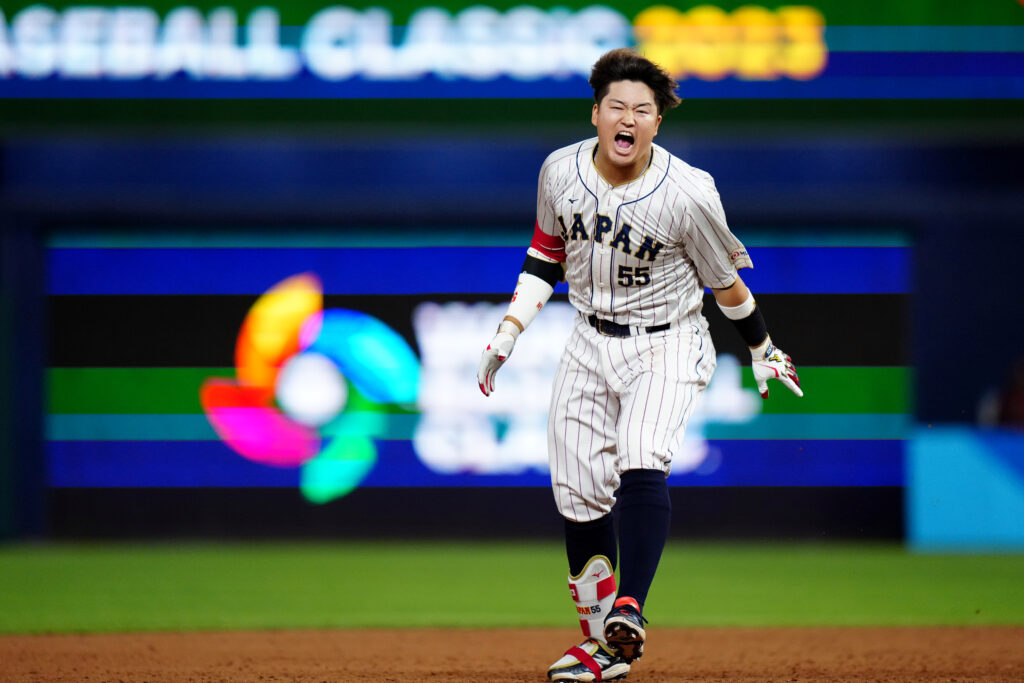
In the midst of a rare quiet game at the plate, Ohtani finally broke through with a leadoff double that put the tying run in scoring position. After a Yoshida walk, the 23-year-old Murakami would play the role of hero, lining a double off the center field wall that scored both Ohtani and pinch-runner Ukyo Shuto and sent Japan to the championship game.
In a rematch against a United States team that sent them home in the 2017 semifinals, Murakami would once again come up big, tying the score at 1 with a titanic home run off Merrill Kelly. A Laars Nootbaar RBI groundout would give Japan the lead, and Okamoto would tack on what would prove to be a critical insurance run with a solo home run in the fourth.
Meanwhile, the Japanese pitching staff completely neutralized the United States after a Trea Turner second-inning homer, as four different Japanese relievers combined to shut out the United States over the next five innings.
Needing six outs for the title, Japan turned to Darvish for a rare relief appearance, and although Kyle Schwarber greeted him rudely with an upper-deck homer to cut the lead to one, he was able to secure three crucial outs with the lead still intact.
This set up the dream scenario: Ohtani, the world’s biggest superstar, jogging out of the bullpen to try and close out Japan’s third WBC title. He would walk pinch-hitter Jeff McNeil but induced a 4-6-3 double play from Mookie Betts, leaving the United States’ hopes in the hands of Ohtani’s Angels teammate Mike Trout.
With the count 3-2 and 35,000 fans holding their collective breath, Ohtani made perhaps the best pitch of his life: A whiffle-ball sweeper dotted perfectly down-and-away that Trout could only wave at, securing Japan their third WBC title.
While there have been many great teams in WBC history, the combination of talent and performance put forth by Japan in 2023 is unmatched, making them an easy selection for the best WBC team of all time.
Become a Member of Just Baseball
Subscribe and upgrade to go ad-free!
* Save 25% by subscribing annually.
Written by
Daniel Fox is a contributing writer for Just Baseball. He has previously written for Pitcher List, BoSoxInjection, and in the Cape Cod Baseball League. He is…