
Fantasy Baseball 2026: Breakout Sleepers at Every Position
Go draft this year's Maikel Garcia. Here are a bunch of breakout sleeper picks at every position for the 2026 MLB fantasy draft.
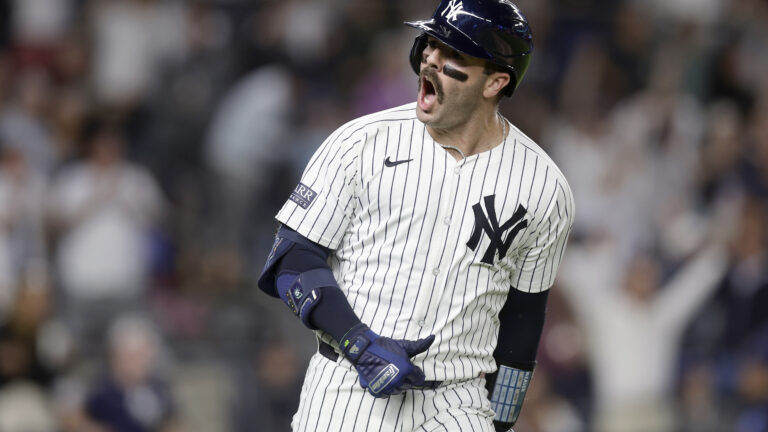
Bobby Witt Jr., Tarik Skubal, Juan Soto, and Paul Skenes are all getting drafted in the first round, and rightfully so. Proven players with a phenomenal track record are always the easiest to project and land the highest in each draft.
But, at one point in time, each was available in late rounds. That’s the thing about stars. They all used to be prospects or unproven at some point before exploding onto the scene. Today, that’s what we are looking for.
Sleepers.
Players you can find in later rounds with the type of upside that can quickly transform them into early-round value. Now, these value picks don’t always have to be rookies. All you are looking for is upside and opportunity.
Marrying those two can be tricky. Do you go for the rookie top prospect or the guy who’s had a season or two and might break out? Guaranteed innings with a limited ceiling or rolling the dice on the electric arm that could crack the rotation?
Luckily, we have got you covered. Today we are going to break down sleepers at each position and tell you why you should consider drafting them.
30+ Fantasy Baseball Sleepers Worth a Draft Look at Each Position for 2025
Starting Pitchers (4)
Quinn Priester, Milwaukee Brewers
Quinn Priester has had a pretty wild start to his career.
A top prospect in the Pirates organization, Priester started to fade before being traded to the Red Sox. He was then later moved to the Brewers, where he broke out in 2025. Across 24 starts, Priester posted a 3.32 ERA, 4.01 FIP, 7.55 K/9, and 2.86 BB/9.
Priester does not have the type of strikeout stuff that attracts early-round sections, but he comes with four pitches that he locates and mixes well to keep batters off balance. Sure, he’ll allow some hard contact, but his sinker-heavy approach usually results in this contact being on the ground, shown in his 55.7% ground-ball rate. That’s elite.
In this range, you usually can chase high-strikeout, high-walk pitchers with upside, or you can lean into more stable profiles. Priester is the latter, but I trust the Brewers organization to get the most out of him.
We saw real improvement last season, and I would not be surprised if he took another step in 2025. At the very least, I see a relatively high-floor arm that can fill the back of your rotation.
Brady Singer, Cincinnati Reds
You know what, Brady Singer is not all that different from Olson. A strikeout rate around 8.5 K/9, a walk rate around 3.00 BB/9, and a high ground-ball rate, but he does come with a higher ERA and FIP. While I think Olson has more to dream on, Singer is the safer pick.
Singer joined the Reds last season and pitched to a 4.03 ERA and 3.98 FIP across 32 starts. Although he now calls Great American Ball Park his home, his 10% HR/FB rate was the best of his career. What you get with Singer is consistency. Rarely injured and a predictable stat line isn’t sexy, but it does carry value.
I like Singer in this range because knowing what you are going to get helps balance the risk you take elsewhere. Not every pitcher is going to light up with little red bubbles on Savant, but I’d happily take a guy who should be right around a 4.00 ERA to round out my rotation.
Mike Burrows, Houston Astros
The Pirates had too many high-end arms, which made Mike Burrows expendable — a move they could grow to regret. Burrows has not had a full season of work, but did start 19 games in Pittsburgh last season, pitching to the tune of a 3.94 ERA and 4.00 FIP.
Burrows comes with a profile that we all know too well: Strikeout stuff with spotty command. However, his command in 2025, both in the majors and minors, was much improved compared to years prior.
He offers a changeup that produced a 43% whiff rate and neutralizes lefties, but he needs work on his fastball command to avoid getting hit hard.
Burrows’ changeup is already great. I think he can figure out either his curveball or slider, giving him a breaking ball to work with. The big question comes down to his fastball. The velocity and movement are there, but if he continues to struggle with location, perhaps we see more of his sinker.
He’s an upside pick with a fresh start.
David Peterson, New York Mets
You will not hear anyone clearing their schedule to tune in for a David Peterson start, but it’s hard to deny the production we have seen over the past two seasons. Peterson doesn’t offer the same strikeout upside he did earlier in his career, but he has improved his command.
What I like most about Peterson is his elite ground-ball rate of 54.7%. I’m less worried about a somewhat-high 3.47 BB/9 because his profile usually does not result in batters stringing together hits.
I should also mention that Peterson managed to fix his biggest issue: home runs. In fact, over the past two seasons, he’s cut his home runs per fly ball in half.
There’s a theme with all of these arms: they’re ground-ball pitchers and are steady options that give you a high floor. Peterson falls into that category, which is the exact type of pitcher I like to add in this range.
You might want to chase upside in the later rounds, but don’t overlook the proven vets who can provide just as much value.
Catchers (3)
J.T. Realmuto, Philadelphia Phillies
The best days of J.T. Realmuto’s career are now behind him, but that didn’t deter Philadelphia from signing the veteran to a three-year, $45 million contract this offseason. While he’s no longer the 20/20 threat he was at his peak, this meaningful investment assures us that he’s going to play often.
Last season was the worst that we had seen from Realmuto in a decade. The Phillies’ backstop totaled just 12 home runs with a .257 batting average, good for a 94 wRC+ over 550 plate appearances. The projections generally see Realmuto performing a bit better in 2026.
ZiPS is the projection system that sees the most improvement coming for Realmuto, forecasting him for 15 homers and a 104 wRC+ in 492 plate appearances.
Steamer does not take kindly to Realmuto, projecting him for just 390 plate appearances and a 93 wRC+. Steamer is significantly lower on Realmuto’s playing time than other projection outlets, which makes it an outlier in this case.
Overall, Realmuto is a replacement-level catcher in 10, 12, and even 14-team leagues. He doesn’t come with much upside at this stage in his career, but has a decent floor. With that in mind, you can feel comfortable drafting him in deep leagues or as a second catcher because he’s going to accumulate plate appearances.
Austin Wells, New York Yankees
Austin Wells may not be the highest-drafted, catcher-eligible player on the Yankees, but he’s going to be their primary backstop. Ben Rice is catcher-eligible for fantasy but is likely to function as New York’s primary first baseman. Wells’ only real competition for playing time will be J.C. Escarra.
Wells has his flaws as a hitter — his plate discipline is poor, and he strikes out often. In spite of those negative attributes, he is able to hit for some pop.
Wells had an above-average hard-hit rate and barrel rate to go with good bat speed last season. On a Yankees team with dangerous hitters around him, Wells also has a good opportunity for gathering runs scored and RBI this coming season.
Projection systems seem to agree that Wells will hit around the .220s with close to 20 home runs in 2026. OOPSY likes Wells to hit .233 with 19 homers (104 wRC+) in 481 plate appearances, while THE BAT sees him batting just .216 with 17 home runs (90 wRC+).
If you’re in the market for power production from a catcher in deeper-league drafts, Wells is not a bad choice.
Ryan Jeffers, Minnesota Twins
Ryan Jeffers has been an above-average hitter (by wRC+) in three consecutive seasons. On a desolate Twins roster, he should get many opportunities to hit between catcher and designated hitter.
In 2024, Jeffers mashed 21 homers but hit for just a .226 average, earning him a 106 wRC+. Last season, he seemed to change his approach a bit. In a similar amount of plate appearances, Jeffers hit just nine round-trippers while batting .266, good for a 113 wRC+. If Jeffers can reach a compromise between those two campaigns, he could be a real value at this spot.
Projections on the Minnesota backstop’s playing time seem to vary a bit, as ZiPS forecasts just 428 plate appearances for Jeffers, while others have him over 500. What the projection systems do agree on is that Jeffers will be an average-or-better hitter.
Steamer really likes Jeffers on a per-game basis, projecting him for a .245 average with 16 home runs in just 462 plate appearances. Steamer values Jeffers as the 14th-best catcher (C14) by its projections, and he is being taken as C23.
If he were to receive the 500-plus plate appearances that other projection systems have him d
First Basemen (4)
Ryan O’Hearn, Pittsburgh Pirates
The career arc for Ryan O’Hearn has been a fun one to follow.
Bouncing back and forth from Triple-A with Kansas City to carving out a role in Baltimore to being an impact bat at last year’s trade deadline, O’Hearn has given us three straight seasons of success. I think it’s time we take notice.
O’Hearn has the look of a power hitter, but has focused more and more on contact the past few years. He’s cut down on his chase rate, which has improved his walk rate, and he consistently outperforms the average zone contact rates.
I do think there’s enough juice to reach 20 home runs, but his value doesn’t solely rest on power. All in all, O’Hearn is a much better hitter than many have given him credit.
Now in Pittsburgh, O’Hearn will have an opportunity to hit in the middle of the lineup and be featured in a way we have not seen before. I’m not sure where he’ll be slotted into the batting order, but I’m sure it will be in the top four. Last season, he was moved around the batting order quite a bit, but I think he’ll have a more stable spot in Pittsburgh, which only helps his value.
Nolan Schanuel, Los Angeles Angels
I know what you are saying: “Nolan Schanuel, the guy with no power?” Hear me out.
Schanuel was drafted in the first round in 2023 and debuted weeks later. The Angels did him no favors with his development, but he’s improved each year and I think 2026 will be his best one yet.
His first full season was 2024, where he walked at an 11% clip, struck out 17% of the time, and slashed .250/.343/.362 with 13 home runs.
He cut his strikeout rate last season to 12.6% while improving to a .264/.353/.389 slash. He also posted an average exit velocity of 87.5 mph, an improvement from 86.1mph in ’24 and 85.4 mph in 2023. The quality of contact continues to improve without a dip in the amount of contact, which is a trend that always interests me with sleepers.
By no means do I think Schanuel will become a power hitter, but he excels at all other aspects of being a good hitter. With more time on task and growth, is 17 home runs out of the question? I don’t think so. Seeing such a high walk and high average at only 23 years old is encouraging, and there is more room to grow.
The Angels’ lineup does not scream run production opportunities, but we know Schanuel will be hitting high in the lineup — probably the two hole — which should give him more at-bats than some first basemen in this ADP range. More at-bats equals more opportunity.
Triston Casas, Boston Red Sox
When the Red Sox acquired Willson Contreras, questions immediately came up about where Triston Casas would play. The former top 100 prospect has seen his momentum halted by injury after injury, and did not look like himself in a small sample last season.
The only time we saw Casas have over 500 plate appearances was in 2023, which resulted in a .263/.367/.462 slash with 24 home runs at 23 years old. How much have the injuries impacted his ability? It’s hard to say for sure, but I believe there’s enough talent and opportunity to make this selection make sense.
The Red Sox have been involved in trade rumors all offseason and at some point will likely pull off a trade that frees enough at-bats for Casas to see time at DH or first. It’s also possible Casas is the one traded, which would likely open up everyday at-bats, making him even more intriguing.
I struggle to believe someone as young and talented as Casas will be playing in the minors for an extended period of time in 2026. Considering we are approaching pick No. 500, this upside play could pay off in a big way.
Charlie Condon, Colorado Rockies
The Rockies moved on from Michael Toglia this winter, whose role is fairly similar to what Charlie Condon could fill in 2026. After being the third-overall pick in 2024, Condon has quickly worked his way up to Double-A, where he posted a 132 wRC+ in 55 games.
The strikeouts will be something to monitor, but the power potential, especially at Coors, could be a steal this deep in your draft. If you have reached the 600s, I assume you are in a league deep enough where stashing a player is not uncommon.
Colorado’s first base situation is currently Troy Johnson or Blaine Crim — two 28-year-olds who have combined for fewer than 200 plate appearances. I see why the Rockies have brought them in, but they aren’t exactly the caliber of player or prospect to block someone of Condon’s upside.
Condon could also play in the outfield, which is much more stable than first. Regardless of how much he plays in the outfield, the positional flexibility makes it that much easier to stomach on your roster. The pick is risky because playing time is not guaranteed in any way, but that’s the ecosystem you live in once you reach the 600s.
Second Basemen (3)
Brendan Donovan, Seattle Mariners
In each of his first four seasons in the major leagues, Brendan Donovan has batted at least .278. That standard may seem insignificant to your grandfather, but that’s a well-above-average mark to sustain over an extended period these days. His move from St. Louis to Seattle may not help him from a power perspective, but being in a better lineup should boost his counting stats.
Donovan has only reached the 600-plate appearance (PA) plateau once, in 2024, where we saw him hit 14 home runs. Last season, in 515 PA, Donovan hit 10 long balls. There’s below-average power production here, but his double-digit homer projection is forecasted to be better than the likes of Hoerner, Luke Keaschall, and Xavier Edwards.
Currently being selected as the 22nd-best second baseman (2B22), the projections agree that he will provide greater value at this draft position.
ATC, which is considered a good aggregate of all projection systems, believes that Donovan will finish as 2B18. Steamer, which weights past performance heavily, sees Donovan as 2B14. OOPSY, which tends to prefer younger players with bat speed, is lower on Donovan (2B23).
Even if you side with the pessimistic projection on Donovan, he isn’t a bad pick at this price.
Willi Castro, Colorado Rockies
Willi Castro has hit at least eight home runs and stolen at least nine bases in each of the past five seasons. In 2023, Castro stole 33 bases but has since posted totals of 14 and 10. After signing with the desolate Rockies this offseason, there’s reason to believe that he could receive ample playing time and run more frequently.
Castro has spent much of his career as a super-utility man, which has granted him eligibility at second base, third base, and outfield for fantasy this season. Castro has 42nd-percentile bat speed, which has allowed him to post double-digit homer seasons in back-to-back years.
Unfortunately, he still wasn’t hitting the ball hard consistently — his average exit velocity was in the bottom nine percent of big leaguers last season.
Calling Coors Field his home park this year should help him have a decent floor of non-zero power production. The opportunity for a higher ceiling could come from being aggressive on the basepaths, too. OOPSY boasts the highest stolen bases mark for Castro at 16, but he has above-average sprint speed and we’ve seen him double that total recently.
Castro is a deep-league, late-round pick, but he’s one that has a chance to provide some value.
Andrés Giménez, Toronto Blue Jays
I had to deliberate between a few options to decide which player deserves this last spotlight.
Nolan Gorman has a clear path to playing time and has shown power. Jeff McNeil is a steady veteran moving to friendly hitting confines in Sacramento. Ultimately, I landed on Andrés Giménez, because if you’re anything like me, you may tend to chase the best overall hitters early in drafts and find yourself short on stolen bases later.
Giménez, who should be Toronto’s Opening Day shortstop with the departure of Bo Bichette, has shown a tendency to run. Prior to the 2025 season, Giménez had stolen 30 bases in back-to-back campaigns. He swiped just 12 bags in 101 games with the Blue Jays last year.
Currently being selected as 2B28, some projection systems forecast him to be more valuable.
ZiPS DC, which alters ZiPS projections by using curated depth charts, likes Giménez as 2B15. ZiPS DC projects Giménez for a .249 average with 14 homers and 22 steals. THE BAT X, which relies heavily on batted-ball metrics, is low on Giménez, but still forecasts him to finish as 2B22.
There’s not a lot of upside with Giménez, but there is potential for him to exceed his draft value at this spot.
Third Basemen (3)
Alec Bohm, Philadelphia Phillies
Nobody in the draft room will let out any “oohs” or “ahhs” when Alec Bohm comes off of the board, but he’s a solid, high-floor pick.
When healthy, Bohm should play every day and be an average-or-better hitter in a good lineup. Bohm may not have a great deal of raw power, but he can benefit fantasy teams in other ways.
Even though Bohm has only hit 20 home runs in a season once, he routinely posts high batting averages and drives in runs. The lowest average we’ve seen from Bohm over the past four seasons is .274, and he recorded 97 RBI in back-to-back campaigns in 2023 and 2024.
ZiPS DC, which alters ZiPS projections based on curated depth charts, is the fondest of Bohm. ZiPS DC sees Bohm batting .282 with 16 home runs and 78 RBI, which would rank him as the 12th-best third baseman (3B12) for 2026.
THE BAT X, which heavily weights Statcast batted-ball metrics, is less excited about Bohm. THE BAT X has Bohm hitting .271 with 14 homers, which ranks him as 3B15 in that valuation algorithm.
Bohm is currently going as 3B21, but the projections agree that his contributions will be more valuable.
Miguel Vargas, Chicago White Sox
In his first full season with the opportunity to play every day, Miguel Vargas held his own.
He’d been blocked by the Dodgers for the first few years of his big-league career, but with the rebuilding White Sox, his spot in the starting lineup should remain secure. In 2025, Vargas posted career bests in plate appearances (569), home runs (16), and wRC+ (101).
He doesn’t swing the bat very hard (25th-percentile bat speed), but Vargas still posts a league-average barrel rate. Where Vargas thrives is plate discipline; his strikeout (17.6%) and walk (9.8%) rates were both above average. Vargas’ chase rate (21.6%) was nearly in the top 10% of all batters as well.
Unlike Bohm, THE BAT X seems to really like Vargas. THE BAT X projects Vargas for a .244 average with 22 home runs and a 110 wRC+, which ranks him as its 3B12.
ATC, a projection system that incorporates the aggregate outputs of other systems, is a bit lower on Vargas from a batting-average standpoint. ATC has Vargas as 3B17, batting .233 with 18 homers.
Since he’s currently being drafted as 3B25, Vargas seems like another safe, high-floor third baseman to draft at a discount.
Colt Keith, Detroit Tigers
Colt Keith hasn’t been phased by major-league pitching in his first two big-league seasons. Keith has batted .260 and .256, respectively, while hitting 13 home runs in each of those campaigns. In 2026, he’ll be a big part of a Tigers team that hopes to win the AL Central.
Keith’s main weakness, from a Statcast perspective, is that his bat speed is below average (27th percentile). Other than that subpar metric, there’s plenty to like with Keith. His 90-mph average exit velocity is right at league average, his 25% chase rate was in the top third of the league, and his 10.3% walk rate was in the top 27% of all batters.
RosterResource projects Keith as the Tigers’ leadoff hitter against righties in the upcoming campaign. The projections all agree that Keith will hit between .253-.265 with 13-16 home runs. Where the projections disagree is with Keith’s playing time, which ranges from 462-525 PA. THE BAT X, which has the lowest wRC+ projection for Keith (104), has him finishing as 3B26.
Seeing as though Keith is being selected as 3B27 (and 2B24), he seems likely to at least return value at this draft position. Given his multi-position eligibility, he could be a nice fill-in as a corner or middle infielder in leagues with 12 teams or more.
Shortstops (3)
Carlos Correa, Houston Astros
By now, you have likely rostered Carlos Correa at some point in your fantasy baseball journey. Maybe you got burned by one of his injury-riddled seasons, or perhaps you got lucky and had him for 130 games. Either way, you know what Correa can bring to your team.
Last season, Correa was mostly pedestrian before a move sent him back to Houston where he finished the year slashing .290/.355/.430 with six home runs and a 122 wRC+ across 51 games. It was improvements across the board compared to how he started the season in Minnesota.
The power numbers can be hit or miss with Correa, but I do think they have a better chance to shine in Houston than in Minnesota. He still puts up a respectable OBP and will help you in the average department. Correa will now come with both shortstop and third base eligibility, too, which only helps his draft stock.
In 2024, we saw an impressive .310/.388/.517 slash line with 14 home runs across 86 games. Once again, injuries held him from a full season. We know there is going to be a level of risk you’ll have to be willing to take when drafting Correa, but we have seen a lot more good than bad from the 31-year-old across the past two seasons.
Kevin McGonigle, Detroit Tigers
Kevin McGonigle is a consensus top-five prospect in all of baseball. He features a silky-smooth swing with quick hands that can cover all areas of the strike zone, shoot gaps, and impact the ball enough to have respectable home run totals.
Last season, across High-A and Double-A, McGonigle slashed .305/.408/.583 with 19 home runs and 10 stolen bases. Oh yeah, that came with a 15% walk rate and 11.6% strikeout rate. He is a truly advanced hitter who should be in Detroit’s lineup sooner rather than later.
The reservation with McGonigle is trying to predict when he will be called up. I think he’s talented enough to start Opening Day, but the 21-year-old has a total of 46 games above High-A, making his chances to start the season in Detroit somewhat slim.
However, if he hits the ground running, a call-up could happen quickly. Javier Baez and Zack McKinstry should not hold the Tigers back from inserting McGonigle at short early in the season.
Considering we are talking about a player in the pick-300 range, I think McGonigle is the perfect roll-of-the-dice rookie. His feel to hit is elite enough that, at a minimum, he’ll present a high floor.
JJ Wetherholt, St. Louis Cardinals
The Cardinals are going through a rebuild of sorts for the first time in what feels like forever. The core we have seen St. Louis roll out the past five seasons is starting to break apart, opening doors for younger players. That group is headlined by JJ Wetherholt.
Where exactly Wetherholt plays is still to be determined, but he could gain eligibility at second, short, and/or third, making him a useful chess piece.
In some ways, Wetherholt is similar to McGonigle. He’s walking as much — or more — than he’s striking out, there’s enough power to dream on, he will steal you some bases, and he should hit for a high average.
Across Double-A and Triple_A last season, Wetherholt slashed .306/.421/.510 with 17 home runs and 23 stolen bases, good for a 154 wRC+. I have Wetherholt neck and neck with McGonigle, but Wetherholt should get run earlier in the season, assuming McGonigle isn’t on the Opening Day roster.
Detroit having a better lineup allows for more run production opportunities, but if Wetherholt is higher in the lineup, a case could be made for him to be drafted ahead of McGonigle in fantasy drafts.
As far as rookies go, you’ll get a high-floor player who makes enough contact to keep from drowning against major-league pitching. If you are going to take a rookie deeper i
Outfielders (4)
Dylan Beavers, Baltimore Orioles
The Orioles outfield situation is a bit crowded with the addition of Taylor Ward and Tyler O’Neil coming back from surgery, but I have a feeling Beavers will be too good to limit his at-bats.
Although Beavers was a top 35 pick and a highly regarded prospect, his name flew under the radar a bit with the O’s recent group of prospects.
However, Beavers has done nothing but impress throughout the minors.
Last season in Triple-A, he slashed .304/.420/.515 with 18 home runs and 23 stolen bases across 94 games. He joined the O’s for 35 games, hitting four home runs and posting a 125 wRC+ in his first stint in the majors.
I love what Beavers has to offer as a high upside selection. A blend of power and speed with a great approach, who should draw plenty of walks.
My only concern would be if Beavers is used in a platoon role with someone like Tyler O’Neil, which would hurt his value, but certain deep leagues can still capitalize on strong side platoon bats.
Evan Carter, Texas Rangers
Evan Carter made a name for himself as a prospect but really caught the nation’s eye when he debuted as a 20-year-old back in 2023. Since then, injuries have stalled his development, but the 63 games we saw last season, slashing .247/.336/.392, were better than his 2024 season.
Carter will be 23 years old for most of the season and has a total of 131 games under his belt.
It’s hard to say exactly what we can expect in 2026, but I know the talent and tools are there. We have seen Carter cut down on his whiff and strikeout numbers, which might have impacted his power, but came with a better average and on-base percentage.
I still think Carter has enough juice to be a 15-20 home run bat with the speed to steal 25 bags.
We’ll see how last season’s wrist injury impacts his 2026 campaign, but this type of upside, nearing pick 350 in the draft, is too much to pass up.
Victor Scott II, St. Louis Cardinals
With the Cardinals entering a rebuild of sorts, players like Victor Scott II should receive ample playing time, struggling or not.
The 25-year-old outfielder does two things very well – runs and makes contact. The power is next to nothing, and his average was .216 last season, but you don’t have to squint too hard to see how he could fit into your deep league lineups.
Scott improved his 3.9% walk rate from 2024 to 9.1% in 2025 thanks to a 5% improvement in his chase rate. This stands out because the only way Scott provides value is if he’s on base.
Last season, he stole 34 bags in 138 games while getting on base at only a .305 clip. If he could get that number up to even .320, his stolen base potential comes at a steal with pick 379.
There’s a non-zero chance that Scott improves enough in his second full season to become a valuable asset, especially in category leagues where stolen bases can be tough to come by.
I’m not going to say a breakout is about to happen, but I’d bet on improvement.
Cam Smith, Houston Astros
Cam Smith has been put through a lot since being selected 14th overall in 2024. He was quickly moved from Chicago to Houston in the Kyle Tucker deal and debuted with the Astros after only 32 minor league games.
As a 22-year-old rookie without much minor league experience, Smith slashed .236/.312/.358 with nine home runs in 134 games.
The overall numbers look bleak, but Smith posted a .765 OPS in the first half before finishing the season with a .489 OPS. I’m willing to write this off as the rigors of a 162-game season catching up to a young player.
Bottom line, Smith has too much raw talent to pass up this late.
The pedigree speaks for itself, and having a full year of experience, plus all offseason to focus on improvement, leaves me with a good feeling about his 2026 season.
His first half showed hecan be productive in the majors, and sometimes the sophomore people are overlooking can be the best value picks.
Utility Players (4)
Ernie Clement, Toronto Blue Jays
Ernie Clement is one of those players that fans from all teams seem to like. An old-school, bat-to-ball utility player who embraces the role and provides more value than his baseline numbers show. You are going to get a low strikeout rate and a high average output with limitations in power and speed with Clement.
The biggest question with selecting your utility player will be how much playing time he gets. Clement’s value is largely carried by his glove, which doesn’t matter in fantasy baseball but does matter when considering his MLB playing time.
Toronto added a few players this offseason, but I think they value what Clement brings to the team enough to find him everyday at-bats either at second or moving him around the diamond.
This selection is more focused on finding players who will get at-bats more than impact your roster. The Blue Jays’ roster is talented enough that Clement will rack up run production opportunities either on the basepaths or driving runners in.
He has a low ceiling but a high floor. At this draft cost, that’s a fine profile to take a shot on.
Zach McKinstry, Detroit Tigers
Do you believe in the Zach McKinstry 2025 breakout? That’s the first question you should ask yourself.
His production, including a .259/.333/.438 slash with 12 home runs and 19 stolen bases, was far and away his best season yet. That level of production was considerably better than his prior seasons, and he also dwindled down the stretch.
After posting a ridiculous .836 OPS in the first half, McKinstry struggled to a .656 OPS in the second half. All of his numbers turned south, resembling the player we grew to know before the first half of 2025.
However, McKinstry has strung together good stretches before 2025 and should get the type of playing time you need from a utility option.
If Kevin McGonigle starts the season in the minors, McKinstry will likely see a lot of playing time early in the year. Considering we are talking about a pick in the 400s, I think he’s worth a roll of the dice to see if what he discovered in the first half of 2025 can be replicated again.
Josh Smith, Texas Rangers
Josh Smith is my favorite utility guy in baseball. He’s a player whose game is about as bland as his name, which is a compliment in this case. While some players have large variations in what they might do year in and year out, Smith is rather predictable.
He’s going to hit about .250 with around 10 home runs and 10 stolen bases while literally playing all over the field. Smith is a league-average bat that you can plug into short, second, third, first, or outfield, providing a lot of value for your fantasy team. With Marcus Semien gone, expect Smith to take the lion’s share of playing time at second.
Having a piece like Smith who you can move all over, and starts, is the positive. The negative is Smith will bat near the bottom of the order, which will limit the number of at-bats you get across a full season. In terms of negatives, that’s one I’d be willing to accept for this specific role, considering the offense is a non-zero.
Miguel Andujar, San Diego Padres
A lot has changed since the days of Miguel Andujar headlining every Yankees mock trade on the internet. He’s bounced around, shined in the minors, and found a role as a short-side platoon option who now values contact over power.
Andujar really stood out last season, especially once he was moved to Cincinnati at the deadline. He finished the season slashing .318/.352/.470 with 10 home runs and a 125 wRC+. Since he started to focus on becoming a contact hitter, his game has taken off.
He’s still unsigned, but there’s an avenue where he lands on a team that gives him everyday at-bats, making this value pick that much better.
Now, beware. Andujar has really only been used in left, third, DH, and a bit at first. His third base eligibility will carry over, but I doubt he sees much time there. That was simply a product of the A’s trying to fit his bat into the lineup. He does not bring the same level of positional flexibility as the others on this list, but the offensive upside is higher.
Relief Pitchers (3)
Griffin Jax, Tampa Bay Rays
Since converting to a full-time reliever in 2022, Griffin Jax has been an effective back-end option. He hasn’t had his time to shine in fantasy yet, buried behind the likes of Emilio Pagan, Jhoan Duran, and Pete Fairbanks for his team’s closer role. But now that Fairbanks is out of Tampa, Jax appears to be a frontrunner for saves with the Rays.
Jax relies heavily on his sweeper and changeup despite gassing his fastball up into the high 90s. He’s posted a strikeout rate of 34% or greater in back-to-back seasons, good for the top two percent in the league each year. He’s incredibly effective at getting the opposition to whiff (37.3%) and chase out of the zone (38.1%).
How valuable Jax ends up being for fantasy depends greatly on whether the Rays use him exclusively as their closer. The projections remain dubious: they all forecast Jax for 12-15 saves. Even if he gets just 15 saves, as ATC projects, they rate him as their 12th-best reliever (RP12) by value.
There’s a very safe floor for production with Jax, and he also has the ceiling of an elite fantasy closer if he’s given the full-time job.
Seranthony Dominguez, Chicago White Sox
When Seranthony Dominguez entered the league in 2018, he quickly grabbed hold of the Phillies’ closer role and earned 16 saves. That’s a mark that he hasn’t topped since, but Dominguez is likely to beat it this year. Chicago gave him a two-year, $20 million deal in free agency to close games for them, which bodes well for his fantasy value.
Dominguez’s career has been a mixed bag, but he’s always thrown hard. It looked like his command had finally improved when his walk rate was an average 8.2% in 2024. He took a step back last season, however, as he surrendered free passes at an abysmal 13.8% clip. Fortunately, he countered that career-worst walk rate in 2025 with a good 30.3% strikeout rate.
Every projection system sees Dominguez earning 20-21 saves, but his ERA projections range from 3.50 to 4.07. The main risk with selecting Dominguez is that Chicago has an ascending young reliever in Grant Taylor, who could start pushing him for saves as the season wears on.
Robert Garcia, Texas Rangers
The Rangers had one of the least desirable bullpens in baseball last season and didn’t do much to improve it this year. Three Rangers relievers earned nine saves apiece in 2025, but only one of them is returning to the roster: Robert Garcia.
Garcia doesn’t have the makings of a dominant closer — he’s a lefty that averaged just 94.4 mph on his fastball in 2025. Though he pitched to a 2.95 ERA last season, his 3.68 xFIP indicated that he wasn’t as effective. On most teams, he’s a solid lefty specialist. In Texas, he’s likely to be the leader of their closer committee due to lack of competition.
The projections envision Garcia earning 17-20 saves with a mid-to-upper 3.00s ERA. He’s bound to blow some leads, but the fact that the Rangers project to have a

Written by
Just Baseball is a multimedia platform that dives into all aspects of America's Pastime through a new lens. News, analysis, rankings, podcasts, and more!