
Dodgers Owner Mark Walter Embroiled in Financial Investigation
Once heralded as the savior of the Dodgers, Walter is facing a federal investigation that may push him to sell the crown jewel of his financial empire.
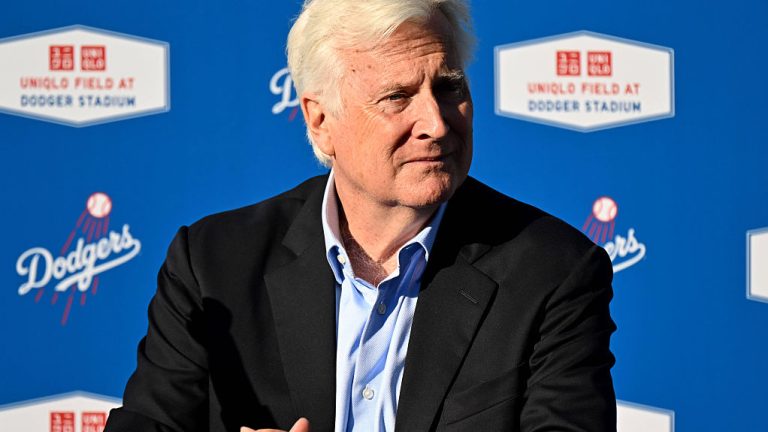
The Los Angeles Dodgers’ remarkable run of success all began when Mark Walter and his ownership group, Guggenheim Baseball Management, purchased the franchise for a then-record $2.15 billion. This sale concluded a financially precarious era of Dodgers ownership under Frank McCourt, giving fans hope of a fresh start for the franchise.
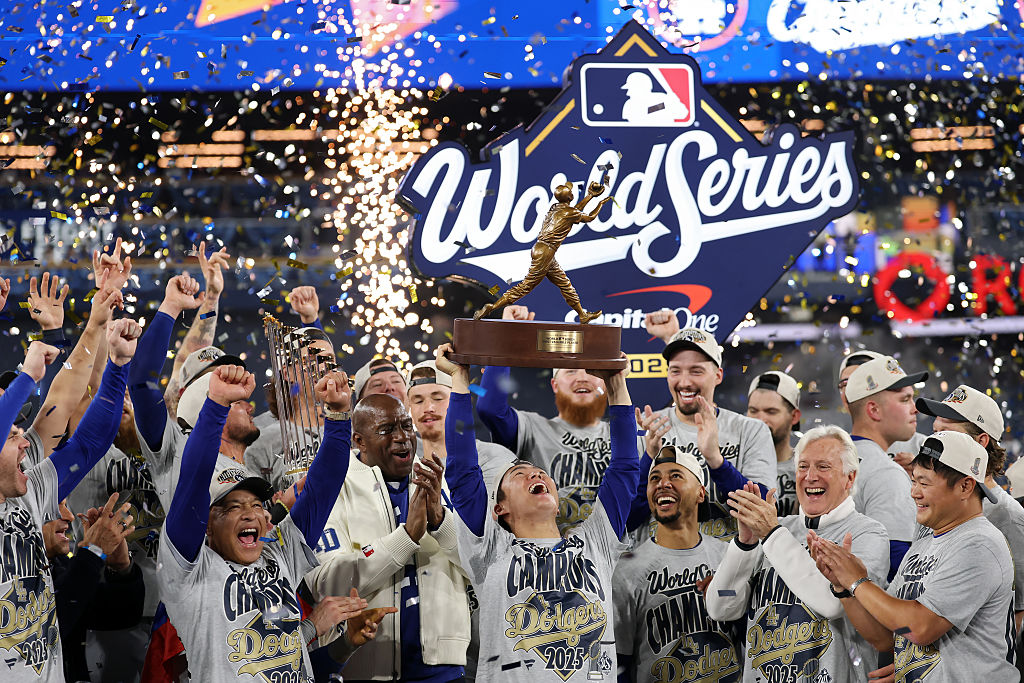
As of March 2026, the Dodgers are now estimated by Forbes to be worth $7.8 billion. In spite of recent struggles, they appear headed back to October in pursuit of a third straight World Series championship. Yet, despite the success of Walter’s prized franchise, there has been little cause for celebration as of late.
On August 17, The Wall Street Journal reported on a story regarding an ongoing federal investigation of Walter and Guggenheim for alleged financial impropriety.
Their report comprised over a decade of investigations, whistleblower complaints, and financial analysis. It detailed the alleged misclassification of loans issued by Walter’s insurance companies to other Walter-controlled businesses.
This news comes less than a week after Walter agreed to a record-breaking $12.5 billion sale of the Los Angeles Lakers. He had purchased the franchise just over a year prior. At the time of writing, Walter has not yet been charged with any crime.
In the days since The Wall Street Journal published its report, the sports world has erupted into widespread speculation and concern. In the interest of helping provide clarity, today I hope to provide some concrete answers as to what specifically was alleged, why it matters, and what the potential impacts on the baseball world may be.
Setting the Scene
Walter first co-founded Guggenheim Partners in 1999. The firm grew massively over time, specializing in asset management, investment banking, and insurance services.
The story at hand truly kicked off around the early 2010s. In the wake of the global financial crisis, Walter and Guggenheim purchased a small number of insurance companies in decline due to ongoing economic conditions.
First, he formed Guggenheim Life and Annuity, which would later become Clear Spring Life and Annuity. Later, he assisted some executives at Guggenheim in purchasing Security Benefit, Delaware Life, and EquiTrust.
Traditionally, insurers invest premium payments into a stable portfolio of bonds and other investments. This allows them to run a profitable business and ensure claims can be paid out while protecting policyholders against any potential market volatility. But, Walter had a different idea.
Instead, Walter and his colleagues began to shift portfolios into higher-yield debt in an effort to quickly reinvigorate the businesses and capitalize on a weak market. Fast forward a few years, and the plan had seemingly paid off.
Walter took things a step further in 2012. While looking to secure his bid for the Dodgers, Walter wound up soliciting funding from his insurance companies. While Walter reportedly contributed around $100 million and Guggenheim businesses put up over $1.2 billion, his insurers put up anywhere from $100 million to over $300 million to push the sale over the finish line.
Several of the other bidders were reportedly apprehensive about Walter’s usage of insurance loans to finance such a non-traditional investment. Notably, insurance regulators looked into the sale, though they did not report any findings of wrongdoing.
Fast forward to 2014, and the story came back up. Two disgruntled policyholders decided to sue Guggenheim in federal court. They alleged that Walter and his business partners had recklessly used the companies to quickly raise the capital to purchase the Dodgers. Walter and Guggenheim denied the allegations, and the legal complaint was quickly withdrawn.
In 2016, Walter once again found himself the subject of regulatory scrutiny. This time, however, the spotlight lingered.
What Has Been Alleged?
A Guggenheim compliance lawyer noted that some of Walter’s investments had been financed by ABS Capital. The investment firm was founded by two of Walter’s former colleagues at Guggenheim, and allegedly played a role in helping him finance a number of personal expenditures.
Within two years, ABS Capital had reportedly assisted Walter in buying up a couple of extravagant homes in Los Angeles and an $85 million mansion in Malibu using LLCs set up for these acquisitions. Notably, the Malibu property was purchased from Geffen, one of Guggenheim’s clients.
Over the next few years, several whistleblowers filed complaints with the SEC. The complaints were wide-ranging, alleging self-dealing by Walter, ABS Capital, and Guggenheim, as well as Walter’s insurance companies. However, the SEC never formalized a legal complaint and wound up dropping their investigations.
These cases became ripe for revisiting after it became public in June that Delaware Life and Clear Spring Life and Annuity, Walter’s insurers, had been subpoenaed by the U.S. Attorney’s Office of the Southern District of New York.
The ongoing federal investigation is centered around four investment firms: Amistad Financial, Bradford Allen, Hudson Trading, and the aforementioned ABS Capital. Each of these firms is either directly linked to Walter through previous business dealings or chaired by former colleagues.
It is alleged that Walter’s insurers have funneled a substantial amount of loaned funds to other businesses under Walter’s control using these firms as an intermediary.
With the home purchases as an example, these investment firms allegedly utilized LLCs to provide a channel for the loans to pass through. Meaning, rather than the funds flowing directly from Walter’s insurers to his other businesses, the transactions would be obfuscated by a third party.
Walter’s personal holding company, TWG Global, was also the subject of a whistleblower complaint in 2025 regarding its partnership with sovereign wealth fund Mubadala to raise $10 billion in equity. The complaint alleged that related contracts were manipulated to secure better terms for the agreement, and set off the domino effect that brings us to where we are today.
Payments from these contracts were what initially brought authorities to investigate the four investment firms of note, leading them to discover their ties to the LLCs used as vehicles for Walter’s insurer loans. Now, the loans themselves are under immense scrutiny.
Why Does It Matter?
The primary concern in this case is the misclassification of loans made by Walter’s insurers as “unaffiliated,” even though the funds allegedly wound up financing personal investments by Walter into companies under his control. This poses a massive potential for conflicts of interest.
Using these loans for personal investments can place unnecessary risk exposure on the backs of policyholders. Insurance investments are primarily supposed to be invested in stable portfolios with predictable returns for their protection.
These personal investments may not be bad investments at face value. They might grow faster, or help diversify a portfolio. But, they are far more likely to face illiquidity issues, and the insurer’s vested business interest in the borrower can pose transparency and urgency issues in the face of turbulence.
However, it should be noted that affiliated investments are not illegal in and of themselves. They are just subject to more regulatory scrutiny given the concerns outlined above. What matters is not the investments in principle, but the scale of these investments.
When Delaware Life initially filed its 2025 financial disclosures, the company’s affiliated investments reportedly amounted to roughly 3% of its portfolio. However, after these investigations prompted internal reviews of these disclosures, Delaware Life reportedly found an additional $17 billion in funds misclassified as unaffiliated.
This brings the reported 3% proportion to a whopping 42% of their investment portfolio. That is a massive amount of risk for insurance companies to be shouldering with premium payments. Even if these are not “bad” investments, it would still effectively amount to gambling at the expense of unassuming policyholders.
In an effort to rectify the situation, Delaware Life is reportedly preparing to sell roughly $6.5 billion in affiliated assets tied to Guggenheim and TWG Global, among other restructuring agreements for the debt. In exchange, they would receive an equal amount from TWG Global in unaffiliated investments—though the deal would still require regulatory approval.
Connections to the Dodgers
As of now, there is still relatively little evidence linking Walter’s alleged financial misdealings with the Dodgers organization.
One small wrinkle noted by The Athletic on August 17 was a $4.1 million loan from Delaware Life to Dodger Tickets LLC, the ticketing arm of the Dodgers organization. The entity also shares its CEO and president, Stan Kasten, with the Dodgers organization. However, the loan has been nearly paid off since April 2026.
The largest link lies in the Dodgers’ television deal. The 25-year, $8.35 billion contract gives ownership of SportsNet LA to American Media Productions (a Guggenheim subsidiary), while distribution is managed by Charter Communications.
The TV deal was already the subject of immense scrutiny by the baseball world. The deal was initially established towards the end of McCourt’s tenure as owner, when the Dodgers had gone bankrupt. As part of the bankruptcy case, the Dodgers’ taxable baseline for their media deal was locked in at $130 million in the first year, with a slight escalator attached.
This means that, while their media deal generates roughly $334 million in revenue per year, only around $130 million of that figure is subject to revenue sharing payments. Since revenue sharing for local TV deals sits at around a 48% cut, this provides the Dodgers with tens of millions in savings each year.
A story circulating online holds that around $1.45 billion in debt from this deal is held by several of Walter’s insurance companies. Walter’s companies act as both the lender and recipient in this exchange. Theoretically, this financing could potentially allow for American Media Productions to deduct their interest payments on this debt from their local net revenue. However, there are reasons to be skeptical of this hypothesis.
For starters, at the time of publishing, no major national outlets have specifically verified and reported on the $1.45 billion debt figure. In all fairness, The Wall Street Journal has confirmed that over $300 million in American Media Productions debt is held between Delaware Life and Clear Spring Life and Annuity.
That said, the idea that the Dodgers have been deducting interest expenses as a measure to further reduce revenue sharing is questionable at best. If they were to attempt to artificially suppress reportable local revenue using what amounts to an accounting trick, MLB would likely be aware of this.
MLB receives disclosures and audit reports for team finances each year as part of the process of calculating the distribution of pooled revenue sharing funds. The commissioner also has the authority to impute the fair market value of assets contributing to local net revenue.
If the Dodgers, who already have a wealth of financial advantages, were using debt-servicing deductions to further short-change their revenue sharing obligations for over a decade, I reckon that might not go unchecked by the other MLB franchise owners.
What Has NOT Been Alleged?
There have been a number of misconceptions circulating online in recent days. Given the scope and scale of this story, I felt it may be important to do some mythbusting on this front.
- The Dodgers have not been accused of fraud. The allegations of financial misdealings center around the misclassification of loans made by Walter’s insurers used for personal investments in his controlled businesses. The reports at hand do not allege the use of illicit funds or the aforementioned insurer loans to afford the Dodgers’ payroll. At the time of writing, the Dodgers organization has not been singled out for any alleged illicit activity—though this could change upon further investigation.
- The Dodgers are not “broke.” Walter’s liquidity concerns are separate from the Dodgers organization, at least for now. Even if Walter’s alleged financial troubles were to carry over, he is still only the principal owner with a stake valued at around 27% of the franchise. In theory, an outside buyer could be brought in to take his place, and 73% of the original equity partners would remain. Plus, Forbes estimates that the franchise brought in around $850 million in net revenue last year. This is after factoring in revenue sharing payments and debt servicing. Again, things could change, but for now, the Dodgers’ finances seem intact.
- The Dodgers are not about to be sold—at least not yet. If Walter is going to meet restructuring agreements for his insurance companies, he will need a significant amount of cash. He just sold the Lakers and has reportedly looked into selling his stake in Chelsea FC. Of the assets Walter could draw on to meet this need, the Dodgers would likely be the last to go. Stan Kasten, the president and CEO of the Dodgers organization, has doubled down on this notion, stating that the sale of the Lakers is entirely separate from the Dodgers. That said, if Walter is not able to secure enough liquidity to meet his restructuring obligations, he may have to explore Dodgers-adjacent options.
The key point here is that Walter’s financial troubles and the Dodgers’ financial standing should be considered separate from one another for the time being.
No reports have yet indicated that these illicit insurance loans served to finance the Dodgers’ payroll expenditures. That’s not to say it is impossible for that to be the case. But based on currently available evidence, it seems that Walter’s financial misdealings were more likely limited to personal investments in companies under the purview of Walter and TWG Global.
What Does This Mean Going Forward?
For now? Hard to say.
At this time, the Dodgers are not involved in the federal investigation of Mark Walter. The organization continues about its day-to-day business and will continue to do so unless it is folded into the investigation as well.
Still, it is only fair for fans to be nervous. The story is continuing to develop, and even the slight chance of dealing with another McCourt-esque situation is enough to send a chill down the spine of any Dodgers fan. But for now, we only know what we know.
However, Walter suffering from a huge cash deficit poses significant consequences for the Dodgers. While they enjoy a lucrative revenue stream now, the impending CBA negotiations ending in a prolonged lockout would decimate that.
Even if Walter is able to secure the liquidity to meet his restructuring agreements, he will still have to contend with the possibility that he may not be able to afford the illustrious payroll the Dodgers have put together under his ownership. Factor in the possibility of a downgrade to his credit line and jump in his risk premium, and he may be backed into a corner regardless of how this saga ends.
If it were to come out that Walter’s financial manipulations had a hand in funding the Dodgers’ exorbitant payroll, the ramifications for their organization and baseball as a whole would be monumental. Beyond the erosion of institutional trust and devaluation of the achievements of Dodgers’ players under Guggenheim’s ownership, it would also have massive implications for the upcoming CBA negotiations.
Regardless, Walter’s actions pose a question much bigger than just the game of baseball: If Walter was ostensibly able to get away with such a reckless financial strategy for this long, how many others have done the same?
Baseball, Private Equity, and Those Left Holding the Bag
The Wall Street Journal describes Walter as having “helped pioneer a lucrative and now common trade,” whereby insurance companies have steered premiums into private credit investments, rather than safer, more stable portfolios. They estimate that around $1 trillion in insurer funds currently resides in these investments.
In the years since Walter first took over his insurance companies following the global financial crisis, plenty of others have followed in his footsteps. In doing so, they have built a foundational pillar in what has become a supercharged private equity industry.
Now, private equity has its sights set on the sports world.
According to the CFA Institute, private equity firms have made over $55 billion in investments into professional sports assets between 2019 and 2024. Over 70 professional sports teams have some form of private equity investment in North America alone.
In the baseball world, 18 out of 30 MLB teams have some form of institutional private equity involvement. Of these teams, at least eight receive direct financial contributions. Just this past week, the New York Yankees announced a $2.6 billion deal with Apollo Global Management.
And yet, the link between baseball and private equity runs deeper. It was reported in July 2025 that private equity had taken a massive stake in Minor League Baseball as well, with one company having acquired over 40 MiLB teams over just four years. The company, Diamond Baseball Holdings, is backed by private equity firm Silver Lake and was estimated to own over 35% of all MiLB teams—and that was over a year ago.
If Walter’s alleged financial impropriety was entangled with the Dodgers, that’s a bad look for MLB in its own right. But even if it was not, the recklessness with which his financial strategy placed risk on the shoulders of insurance policyholders poses a major liability for MLB. With the vast majority of MLB teams now affiliated with private equity groups in some way, it warrants asking whether this problem extends beyond Walter and Guggenheim.
This story will continue to unfold over the coming weeks and months. As it does, we will come to know more details surrounding the extent of Walter’s alleged misdealings and the Dodgers’ potential involvement. For the time being, this moment should call for greater scrutiny into the financial giants taking hold of the professional sports industry.
When Walter and Guggenheim first purchased the Dodgers in 2012, financial journalist Andrew Ross Sorkin gave an ominous warning regarding the discrepancy between Walter’s actual liquidity and the price paid for the franchise.
“Using insurance money—which is typically supposed to be invested in simple, safe assets—to buy a baseball team, the ultimate toy for the ultrarich, seems like a lawsuit waiting to happen.”
All research for this piece was compiled using publicly available information sourced from national and local news outlets. Any and all opinions presented in this piece are my own, and do not necessarily reflect the opinions of Just Baseball. Last edited on 8/22/2026.
Become a Member of Just Baseball
Subscribe and upgrade to go ad-free!
* Save 25% by subscribing annually.

Written by
Ryan Murphy is a contributing writer for Just Baseball and graduate of James Madison University. The former Southern California native is an avid fan of the…