
Should the White Sox Prioritize a Munetaka Murakami Extension?
Murakami's performance has made an extension worth discussing. The big question for Chicago is whether now is the right time.
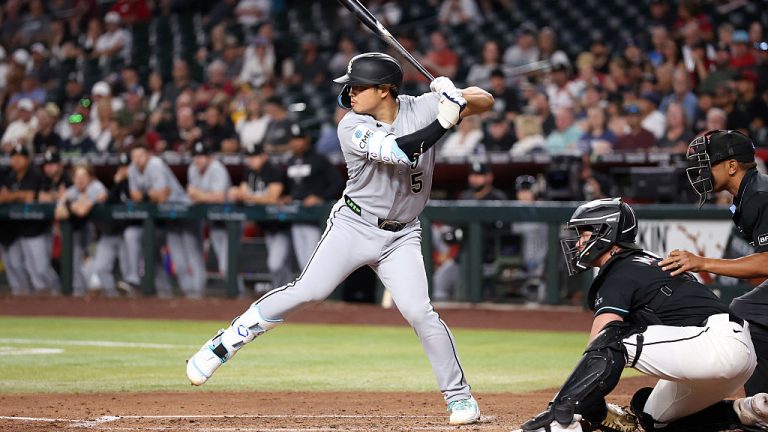
Chris Getz was asked about a Munetaka Murakami extension before the Chicago White Sox had even seen him for a full month.
Murakami arrived from Japan on a two-year, $34 million deal, giving the White Sox a short runway with one of the most accomplished power hitters in Nippon Professional Baseball history. Chicago first needed to see how his game would translate. By late April, the organization was already being asked whether it should try to keep him beyond 2027.
Getz did not dismiss the thought. He said no talks had started and made clear the White Sox did not want to get ahead of themselves.
Murakami has made an extension worth discussing, but the timing is harder to justify.
The White Sox should want Murakami long term. Deciding whether to pay him like a fully established middle-of-the-order bat before the 2027 season is a different question.
Stats updated prior to games on August 20.
Murakami Changes Chicago’s Business Calculation
Murakami’s baseball résumé made him one of the most fascinating signings of the offseason.
He was the 2022 Central League Triple Crown winner in Japan after hitting 56 home runs with a .318 average and 134 RBIs for the Yakult Swallows. His power gave the White Sox a needed middle-of-the-order bat, and his age made the short-term deal more interesting than a typical veteran stopgap.
The White Sox have rarely had a player with Murakami’s reach. Tadahito Iguchi and Shingo Takatsu remain important figures in franchise history, especially because both were part of the 2005 World Series team. Murakami arrived with a different level of built-in attention. He came to Chicago at a time when highlights move instantly and international interest can follow a player every night.
Brooks Boyer, the team’s executive vice president and chief revenue and marketing officer, addressed that after the signing became official. He said the White Sox had not had a Japanese player of Murakami’s caliber or popularity and called it an opportunity to grow the White Sox brand internationally.
The team has already treated him that way.
Murakami has not been marketed like a standard offseason addition. The White Sox added a bobblehead commemorating his first major league home run. They also introduced Muneshot sushi push-pops at Rate Field, with more than 2,000 sold over three games during the initial run.
Those promotions are small pieces of the larger picture, but they show how quickly the organization built around him. Murakami gave the White Sox a player who could draw attention from fans in Chicago and from fans watching in Japan.
That wider reach deserves more than a passing mention in any extension discussion. People around the team have talked about Murakami like someone who changed the feel of the organization almost immediately. The White Sox have already treated him as a player capable of expanding their audience at home and overseas.
His value still starts with the bat, but the attention around him gives the club another reason to think seriously about keeping him beyond 2027.
Getz spoke with Boyer before the deal was completed because he wanted to better understand how Murakami could affect the business side of the equation. A player with Murakami’s profile creates more than WAR value for a franchise still trying to rebuild its image.
The Marketing Plan
Murakami’s first season has also worked inside the clubhouse.
Getz has pointed to his comfort level with the team and the city. Hitting coach Derek Shomon said the players love him and described him as someone who is constantly involved in team meetings. Manager Will Venable praised the way Murakami has handled the attention that followed him from Japan to Chicago.
Murakami has said the feeling is mutual. Through interpreter Kenzo Yagi, he said he loves the team and called his teammates open to communication.
That comfort level helps explain why an extension is already part of the conversation. Murakami has settled into the clubhouse faster than most players could under those circumstances, especially while making the jump from Japan with that level of attention around him.
His production has pushed the conversation forward, especially with Murakami already sitting at 29 home runs and closing in on 30 in his first major league season.
The batting average does not capture how extreme Murakami’s offensive profile is. His zone-contact rate sits at the bottom of the league, which was one of the main concerns when he came over from Japan. The counter is what happens when he gets the ball in the air. Few hitters square up fly balls with more authority, giving him enough impact on contact to survive a swing-and-miss profile that would sink a lesser power bat.
The strikeouts are still the obvious risk. Murakami will probably never be a high-contact hitter, and pitchers are going to keep testing that part of his game. But his offensive value comes from how much damage he creates when he does connect. Through his first season in Chicago, that trade-off has been good enough to keep him in the middle of the lineup.
The harder question is whether the White Sox have seen enough to price that trade-off before the league gets another full season to test him.

The Top of the First Base Market
Murakami is already under contract for 2027 at $17.5 million. Any extension would either begin after that season or replace the final year of his current deal with a larger guarantee.
The White Sox would have reason to begin with a shorter term. A four-year extension would give them more control without tying up too much long-term payroll before Murakami finishes two full major league seasons. It would also help them preserve flexibility while the league works through labor uncertainty.
Murakami’s side would almost certainly aim higher. He will be entering his age-28 season when his current deal expires. If he follows this year with another strong power season in 2027, he could reach free agency as one of the top bats available. Giving up that chance would require a significant guarantee.
Pete Alonso and Kyle Schwarber help frame the conversation.
Alonso landed a five-year, $155 million deal with Baltimore. Schwarber returned to Philadelphia on a five-year, $150 million contract. Both had longer MLB track records than Murakami when they signed, but they also set a clear salary range for power-first bats with some defensive limitations.
Murakami’s age gives his side a strong argument. He would be signing away seasons that still fall near the front half of his prime. The White Sox can counter with the shorter MLB résumé, since any deal near that range would depend on his power continuing to hold up as pitchers get more looks at him.
Matt Olson offers another reference point. He signed an eight-year, $168 million extension with Atlanta after being acquired from Oakland. Olson was 27 and already had a strong major league track record. The average annual value was lower, but Atlanta received more certainty and more years.
Murakami falls between those examples. He is too young and too talented to be treated like a short-term DH. He also has not built the same MLB case as Alonso, Schwarber or Olson.
A realistic negotiation could start with the White Sox preferring four years and Murakami’s camp pushing for six. Five years would be the natural middle ground.
The money is where figuring out a deal gets difficult.
Five years and $140 million would put Murakami below Alonso and Schwarber in total guarantee and average annual value. It would still be a major commitment for a player with fewer than two full major league seasons.
Six years and $160 million would give Murakami’s side a stronger headline number. It would beat Alonso’s total guarantee while keeping the average annual value below $27 million.
That structure might be easier for his camp to sell. For the White Sox, it would still require a level of conviction they may not have this winter.
CBA Uncertainty
The strongest reason to wait comes from the calendar.
Major League Baseball’s current collective bargaining agreement expires after the 2026 season. If the league enters another lockout, teams may slow down before making major long-term commitments. Agents could take the same approach if they believe the next market will be more favorable for players.
Murakami is not a pending free agent, giving the White Sox another season to learn more about how his bat holds up once pitchers have a longer book on him, as well as how often he needs to be used at first base compared to DH.
Waiting would still carry risk, as another 30-plus home run season would push the price higher and a stronger player market after the next CBA could have the same effect. More time in Chicago could also help if Murakami’s connection with the team continues to grow.
This winter still looks awkward.
A Murakami extension would not be a small bet with obvious surplus value. It would likely require the White Sox to approach free-agent pricing one year early. In a normal offseason, that would be a difficult decision. With labor uncertainty hanging over the sport, the case for patience becomes easier to understand.
The Roster Fit Could Look Very Different by 2028
The White Sox signed Murakami with first base in view. That kept him away from the more demanding defensive responsibilities he had at third base in Japan and gave Chicago a needed bat at a position that lacked stability.
The picture could change by the time a new deal begins.
Murakami, Miguel Vargas and Colson Montgomery all look headed for 30-plus homer seasons, which has made Chicago’s current infield and DH picture far more than a short-term bridge.
Vargas has become a core bat, and Montgomery has added another left-handed power threat to the major league lineup. Behind them, Roch Cholowsky and Caleb Bonemer give the White Sox two more high-end infield prospects to plan around.
That should not stop Chicago from keeping a productive major league hitter. Prospects do not all arrive on schedule, and some never become what the organization expects. But the group is strong enough to affect how the White Sox think about Murakami’s defensive future.
If Vargas eventually shifts to first base or Chicago needs more infield at-bats for younger players, Murakami could move into a heavier DH role. Andrew Benintendi’s contract runs through 2027, which may open more flexibility after next season. By then, the White Sox could be deciding how often Murakami needs to be in the field during the years covered by an extension.
That affects the price but a DH-heavy version of Murakami can still be worth a major deal. Schwarber’s contract shows how much teams will pay for elite power when the offensive production is loud enough. Murakami just has to clear a higher bar if the defensive value fades.
Murakami has the power to make that work, but the White Sox just need more evidence before paying as if that outcome is already secure.
The Luis Castillo Consideration
Luis Castillo should not become the center of a Murakami extension piece, but his contract still lingers in the background.
The White Sox took on a major salary commitment when they acquired Castillo. He is owed $24.15 million in 2027, and his $25 million option for 2028 can vest if he reaches 180 innings next season. That does not prevent Chicago from extending Murakami, but it changes how the next major commitment should be viewed.
The White Sox can justify Castillo’s contract if he stays healthy and gives them the innings they expect. The larger question is whether they are willing to stack another long-term guarantee on top of it.
That question is fair given the organization’s history. The White Sox have not often operated like a team comfortable carrying several expensive contracts at the same time. Moving salary elsewhere can make a trade easier to rationalize, but Castillo’s full number still goes on the books.
Murakami could be the right player for the next large check. Chicago just needs a clearer view of the roster before making that decision. The rotation, arbitration raises and next wave of position players all factor into how much flexibility the White Sox should preserve.
August is too early to know exactly where Murakami fits in that order.
The Verdict on a Murakami Extension
The White Sox should explore a Munetaka Murakami extension while recognizing this winter may not be the right time to force one.
Murakami has made the long-term case worth taking seriously. His power already plays in the middle of the order, and his age gives the White Sox a chance to keep that bat through more of his prime. He has also settled into the clubhouse quickly, with business and international interest around him that few players on this roster could match.
Chicago still needs a fuller picture before making that kind of commitment. Murakami has not completed two major league seasons and pitchers will keep testing the swing-and-miss. His defensive future could also move closer to DH, putting more pressure on the bat to carry the deal. The expiring CBA adds another reason for teams to be cautious with major long-term spending this winter.
A six-year, $160 million ask would be difficult to justify right now. Five years and $140 million makes the conversation more reasonable, though the White Sox would still be paying near free-agent prices before seeing how Murakami handles another full season of adjustments.
Murakami is worth keeping in the long-term picture. The White Sox should want that door open. They also have another year of control, a labor fight approaching and a roster that could look different by 2028. Patience may serve them better than urgency.
Keeping the conversation alive makes sense. For now, the White Sox can learn more in 2027 and be ready to act if the number becomes more favorable. Murakami has already made the organization more visible than it was before he arrived. Paying early only makes sense if it gives Chicago a legitimate advantage.
Become a Member of Just Baseball
Subscribe and upgrade to go ad-free!
* Save 25% by subscribing annually.

Written by
Adrian White covers the Chicago White Sox for Just Baseball and FutureSox. He studies sports management at Florida Atlantic University and focuses on player development and…