
The Good, the Bad, and the Ugly: How To Fix Cade Cavalli
Can Cavalli recapture some of the ace potential he once had? Let's take a look.
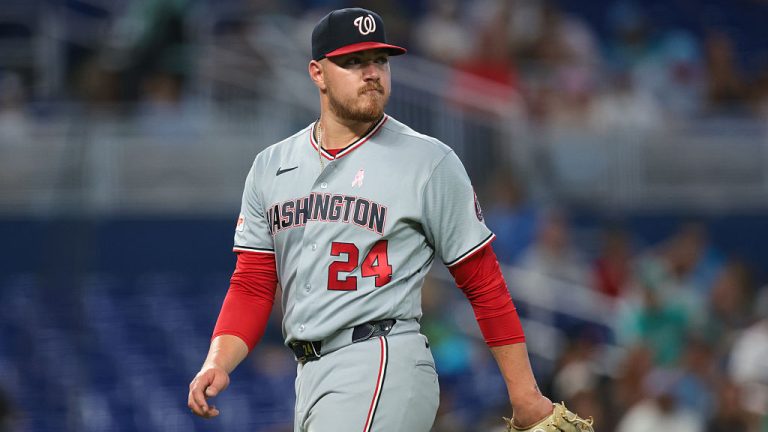
Back in the 2020 MLB Draft, the Washington Nationals were absolutely thrilled to land right-hander Cade Cavalli with the 22nd overall pick. After all, he possessed many of the qualities needed to succeed at the next level: an electric fastball, clean mechanics, and a good feel for his arsenal as a whole.
Once he reached the minor leagues, it seemed like he had a bright future ahead of him. His first season as a professional was a successful one, as his excellent performance led him to reach Triple-A and make six starts at the level. He’d eventually make his major league debut the following season, as it looked like the Nationals had hit big on their draft day gamble.
However, what followed was an extremely long road that kept him off a major league mound for nearly three seasons. Cavalli dealt with shoulder inflammation, a torn UCL, and complications along the whole journey back to the mound, which made his return that much more special.
Now in 2026, Cavalli has looked healthy yet again, but he’s still left something to be desired with his performance on the mound. He currently possesses a 4.15 ERA through his first eight starts of the year, as it seems like something is missing between this version of Cavalli and the promising version of himself the Nationals once saw.
The good news, though, is that this is fixable with the right tweaks, and if the Nationals build off the positive aspects of his showing up until this point. Let’s try to fix Cade Cavalli and explain how he can recapture some of that ace potential he once had.
The Good
The good news for the Nationals during this process is that Cavalli already has a stronger underlying foundation than most arms in his position. Rather than building from the ground up, he just has to make some tweaks to the skills he’s already showcased, and there’s a decent amount to like.
Many of the traits that made the Nationals so excited about Cavalli out of the draft remain — it’s just about optimizing these traits for long-term success.
Cavalli Has (Mostly) Limited Significant Damage
When looking through Cavalli’s underlying data, one of the first things that immediately stands out is that he’s done a pretty decent job of limiting significant damage.
Cavalli’s barrel rate currently sits at a respectable 6.8%, and his 35.9% hard-hit rate tells a similar story. Not only this, but his average exit velocity has sat right around 89 mph, and he has yet to allow a batted ball above 111.5 mph.
These are all very solid starting points, as these numbers indicate that hitters are struggling to hit him hard or do any type of genuine, meaningful damage against him.
Taking things a step further, Cavalli has always done a good job at limiting pulled fly balls, which is a really important trait considering that these types of batted ball results produce the most devastating results. This hasn’t changed in 2026, as Cavalli’s pull-air rate currently sits at just 14.6%.
Through his first eight starts of the year, he’s allowed just 11 extra-base hits, including just one home run.
Cavalli’s Knuckle Curve Has Looked Very, Very Good
To this point, Cavalli’s arsenal has lacked a pitch that makes you sit back and audibly say “wow” when looking at his data, but he can get pretty close with his knuckle curve. This pitch has produced some notable early returns that signal it could be his go-to breaking ball.
For starters, he’s struggled to produce high whiff rates against his arsenal as a whole (25.7% overall whiff rate), but his knuckle curve defies this. It’s his only offering that’s produced a whiff rate over 28%, and it’s gone much further. Currently, opponents have whiffed at his knuckle curve 48.4% of the time, which is a tremendous mark.
The pitch’s positive returns don’t end there, either. Opponents have posted an xwOBA of just .195 against it, which shows how effective it’s been. Also, it’s turned in an average exit velocity of 84.2 mph, as opposing hitters have struggled to record any significant contact against it.
Cavalli has only allowed one extra-base hit against his knuckle curve so far this season, and no batted ball that was produced against his knuckle curve was hit harder than 105.2 mph.
Going one step further, his knuckle curve has produced a groundball rate of 62.5%. In short, opponents aren’t just struggling to barrel it up, but it’s producing two of the best results possible: weakly hit groundballs and whiffs.
The Numbers Indicate He’s Truly Healthy
Although this may not be as big a key to success for Cavalli so far, his data shows that he’s truly feeling healthy. This is a very important takeaway for the right-hander, as health has been his biggest battle up until this point.
His fastball velocity is arguably the biggest factor in this. So far, his fastball has averaged 96.3 mph, which is a strong place to be after requiring Tommy John surgery. This holds true across his full arsenal, as his velocity is right where you’d want to see it post-operation.
With Cavalli presumably feeling healthy once again, this makes tweaking his game in order to optimize his performance on the mound that much easier. It’s another factor that may not need to be accounted for during the development process, which will be huge for the staff around him.
Cavalli hasn’t tossed more than 74 innings in a season since 2022. If this current pace holds, he should break this threshold at some point sooner rather than later. This is a huge accomplishment for the former first-round pick, as it means his biggest challenges may finally be behind him.
The Bad
With the focal point of this story surrounding the idea of fixing Cade Cavalli, this means everything hasn’t been all sunshine and rainbows for him so far this year. While there have been some things to like about what he’s showcased up to this point, he still has plenty of places where he needs to get better or optimize his game for success.
Understanding these weaknesses will be critical in how we approach fixing him, as these factors will tell us exactly where he needs to improve to reach his full potential. If properly addressed, there’s a lot of untapped potential left in his game.
Cavalli’s Poor Four-Seamer
The first major weakness that’s stuck out about Cavalli’s performance so far is his poor four-seam fastball. Once hailed as the strongest offering in his repertoire, his four-seamer now seems far from where it once was; it’s been the biggest drawback of his game so far.
Beginning with the pitch’s shape, his four-seamer has a legitimate case to be considered a “dead-zone” heater. With just 15.4 inches of induced vertical break (IVB) and 4.2 inches of glove-side horizontal break, it has below-average shape, which is a key trait of the “dead-zone” label.
On top of that, Cavalli doesn’t necessarily have the velocity or other elements of deception that could help make up for the poor shape.
His fastball has a VAA of -5.20, which sits right in the “dead zone.” It’s not flat enough to produce a rising effect that pitchers like Joe Ryan use to their advantage, and it isn’t steep enough to sink under opposing hitters’ bats. On top of that, while 96.3 mph is faster than a good portion of heaters around the league, it isn’t enough to make up for the poor shape.
Knowing this, it’s not a big surprise that his heater has been crushed up until this point. Opponents are batting .412 and slugging .588 against it, which both speak to its early struggles. On top of that, its average exit velocity of 91.5 mph is far from a positive metric.
Opponents haven’t had too many issues seeing the pitch, either. Opponents are whiffing under 20% of the time against the four-seamer, which leaves a lot to be desired.
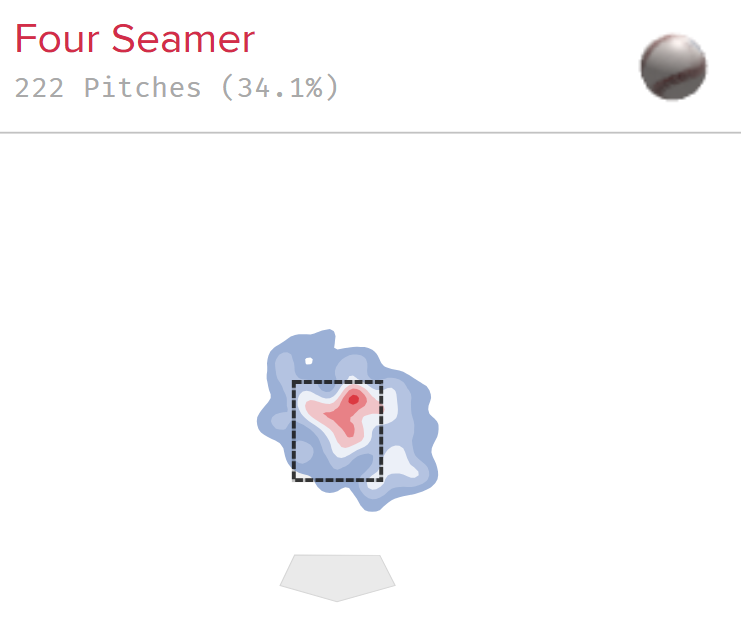
Lastly, Cavalli has really struggled to locate this pitch as well. He’s only thrown it for strikes 68.6% of the time, and when he has located it in the strike zone, it’s been over the heart of the plate. Neither of these has been a recipe for success, as it’s allowed hitters to either take it consistently or crush it when thrown over the strike zone.
Early Battles With Control
Not only has Cavalli struggled to locate his four-seamer, but these struggles with control have extended to the rest of his arsenal. Without the ability to consistently locate any of his pitches, it’s made him a lot easier for opposing hitters to attack.
No metric is more indicative of his control struggles than his 10.3% walk rate. Although his big league stints have been limited up until this point, this mark is his career high by a decent margin, which cannot be understated.
On top of that, Cavalli hasn’t thrown his four-seamer, knuckle curve, sinker, or his sweeper for strikes above 70% of the time, which is another indicator of his strike-throwing struggles.
Inability To Produce Whiffs
When talking about Cavalli’s success with his knuckle curve, I mentioned that it was an outlier in his arsenal due to its ability to produce significant whiffs. This is a much bigger issue than it might’ve seemed at the time, as Cavalli’s entire arsenal has struggled to induce whiffs in 2026.
Outside of his knuckle curve, Cavalli doesn’t have another pitch with a whiff rate over 28%, which is extremely alarming. Without the ability to get whiffs, he’s forced to come in the strike zone more often, which we already identified as being a huge reason for why he’s been hit so hard this season.
Cavalli likely hoped that his new sweeper would function as another go-to “whiff offering,” but this hasn’t been the case so far. The pitch has produced a whiff rate of just 25%, which is 38th in baseball among the 47 arms that qualify for the leaderboard.
Cavalli has seen an even more concerning lack of whiffs with his four-seamer, which has generated a whiff rate of only 19.3%. For reference, that ranks 130th out of 216 among pitchers who qualify for this leaderboard (as of his latest start).
Across all his pitches, Cavalli has produced a 25.7% whiff rate, which ranks about league average (54th percentile). If he could get this number even a little closer to 30%, he’d be in a far, far better place than he is currently.
The Adjustments Needed To Fix Cavalli
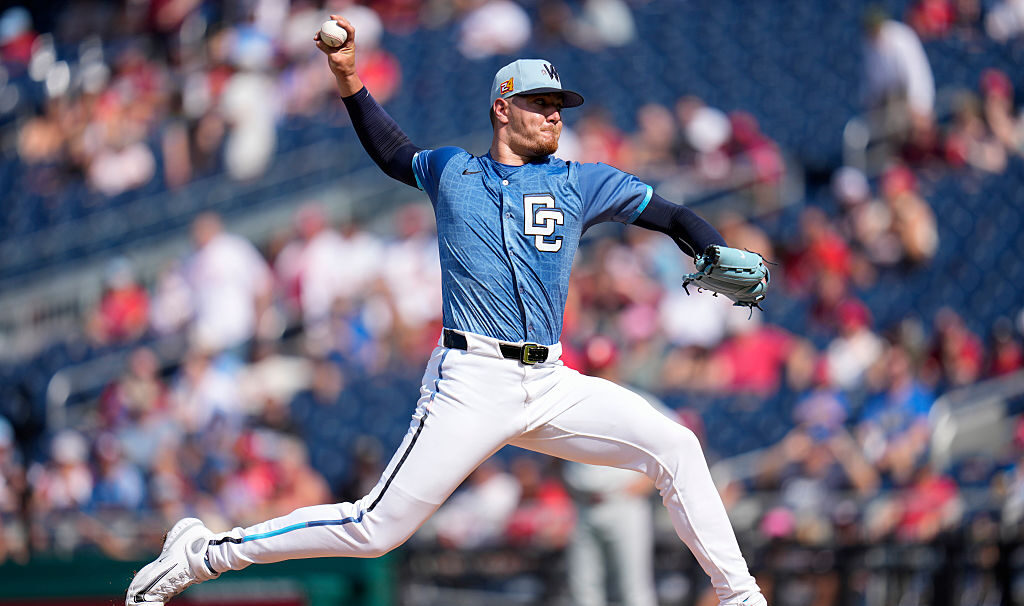
Now that we’ve dived deep into Cavalli’s strengths and weaknesses from his time on the mound so far this season, we can now start to explain the adjustments needed to take his game to the next level. While these may seem like major changes, they’re realistic tweaks he could make to step up his production.
Cavalli is much closer to being a solid arm than the numbers may indicate, and I truly believe that with these changes, he could finally reach the first-round pedigree he once had.
Prioritize the Sinker
The biggest change I think Cavalli should make is to significantly prioritize his sinker over his four-seam fastball. While I don’t think he should ditch the four-seamer altogether, he could potentially benefit from swapping how frequently he uses them (34.1% four-seamers, 18.3% sinkers).
The first reason for this is that by using his sinker more, he’s able to mask the poorer shape his four-seam fastball has showcased so far this season. Considering that there isn’t a huge difference in velocity between the two pitches (96.3 mph avg. on his four-seam, 95.8 mph avg. on his sinker), his sinker would be used to hide the “flat” effect of his four-seamer by adding some extra arm-side run.
With the sinker now at the top of his arsenal, Cavalli will hopefully be able to induce more soft contact early in at-bats, something that he’s done quite well as of late. His sinker has produced more groundballs and pop-ups than his four-seam fastball, as well as fewer fly balls and line drives.
For example, in his start against the Twins on May 5, Cavalli used his sinker inside to Byron Buxton to record two pop-outs early in the count (one in a 0-0 count, one in a 0-1 count). These are the types of at-bats he could have had more frequently by using his sinker primarily, as opposed to long, drawn-out at-bats where his four-seam fastball is used less effectively.
While there is some concern that he’ll struggle to locate it consistently (54.6% zone rate), the extra movement could buy him some room if more hitters are willing to bite at borderline pitches due to the extra movement it provides.
In summary, Cavalli’s sinker will be key for him in masking his poor four-seam fastball shape, inducing soft contact early in counts, and helping him pitch deeper into games.
Reshaping Cavalli’s Sequencing and Usages
To make Cavalli truly elite, we also have to move him away from “challenging” hitters with raw velocity and toward dissecting them with a sophisticated, multi-pitch lane of attack.
As I already mentioned, his sinker and four-seamer should swap places in terms of their pitch usages. His sinker now becomes the pitch he uses to fill up the strike zone and induce early-count weak contact, while he keeps his four-seamer in his back pocket to help set up the rest of his arsenal, or induce some swings and misses up in the zone.
The main pitch that his four-seamer will be used to set up is his knuckle curve, which pairs well with his heater to create the perfect north-south separation that’s repeatedly worked well in the modern game. He’ll use the fastball to “climb the ladder” and help keep hitters off balance with the knuckle curve low in the zone, which will hopefully lead to even more swings and misses.
Next, Cavalli should increase his changeup usage slightly in hopes that it could play well off his sinker. The two offerings are separated by about 6.6 mph, and his changeup has 3.4 more inches of horizontal movement, meaning they could create a dangerous tunnel.
Hitters see a similar amount of movement from a similar slot, but the velocity and slight movement difference would leave hitters struggling to tell the two apart. In fact, his changeup could even become a second “whiff offering” if this is done correctly.
Lastly, Cavalli should lean even harder into his sweeper becoming a chase pitch by reducing how much he throws it. He should break it out when ahead in the count as a different look away from righties, which would contrast sharply with the sinker/changeup that both break towards them.
This sequencing overhaul would take the pressure off Cavalli’s command slightly, allowing the natural movement of these pitches and the deception of using them correctly to do the work. Although a relatively minor change, this new and improved way of attacking hitters could have tremendous long-term implications.
Become a Member of Just Baseball
Subscribe and upgrade to go ad-free!
* Save 25% by subscribing annually.

Written by
Jay Staph, a huge baseball fan and stat nerd, founded and ran his own baseball writing website, BSBWrites, at just 16-years-old. With focal points around prospects,…