
The Cardinals Have a Relief Ace Blossoming Before Our Eyes
Riley O’Brien may not have arrived on time. But for the Cardinals, he may have arrived exactly when they needed him.
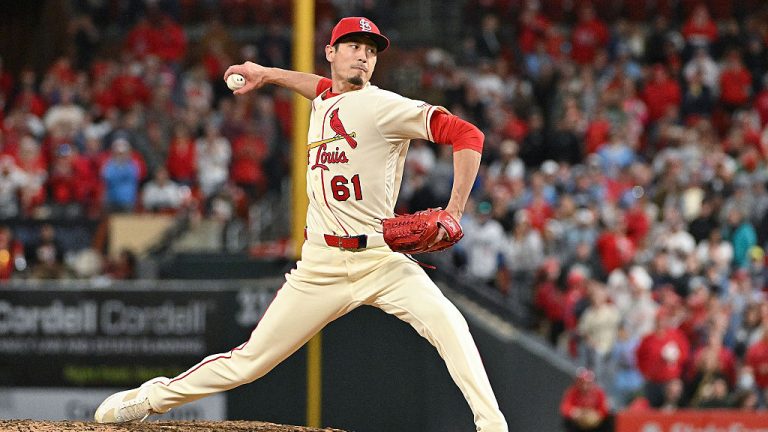
Every season produces a handful of unlikely bullpen breakouts. Some are built on smoke and mirrors. Some are simply small-sample hot streaks. And every so often, one is backed by enough tangible change that it deserves a closer look.
Riley O’Brien falls into that final category.
At 31 years old, O’Brien is not a prospect. He is not a former top-100 name finally arriving. He is not the kind of arm who entered the season with much national attention. But through the first month and change of the 2026 season, the St. Louis Cardinals reliever has turned himself into one of the most important arms in St. Louis and one of the most productive relievers in baseball.
For a Cardinals team that has been one of the bigger surprises in the National League, O’Brien’s emergence has been more than a fun story. It has been a stabilizing force. And depending on where the Cardinals are sitting in July, it could become one of the more fascinating roster decisions of the summer.
Stats were taken prior to play on May 7.
O’Brien’s Path To Success
Riley O’Brien was not exactly an overnight success story.
Taken out of the College of Idaho in the eighth round of the 2017 MLB Draft by the Tampa Bay Rays, O’Brien began his professional career as a starter and quickly showed promise. He posted a 2.75 ERA across 88 innings between both A-ball levels in 2018, then followed it up with a 3.05 ERA across 102 innings between High-A and Double-A in 2019. For a small-school arm, that was a legitimate developmental foundation.
Then came the disruption. The 2020 minor league season was wiped out by the pandemic, and O’Brien was eventually traded to the Reds. In 2021, he threw 112 innings with a 4.55 ERA and made his MLB debut with Cincinnati, but his path to a stable big-league role remained unclear.
By 2022, he had transitioned to the bullpen with Seattle, throwing just one inning in the majors and 39 innings in Triple-A. He spent all of 2023 in Triple-A, then moved on to St. Louis, where he spent most of 2024 back in Triple-A before logging eight innings at the major league level.
The 2025 season was the first time O’Brien really carved out extended MLB opportunity. He threw 48 of his 67.1 total innings at the big-league level for the Cardinals and posted a 2.06 ERA. On the surface, it looked like a breakout. Under the hood, though, the indicators were less convinced.
His xERA, FIP, and xFIP all pointed toward regression, suggesting that while O’Brien had taken a step forward, he had not yet fully answered the questions that had followed him throughout his career.
Those questions mostly centered around command.
What’s Changed?
O’Brien ascended through the minors as a cutter-sweeper dominant arm with legitimate bat-missing traits, but his lack of strike-throwing consistently kept him from settling into a permanent MLB role.
After hovering around a 4.00 BB/9 during his first two professional seasons, the command backed up considerably. By 2022, he had bottomed out with a 6.81 BB/9, the kind of walk rate that can overwhelm even a strong arsenal.
That is what makes his age-31 resurgence so interesting.
O’Brien is no longer simply the cutter-sweeper arm who teased upside but walked too many hitters to fully trust. He has evolved into more of a sinker-sweeper-slider reliever, and the revamped arsenal has helped push the memory of the 2022 version — the one walking the world — further into the background.
The raw ingredients were always there. The question was whether O’Brien could find a shape, usage pattern, and command baseline that allowed those ingredients to play at the major league level.
In 2026, that answer is starting to look a lot more convincing.
Through 17 appearances, O’Brien has looked the part of a dominant late-inning relief arm. He has paired swing-and-miss stuff with a level of strike throwing that simply was not present earlier in his career. His 26.9% K-BB rate is one of the best marks among relievers, and the foundation of that jump has been an eye-popping 1.5% walk rate. For a pitcher whose previous big-league uncertainty was rooted almost entirely in command, that is not a small development. It is the development.
The biggest driver has been his sinker.
O’Brien throws the pitch 58% of the time, and it has become the stabilizing force of his entire arsenal. The sinker first emerged as his dominant offering in 2024, but the 2026 version has taken another step forward. He is throwing it around 98 mph, adding roughly an inch of horizontal movement compared to last season, going from 15.9 inches to 17.2 inches of run, while also killing about an inch of vertical movement.
That shape gives him a power sinker with real east-west action, and his ability to consistently fill up the zone with it has been the key to his strike-throwing resurgence.
Everything else plays off that foundation.
O’Brien pairs the sinker with a sharp sweeper at roughly 83 mph that gets around 17 inches of glove-side movement. When layered against the sinker, the two pitches create roughly 34 inches of horizontal separation, giving hitters two pitches moving in completely different directions from similar release points. That is a nightmare look, especially when O’Brien is ahead in counts and forcing hitters to protect against 98 mph arm-side run.
He rounds out the arsenal with a tight bullet slider around 91 mph. The pitch gives him another hard, short-breaking option that tunnels well off the sinker without moving as dramatically as the sweeper. In practice, that gives O’Brien three distinct looks: the power sinker to attack the zone, the sweeper to create chase and horizontal separation, and the harder slider to disrupt timing and keep hitters from sitting on the big two-plane movement.
This is no longer just a nice early-season story, either. O’Brien has been one of the best relievers in baseball through the first month of the season. He ranks third among relievers in fWAR at 0.8, behind only Mason Miller and Louie Varland, and sits tied for second in baseball in saves. For a Cardinals bullpen that needed stability, O’Brien has not merely provided competence. He has provided impact.
The Path Forward for O’Brien
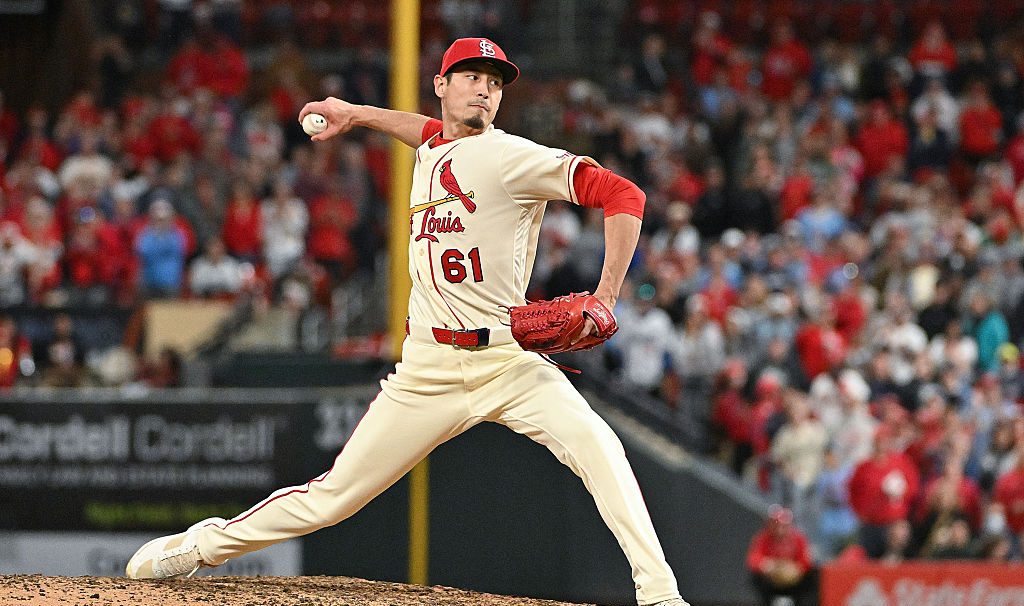
Simply put: Riley O’Brien has pitched like one of the best relievers in baseball. And unlike past flashes, this version is backed by a cleaner arsenal, better strike throwing, and a role that finally appears to fit.
That matters because the Cardinals have been one of the biggest surprises through the first month and change of the 2026 season, and O’Brien’s excellence in leverage has been a major part of that early success.
St. Louis has an exciting core of young position players that is growing up in real time. The Cardinals may not have entered the season with much external belief, but their start has at least given them a chance to hang around the NL playoff picture longer than many expected. If O’Brien continues slamming the door in the ninth inning, that path becomes a little more believable.
But that is also what makes this situation so interesting.
As fun as the Cardinals’ start has been, there was a reason their preseason win total sat below 70. The young position-player core is exciting, but the starting staff remains thin enough to make a postseason push an uphill climb over a full 162-game season. That leaves St. Louis in a fascinating spot with O’Brien.
At 31 years old, O’Brien is not a prospect, nor is he the kind of young breakout arm typically associated with a long-term rebuild. But because of his winding path to the big leagues, he is also not a short-term rental. O’Brien has four years of team control after the 2026 season, which makes him a uniquely valuable deadline chip if the Cardinals eventually decide to sell.
Leverage arms are always one of the most sought-after commodities in July. A reliever pitching at O’Brien’s level would draw interest on performance alone. A reliever pitching at this level with multiple years of team control attached could become one of the most intriguing bullpen targets on the market. St. Louis does not have to be in any rush to move him, but for a club still trying to build out a revamped farm system, it would be hard to ignore the possibility if the right contender came calling.
The important caveat is that relief pitching is inherently volatile. Regression is not just possible; it is usually the rule. But O’Brien’s breakout is not being built solely on a shiny ERA or a month of sequencing luck. His stuff is playing up. His arsenal has more coherent shape. His sinker is allowing him to attack the zone. The strike throwing has taken a real step forward.
That does not guarantee that O’Brien will remain one of the best relievers in baseball all season. It does, however, make this version of him far more interesting than a typical early-season bullpen heater. For the Cardinals, that creates two legitimate paths. O’Brien can help turn a surprising start into a more credible playoff push, or he can become the kind of controllable leverage arm who helps accelerate the next version of this roster.
Either way, Riley O’Brien has turned himself into one of the more important players on the Cardinals’ roster.
That is the beauty of this kind of breakout. O’Brien’s path has been anything but linear. He has been a starter, a depth arm, a Triple-A mainstay, a regression candidate, and now, suddenly, a high-leverage force for a Cardinals team trying to prove it is ahead of schedule.
The bullpen can be a volatile place, and reliever breakouts should always be treated with some skepticism. But when a pitcher starts throwing 98 with sinker command, creates massive horizontal separation with a sweeper, adds a harder slider to round out the look, and nearly stops walking hitters altogether, the story becomes much more than a hot month.
Riley O’Brien may not have arrived on time. But for the Cardinals, he may have arrived exactly when they needed him.
Become a Member of Just Baseball
Subscribe and upgrade to go ad-free!
* Save 25% by subscribing annually.

Written by