
The Rays Are Obvious Early Winners of the Shane Baz Trade
It's still early, but the prospects the Rays got in the Shane Baz trade have performed well, while Baz himself has struggled on his new team.
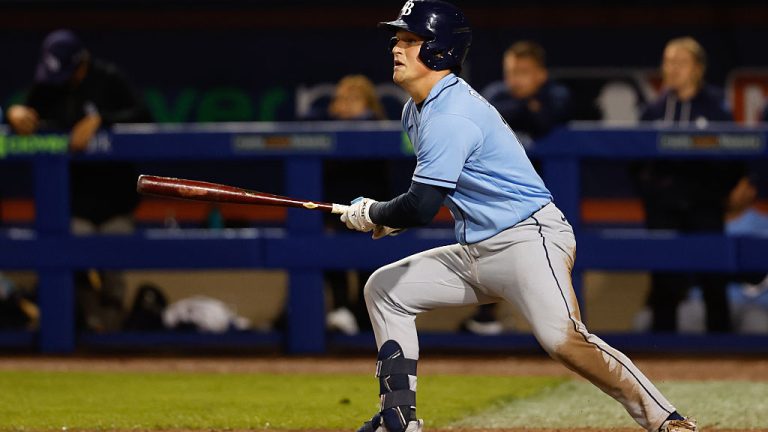
During his time as the general manager of the Baltimore Orioles, Mike Elias has often been criticized for his unwillingness to tap into the farm system in trades. Especially when it came to the Orioles’ desperate need for starting pitching depth, Elias remained hesitant.
However, this trend changed on Dec. 19 of 2025, when the Orioles pulled off a blockbuster swap to acquire right-handed pitcher Shane Baz from the Tampa Bay Rays. It was truly an unprecedented move by the Orioles, and one that excited fans around the sport.
Although the move felt exciting in the moment, the one other theme that quickly developed was that this deal felt like a steep price to pay for a starting pitcher who had only thrown more than 100 innings in the big leagues one time. After all, the Orioles sent two former first-rounders, two top-30 prospects, and the 33rd overall pick in the upcoming 2026 MLB Draft to the Rays.
Now that the season is underway, this initial speculation has become a reality, as the four prospects the Orioles sent to the Rays have performed tremendously well, while Baz has run into some early struggles with his new team. Even though it’s still just May and a lot can change with time, this deal is looking like a slam-dunk trade for the Rays.
Let’s break it all down and take an even deeper look into how both sides of this deal have aged so far.
All stats updated prior to games on Sunday, April 26
Baz’s Weaker Start
Despite making just five starts so far in the orange and black, Shane Baz’s start with the Orioles has been rocky at best. His numbers have seen a pretty notable spike from his 31 starts last season in Tampa Bay, as it’s been a less-than-stellar introduction in Baltimore.
Through his first 28.1 innings, Baz has pitched to an ERA north of 5.00, a 1.55 WHIP, and he’s only struck out 23 batters while walking 10. Not to mention, Baz has allowed 34 hits in this same span, and opponents have posted an OPS of .865 against him.
While this is already unimpressive on the surface, Baz’s underlying numbers are a bit concerning as well.
For starters, his fastball is currently generating poor results, which is alarming considering this was previously his best pitch by a significant margin. Opponents are slugging .600 against it, in addition to a .422 wOBA. Without being able to consistently trust his heater, Baz is getting backed into a corner on the mound.
It doesn’t help that Baz’s curveball is in a similar, if not worse, place. Using it 32% of the time, opponents are posting a hard hit rate near 50%, while whiffing noticeably less than last year.
In addition to his fastball and curveball playing poorly to begin the season, Baz is generating less contact on the ground than he has in recent memory, which can lead to some concerning results. His ground ball rate went from 47% to 39.6%.
Hitters are also pulling the ball in the air against Baz at the highest clip since his first taste of big league action in 2021, as his pull air rate has crept up near 19%. Considering that pulled fly balls typically produce the best results, this is pretty alarming.
When parting with a package of the size that the Orioles did to get Baz in their jersey, they certainly expect a lot more out of him. While the talent is always going to be clear and stand out among the other arms they possess, there’s no sugarcoating this start for the right-hander.
Once again, it’s still early, and there’s plenty of time for things to come around. But, it should still be noted that this is alarming, at the very least.
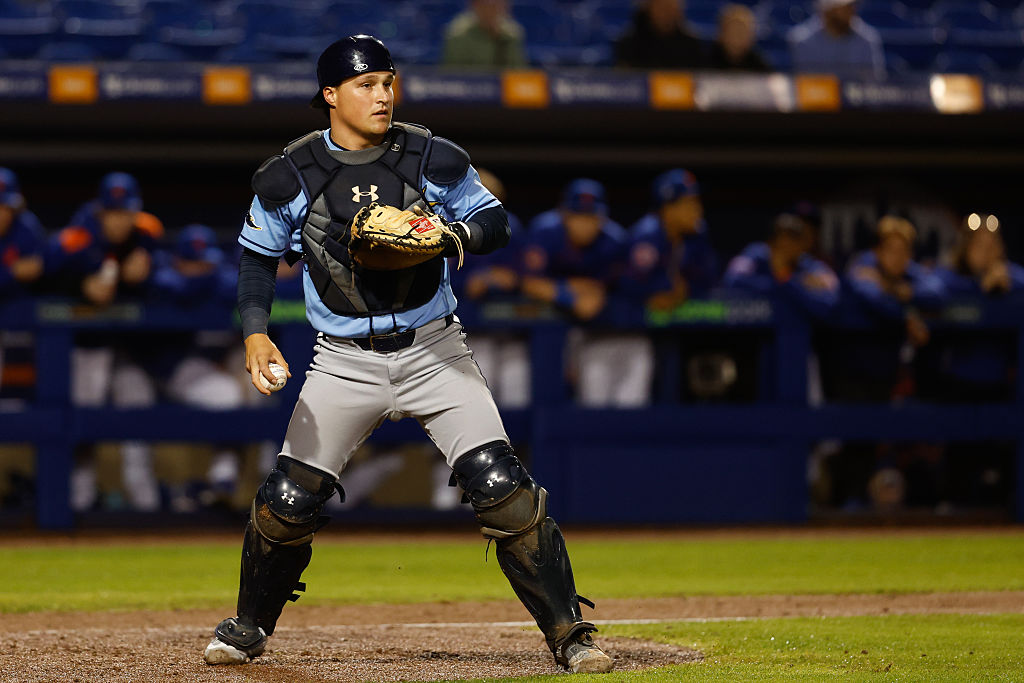
Strong Start for the Rays’ Return
On the flip side, the Rays couldn’t be happier with how their side of this deal has aged to this point. Multiple of the players they acquired are off to an incredibly hot start, and with the Rays’ player development as sharp as anyone, this becomes even more encouraging.
Beginning with one of the highest-ranked prospects moved in this deal, catcher Caden Bodine has been raking early in his Rays career. After being the second catcher selected in last year’s draft, he’s currently slashing .408/.457/.662 with a 189 wRC+ and a trio of home runs.
Especially considering Bodine was originally seen as a glove-first catcher, his offensive development has been tremendous to see. He’s looking like a special player, and the type of prospect the Rays have been searching for over the past few seasons.
On the mound, righty Michael Forret has showcased promising numbers through his first three starts. Across 15 innings pitched, Forret has pitched to an ERA of just 1.80, a WHIP of 1.13, while racking up 14 strikeouts. Although walks have been a bit of a concern early on, this is a pretty impressive beginning for the 22-year-old.
Aside from just Caden Bodine, the Rays also added some offensive help in outfielder Austin Overn. He may be off to the slowest start of any player acquired by the team, but he’s still shown some promise. He’s slashing .250/.311/.338 with a home run and an astounding 18 stolen bases in just 17 games.
The Rays also received one of the best prep prospects in the 2025 MLB Draft, Slater de Brun. While he has yet to play a game of professional baseball, he possesses qualities that the Rays develop well, and with how the rest of this deal has aged, he’s set to provide even more value once he begins his career.
Not to mention, the Rays also have the 33rd overall pick in this year’s draft on top of this group of promising players. Even if these player begin to slow down as the season progresses, they can add another first-rounder to their farm system once the draft rolls around in July.
It may still be early, but it’s hard to argue with how the Rays have done with their side of the deal so far. Especially as de Brun begins to play, and the Rays make their draft pick in July, this could quickly become even more one-sided.
Is There Any Hope For Baltimore?
Now that we’ve established how each side of this deal is looking so far, there’s another question lurking: Is there any hope that the Orioles’ side of this deal begins to look stronger?
The answer is a somewhat surprising yes, given the unimpressive numbers he’s shown across the board to this point. Despite seeing some regression in a few areas of his game, Baz’s underlying data indicates some unluckiness, which will come back down to reality in due time.
For example, Baz’s BABIP is currently sitting at .360, which is an unsustainable pace. Only nine pitchers around the league have posted a number that’s greater than or equal to .360, and five of these pitchers have posted ERAs above 5.00.
To be quite honest, this is an unsustainable pace. Especially considering Baz’s barrel rate, hard hit rate, and exit velocity numbers are sitting close to his career norms, meaning he might not be getting hit as hard as some of his numbers may indicate.
These encouraging expected numbers span nearly his entire stat sheet. He’s posted a lower xERA and xwOBA than his actual marks, which is another sign that things may regress to the mean sooner rather than later.
If this happens, Baz should naturally begin to pitch better, leading to better actual results and this deal looking better than it does presently. As it stands now, though, this has been a slam-dunk win for the Tampa Bay Rays.
Become a Member of Just Baseball
Subscribe and upgrade to go ad-free!
* Save 25% by subscribing annually.

Written by
Jay Staph, a huge baseball fan and stat nerd, founded and ran his own baseball writing website, BSBWrites, at just 16-years-old. With focal points around prospects,…