
Closer Role Changes Teams Should Already be Eyeing
Shaky bullpen play has already hurt several teams this season. Here are four teams that should be looking to change things up late in games.
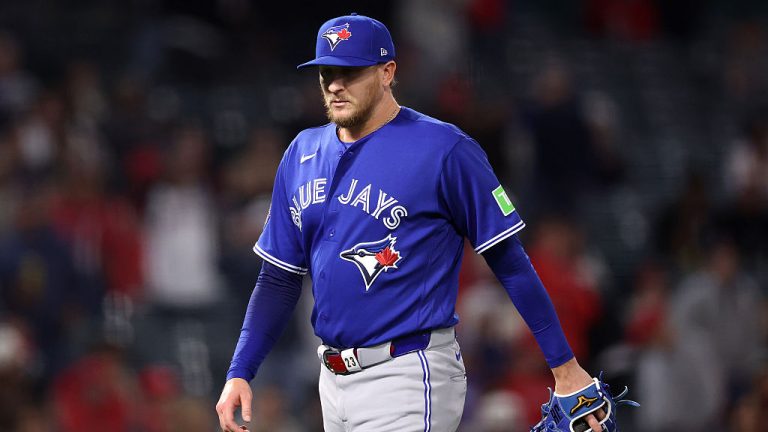
When you think of a closing pitcher, you think of the nastiest arm at the back end of a bullpen, the guy who slams the door and doesn’t give the opposition hope of scoring. Names that come to mind are Mason Miller, Aroldis Chapman, Jhoan Duran, and Josh Hader.
Unfortunately, not every team has that luxury. Some clubs came into the season thinking they had their guy, only to watch him stumble out of the gate. Others never had a clear answer to begin with and now are feeling it in the late innings.
Yes, it’s early. Some pitchers need time to settle in and find their groove over a long season. But when the ninth inning starts raising the heart rates, patience runs thin, especially with how volatile bullpen roles can be.
Right now, a handful of teams are already dealing with their closers not holding up. Let’s take a look at which bullpens are struggling to close games, and who could be next in line to take over the ninth.
All stats were taken prior to play on April 22.
Los Angeles Dodgers
The news of Edwin Díaz missing months due to surgery makes this more of an honorable mention. That said, the Dodgers have many different directions they can go in, starting with Tanner Scott.
Scott’s first season as a Dodger was a massive disappointment, blowing 10 saves and posting a 4.74 ERA. Across 10 games this season, he owns a 1.04 ERA and has yet to walk a batter. It seems like he would be first up for saves.
Another option if Scott isn’t available is fellow lefty, Alex Vesia. Vesia already has two saves this season and hasn’t allowed a run in 10 appearances. He ranks in the top of the league in average exit velocity, chase rate, whiff rate, and strikeout rate.
For a third option, Blake Treinen could pick up an occasional save. Once one of the best closers in baseball, he’s on the back end of his career and has been inconsistent to start the year, putting him third in the pecking order.
An interesting wrinkle could be moving Roki Sasaki to the bullpen if things get dire. Sasaki hasn’t looked comfortable as a starter in his brief major league stint, but his stuff could play up in relief. We saw that first hand in last year’s postseason.
With all of the starting pitching depth the team has, it’s not out of the question to see Sasaki closing games.
Most teams would be in trouble losing a closer of Díaz’s caliber. The Dodgers should be just fine.
Toronto Blue Jays
The question of whether the Blue Jays should make a change at closer dates back to last season.
After an All-Star season in 2024, Jeff Hoffman signed a three-year, $33 million contract with the team via free agency. He earned 33 saves last season but was shaky overall, owning a 4.37 ERA with a 1.19 WHIP.
The club trusted him during the postseason, where he was mostly solid, surrendering two runs in 12.2 innings. One of those, though, was Miguel Rojas’ game-tying solo home run in the top of the ninth, ultimately propelling the Dodgers to their second straight World Series Title.
Resume to this season, and Hoffman remains struggling. In 12 appearances, he has three blown saves and recently gave up a go-ahead grand slam to Corbin Carroll, pushing his ERA to 7.59.
So, what changed? His four-seam fastball has become a problem. Its run value has steadily declined since 2024, and his command has worsened, too, leaving it right down the heart of the plate.
The Jays have two immediate options to look at in Tyler Rogers and Louis Varland.
Rogers has been solid, giving up one run in 12 appearances while continuing his trend of generating weak contact and ground balls. He has 19 career saves, though his low velocity profile isn’t typical for a closer.
Varland, meanwhile, has been dominant. He hasn’t allowed a run in 13 innings of work and is striking out 41.3% of batters he faces. The only question is experience; he hasn’t closed games before, but he’s handled high-leverage spots.
But at some point the Blue Jays need to do what’s best for the team, and Varland is the most dominant relief arm at this moment.
Manager John Schneider has backed Hoffman publicly, so it may take more struggles for a change. If it gets there, Varland feels like the higher-upside option in the ninth.
Cincinnati Reds
Emilio Pagán was a revelation for the Reds last season, saving 32 games with a 2.88 ERA. The team brought him back on a two-year, $20 million deal to keep him in the closer role.
So far, it hasn’t translated. Through 11 games, Pagán has a 4.76 ERA and 1.24 WHIP, though he’s converted six saves.
Like Hoffman, the issue traces back to one pitch: his splitter. He’s missing all over the zone, and hitters are batting .375 against it.
If the Reds look elsewhere, Tony Santillan is a logical next man up. He hasn’t allowed a run in 10 appearances and is generating whiffs at a 32.8% clip with a 32.4% strikeout rate.
The concern is control. His 16.2% walk rate isn’t ideal for a closer, though he’s allowed just three hits compared to six walks.
Another option is Graham Ashcraft, who owns a 1.50 ERA through 12 games. He generates similar swing-and-miss but induces more chase and significantly more ground balls than Santillan.
Both have recorded a save this season, but Santillan’s 12 career saves give him a slight edge. If Pagán continues to falter, Santillan likely gets the first crack.
Milwaukee Brewers
Trevor Megill earned his first All-Star nod after saving 30 games with a 2.49 ERA last season. But like others on this list, he hasn’t been a lockdown presence early on.
After back-to-back blown saves on April 10 and 14, Megill’s ERA spiked to 14.40 and now sits at 9.00.
He’s a two-pitch pitcher —four-seam fastball and a knuckle curve. For that combo to work, the fastball needs to live at the top of the zone to set up the curve. Instead, he’s leaving it over the middle, and hitters are punishing it to the tune of a .438 average.
Fortunately for manager Pat Murphy, Abner Uribe is waiting.
Uribe hasn’t quite matched his dominant 2025 season (1.67 ERA), but he’s been more effective than Megill so far. His sinker averages 97.7 mph, and his slider is among the best in the game.
With two saves already this season, it’s fair to wonder how much longer the Brewers stick with Megill before making a change.
Become a Member of Just Baseball
Subscribe and upgrade to go ad-free!
* Save 25% by subscribing annually.

Written by
Ethan is an aspiring sports analyst who has a passion for all sports. He was a collegiate baseball player and is a recent San Diego State…