
The Sophomore Bump: Jac Caglianone, Cam Smith, and Matt Shaw Could Define 2026
These three players enter year two positioned to provide an enormous impact for their respective ball clubs.
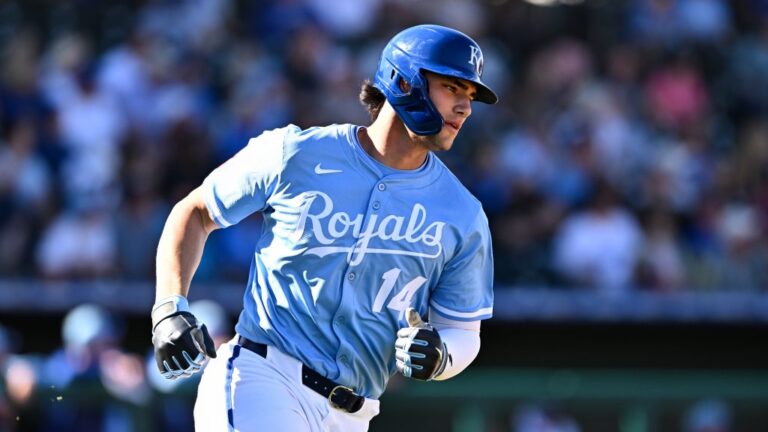
Baseball loves a cautionary tale. The “sophomore slump” has long been treated as an inevitability — pitchers adjust, weaknesses are exposed, and last year’s breakout darling suddenly looks ordinary.
But development isn’t linear, and for every step backward, there are players who make a second-year leap that reshapes not only their trajectory, but their team’s season.
In 2026, several contenders are quietly depending on exactly that kind of jump. Not from established stars, but from second-year players whose rookie seasons revealed both flaws and tantalizing upside. If the game slows down, the approach tightens, or the role clarifies, these players have the tools to swing playoff races.
Jac Caglianone, Cam Smith, and Matt Shaw arrived in the majors under very different circumstances, yet all three enter year two positioned to provide something their teams desperately need — impact beyond expectations.
A sophomore slump would be survivable. A sophomore bump could be season-defining.
Jac Caglianone
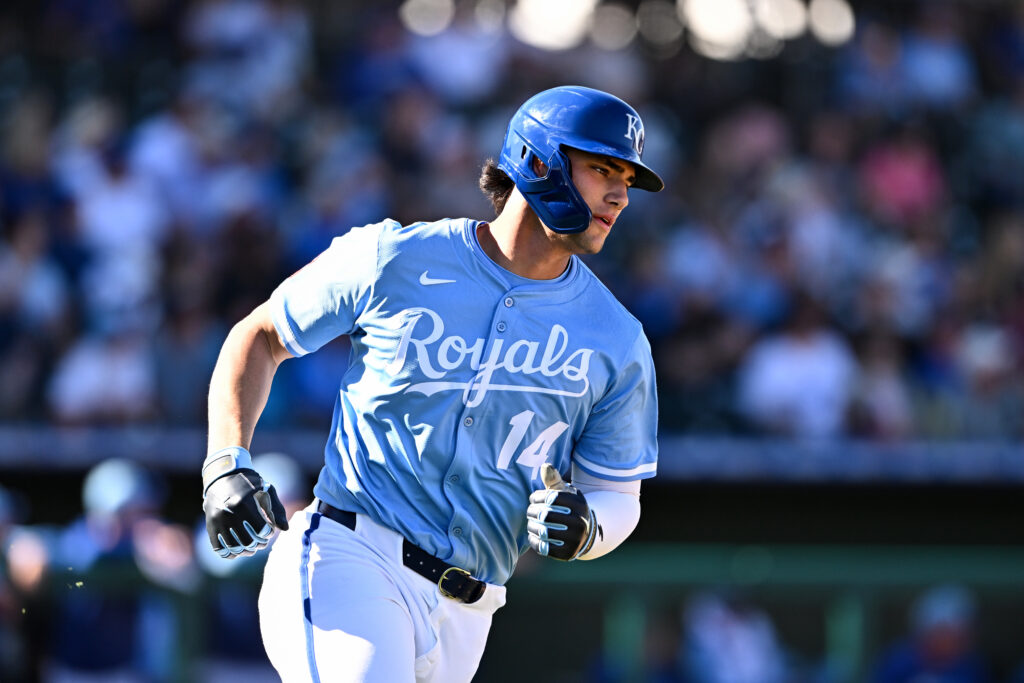
Rookie Season
Jac Caglianone’s first full professional season was a tale of two levels. The sixth overall pick in 2024 tore through Double-A and Triple-A to open 2025, forcing a call-up while learning a new defensive home in right field after being drafted as a first baseman. Once in the majors, however, his expansive approach caught up to him.
Despite some of the worst batted-ball luck in baseball, the underlying issue wasn’t fortune — it was swing decisions. Caglianone ran a 38% chase rate, frequently putting himself in disadvantageous counts and preventing him from getting his “A” swing off.
Already prone to ground balls due to a relatively flat bat path, his quality of contact deteriorated further when he expanded the zone. The result was a debut that muted some of the most prodigious raw power Statcast has ever measured.
Why There’s Reason to Believe in More Production in 2026
Caglianone’s approach currently grades out near the bottom of the scale, but the rest of the offensive toolkit remains intact. He pairs 80-grade raw power with above-average bat-to-ball skills — a combination that gives him a higher offensive floor than typical all-or-nothing sluggers.
Context matters. He spent the season learning a new defensive position, managing an injury, and facing the steepest jump in competition — a perfect storm for his worst tendencies to be amplified. When he returned to Triple-A, he resumed torching baseballs, reinforcing that the adjustments ahead are about major-league decision-making, not underlying ability.
Encouragingly, refining swing decisions is generally more attainable than improving contact ability. If Caglianone simply normalizes his chase rate and experiences neutral batted-ball luck, he projects as a league-average hitter. If the game slows down and he begins consistently accessing his top-end swing, there is legitimate All-Star upside.
What a Breakout Would Mean for the Royals
Kansas City’s lineup still revolves around Bobby Witt Jr., and the club has been searching for a long-term middle-of-the-order partner to maximize his prime.
Vinny Pasquantino has flashed that capability, and Salvador Perez continues to provide intermittent protection, but Caglianone represents something different: a potential impact bat with six years of team control aligned with Witt’s competitive window.
Whether he remains in the outfield long term is secondary. If Caglianone unlocks even a portion of his raw power at the major-league level, he could transform the lineup from top-heavy to dangerous, forcing opponents to pitch to Witt and stabilizing Kansas City’s run production.
For a Royals team with playoff aspirations, his development could be the swing factor between fringe contention and a legitimate October push.
Cam Smith
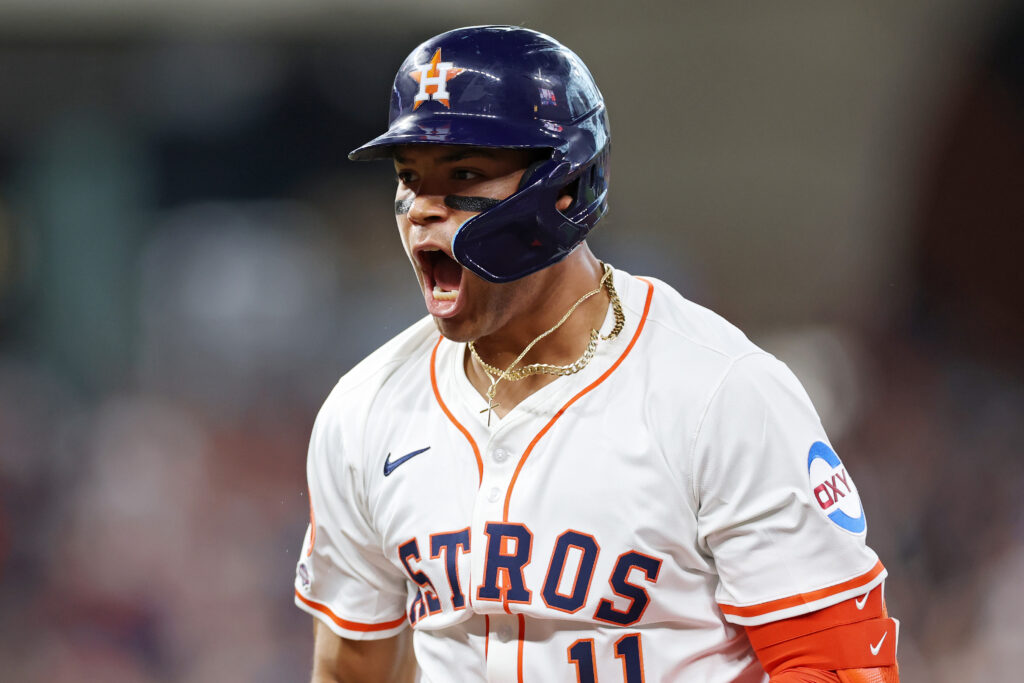
Rookie Season
It’s difficult to overstate how aggressive Houston’s handling of Cam Smith was — and how well he held his own under the circumstances.
Acquired as the centerpiece of the Kyle Tucker return, Smith broke camp with the Astros while learning right field after being drafted as a third baseman. He reached the majors with fewer than 40 minor league games played.
Defensively, the transition was remarkably smooth. Smith graded in the 70th percentile in outs above average and paired that with elite athleticism, including 95th-percentile sprint speed. At the plate, however, the challenge of facing major-league secondaries was evident.
Smith struggled particularly against sliders, finishing with a 90 wRC+ and roughly 1 fWAR, with swing-and-miss tendencies defining much of his offensive profile. Considering the leap in competition and defensive adjustment, the growing pains were expected.
Why There’s Reason to Believe in More Production in 2026
Smith will play the entire 2026 season at age 23, and unlike most prospects, his development is unfolding almost entirely at the major-league level. For a player who effectively skipped the minors, the foundation he showed as a rookie is encouraging.
At 6-foot-3 and 225 pounds, Smith is a rare athlete with elite bat speed and top-tier physical tools. His 113.9 mph max exit velocity as a 22-year-old underscores the latent power in his profile. As he gains experience recognizing and adjusting to big-league secondary pitches, particularly sliders, his power output should begin to match his underlying metrics.
Recent development paths — such as Zach Neto’s — illustrate that players with truncated minor-league seasoning can make significant offensive strides once they acclimate to major-league pitching. Smith’s combination of athleticism, bat speed, and defensive value gives him multiple avenues to impact the game even before the bat fully arrives.
What a Breakout Would Mean for the Astros
Houston is simultaneously maximizing the final prime years of José Altuve-led teams while building a bridge to its next offensive core. Yordan Alvarez remains one of the game’s elite hitters, and Jeremy Peña’s breakout provided a glimpse of the next wave. Smith’s development could determine how seamless that transition becomes.
If he evolves into an above-average regular, Smith solidifies right field and lengthens a lineup that already features high-end talent. If he reaches his ceiling, he becomes more than a complementary piece — he profiles as a cornerstone player and a potential pre-arbitration extension candidate, the type Houston has historically prioritized to sustain long-term competitiveness.
For an Astros club with postseason expectations, Smith’s trajectory may define not just 2026, but the shape of their next contending window.
Matt Shaw
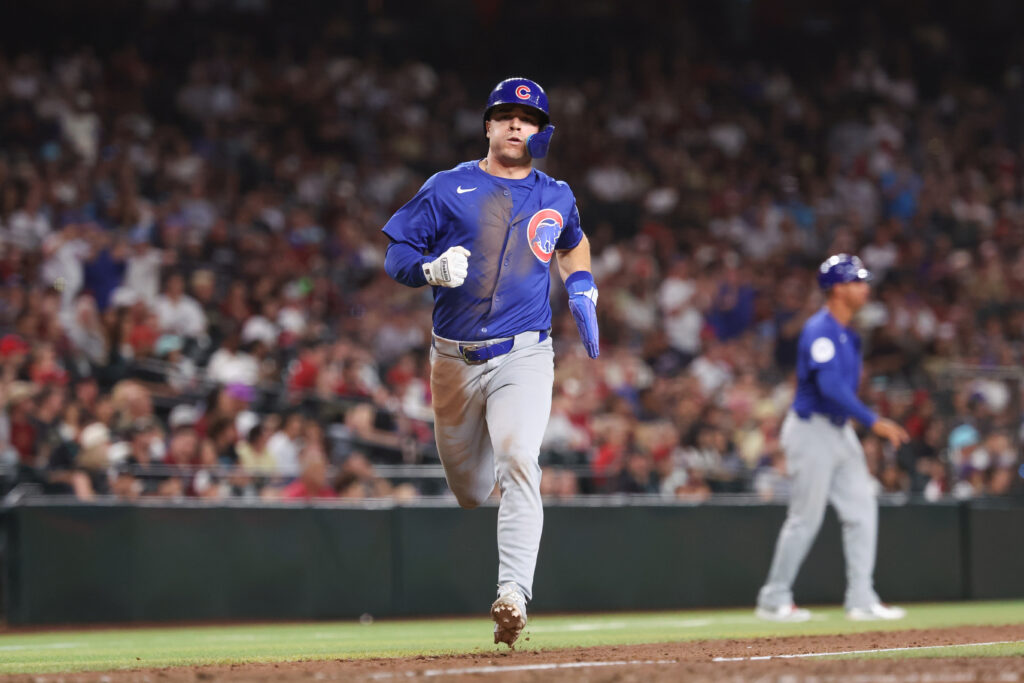
Rookie Season
Entering 2025 as a popular NL Rookie of the Year pick, Matt Shaw fell short of expectations. His contact skills translated as advertised, but he struggled to consistently impact the baseball, and an expansive approach muted what power was present.
After starring as a collegiate shortstop, Shaw’s transition to third base exposed arm strength limitations, where he ranked in just the 33rd percentile.
The Cubs briefly sent him to Triple-A Iowa, where he toned down an exaggerated leg kick in an effort to improve timing. While the adjustment helped him get the bat to the ball more consistently, the overall production remained underwhelming for a consensus top-40 prospect. Shaw’s rookie year ultimately reflected a player caught between roles and adjustments rather than one lacking ability.
Why There’s Reason to Believe in More Production in 2026
The arrival of Alex Bregman on the North Side reshapes Shaw’s path. Rather than locking him into a single position, manager Craig Counsell has indicated Shaw will see time across the diamond, including the outfield. What may appear to be a setback could instead unlock his most valuable traits.
Shaw’s 90th-percentile sprint speed and strong instincts tracking fly balls suggest his athleticism may play up in the outfield. Offensively, while his exit velocities lagged, he demonstrated a swing geared to pull the ball in the air — a foundation that could support increased game power with incremental strength gains or improved swing decisions.
Equally important, Shaw now has the opportunity to learn alongside Bregman, one of the game’s premier examples of maximizing contact quality and situational hitting despite modest raw tools. Removed from the Rookie of the Year spotlight and deployed in a flexible role, Shaw has a path to carving out value across multiple facets of the game — with the upside of a sneaky 20–20 contributor.
What a Breakout Would Mean for the Cubs
The Cubs’ decision to leverage Owen Caissie in a deal for Edward Cabrera addressed rotation needs but left a defensive void in right field. Seiya Suzuki has filled the role, though his defense remains a clear liability. Shaw emerging as a capable — and potentially above-average — outfielder would significantly raise the club’s defensive ceiling.
Chicago already projects an elite defensive infield with Bregman, Dansby Swanson, and Nico Hoerner. An outfield alignment featuring Ian Happ, Pete Crow-Armstrong, and Shaw has the potential to be among the best defensive units in baseball, anchored by Crow-Armstrong’s elite range in center.
For a Cubs team with postseason aspirations, Shaw’s breakout wouldn’t just add offensive depth — it could materially improve run prevention and roster flexibility. In a crowded NL playoff picture, that marginal gain could be the difference between October baseball and another near miss.
Become a Member of Just Baseball
Subscribe and upgrade to go ad-free!
* Save 25% by subscribing annually.

Written by