
Could Ryan Helsley Be an Answer for the Tigers’ Rotation?
Signing Helsley to be a starter would be a risk for Detroit. Might the risk be worth the reward?
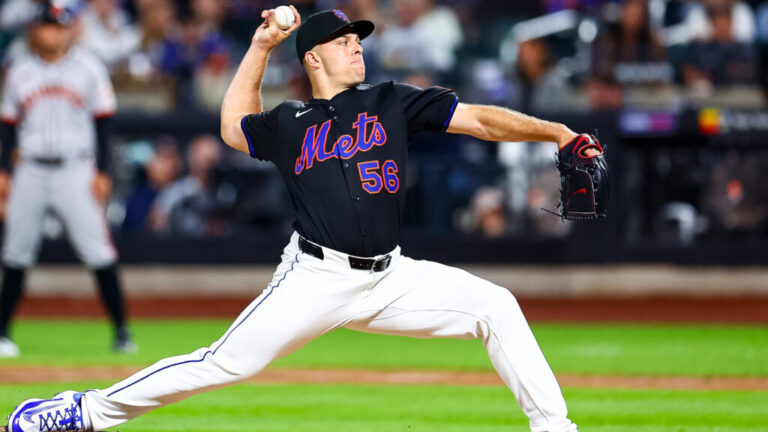
In back-to-back seasons, the Detroit Tigers have entered the playoffs with a rotation that was not up to par. Hell, it didn’t even include five names. Pitching chaos was a cute term the team used to describe their unusual way around this problem, but we know that route is not sustainable.
While fans have been debating Ranger Suárez vs. Dylan Cease and other top arms, a report surfaced Sunday giving us an idea of who could join Detroit’s rotation.
The Athletic’s Ken Rosenthal reported that the Tigers are interested in Ryan Helsley as a starter. Yes, Ryan Helsely, the former Cardinals closer who has never started a major league game.
It’s a perplexing idea that left me, and many other fans, unsure what to think. But, as I peeled back the layers, I started to see why the Tigers would explore this avenue, though I still wonder if the risk is worth the reward.
Why It Could (or Couldn’t) Work
Teams have started to lean into the practice of converting relievers to starters more and more in recent years. Jordan Hicks, Reynaldo López, Michael King, Seth Lugo, and others have all made the change, mostly finding success.
In the most elementary form, it makes sense. If you are good in one inning, wouldn’t it be great to extend that success over five or six innings? If only it were that simple.
The reason so many starters are successful is due to their ability to mix pitches and offer a different attack when they face the same batter two or three times a game. Usually, this requires pitchers to have four or more pitches that they feel confident in to keep batters guessing and off their barrels.
Obviously, not every starting pitcher’s success kit is the same. We see a number of different approaches through which starters find success. However, with most relievers that move to the rotation, they bring with them four or more offerings.
As for Ryan Helsley? He’s more or less been a two-pitch pitcher – slider/four-seamer – with a curveball that he mixes in roughly 5% of the time. So, how does that work out of the rotation?
We have seen starters find success with fewer pitches, although it is rare these days. Spencer Strider is perhaps the best example of a successful pitcher who mostly only uses two pitches, but even Strider started adding offerings recently.
The only way you can make it work is if both offerings are truly elite.

via Baseball Savant
The image above shows the movement profile of Helsley’s offerings over the past two seasons. His slider produced a whiff rate of 51% in 2024 and 41.6% in 2025 while holding batters under a .175 average. I’d say that will play.
His fastball, having over 17 inches of IVB and sitting at 99 mph, gives him another plus pitch that changes his opponent’s eye level and sets up his slider. Both are plenty good to be successful, as we have seen over the years.
Now, the next question is, how do these two pitches change when they have to be thrown 90-100 times in a game instead of 15-25?
We know velocity is likely to tick down. Hicks was also throwing 99 mph out of the bullpen and saw his velocity dip to around 95-97 mph once he entered the rotation. His slider had a similar velocity drop.
Logic and history tell us Helsley would also have a velocity drop. If so, just how effective will he be, unless more offerings are added?
Well, his curveball will need to be used more, and maybe his cutter, which Savant logged a total of 13 of in 2025. I think his curveball has a chance to allow him to make the transition work.
If Helseley is comfortable enough with his curveball command, there’s some upside to dream on. In a tiny sample, Helseley’s curveball earned a 130 Stuff+ grade in 2025. Utilizing the pitch would give him three offerings of very different speeds with plenty of movement to work through a lineup.
Perhaps he could also use a changeup or a cutter as a way to attack lefties when he is deep in a count. Those pitches do not need to be as perfect, but instead just give the batter one more thing to think about.
Usually, pitchers land in the bullpen because they cannot cut it as a starter. The move back to the rotation comes with some risk, but the idea also helps avoid some limitations the Tigers might have.
The Spin Zone
Detroit’s need for a starter is more than clear.
Not only have they shown us this in the playoffs, but on paper, a rotation of Tarik Skubal, Casey Mize, Jack Flaherty, Reese Olsen, and Troy Melton is not enough. Injuries have plagued several of these names, and the Tigers are not in a position to hope younger pitchers can simply fill in. Now, there’s too much at stake.
Let’s say the Tigers sign Helsley and make him a starter. For Helsley, the move to the rotation would open the doors to longer and more lucrative contracts in the future. At 31 years old, he likely has one big payday left if he were to succeed as a starter.
So, knowing that, the idea of him accepting a one-year deal (maybe with options), making the transition to the rotation, and hitting the open market next season, could seem attractive.
For the Tigers, this could be the perfect maneuver to land the arm they want while not having to give the extra years it would take if he were to remain a relief pitcher. They have now manipulated his market into a shorter-term deal, giving them flexibility in the future.
Okay, that’s step one. Step two? His move back to the bullpen.
The Tigers could try the starter thing out and use that angle as a way to get Helsley to join the club. If it works out, great! If it doesn’t? They move him back to the bullpen, where they also have a need, and allow him to once again be a high-leverage arm, all while avoiding a long-term deal.
Even if the Tigers do give Helsley multiple years, the fallback of him landing in the bullpen, where he has been very successful for a number of years, is hardly a disaster.
It’s a bait and switch of sorts. If it works out, Detroit either finds an answer to its rotation needs or fills the ninth inning, which is also a huge need. All in exchange for selling a player on the idea of becoming a starter, leading to more money in the future.
Final Thoughts
The Tigers are unlikely to be one of the big spenders like they once were in the past. Like it or not, they aren’t the Dodgers. Finding ways to get creative with how they spend their money, while exercising the resources and staff they have built up to generate more out of their players, is necessary.
Ryan Helsley is the perfect experiment in some ways: a talented enough arm to pull the transition off while also hitting the market coming off a down year. All while being on the wrong side of 30. It’s an equation that works enough on the Tigers’ side to meet their budgetary restrictions while also providing enough funds to attract a caliber of player like Helsley.
Either way – starter or reliever – the Tigers need an arm like Helsley.

Written by