
Three Factors That Held the Giants Back the Most in 2025
The San Francisco Giants had a talented roster in 2025, but uneven play in a few key areas held them back from making the postseason.
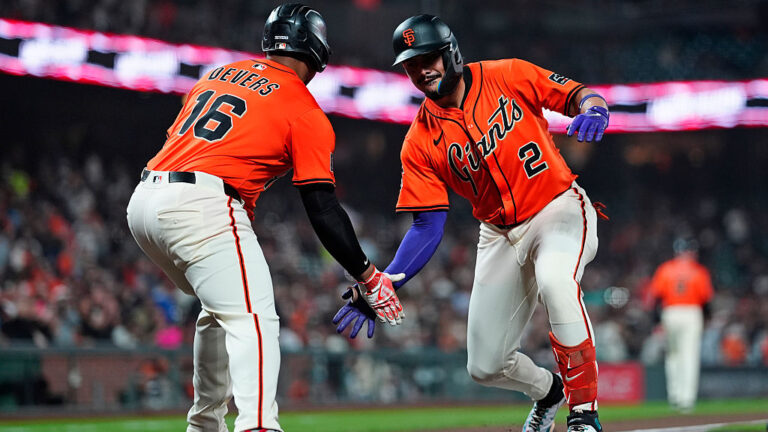
It’s no secret that the San Francisco Giants have been the premier franchise in baseball when it comes to being mediocre. They finished the 2025 campaign at a perfect 81-81, capping off a disappointing four year run with a record of 321-327.
However, it seems as if the tide is changing in the bay. Buster Posey has brought a boom in the excitement department and looks to continue that this offseason.
With names like Willy Adames and Rafael Devers now manning the top of the lineup, San Francisco is surely looking to get into the playoffs in 2026.
That goal was no different in 2025, but there were a surplus of areas that held them back. Let’s take a look at the Giants’ biggest insufficiencies of last year.
The Rotation’s Drop Off
Logan Webb is consistently one of the best starting pitchers in baseball. He’s coming off a year in which he led the National League in innings (207 IP) and strikeouts (224 SO).
While he struggled in September, going into that month Robbie Ray had a 3.18 ERA in 164.0 IP. He was an All-Star alongside Webb, became the team’s clear number two starter, and helped form one of the better one-two punches in all of baseball.
Now, Landen Roupp impressed in 2025 and we saw a breakout year. Up until July 22, he had a 3.11 ERA and 3.62 FIP in just over 100 innings.
However, he only made two more starts throughout the rest of the season.
Justin Verlander was the other mainstay in the rotation and his season was truly a tale of two halves. From Opening Day until July 18, he had a 4.99 ERA. However, after that outing, he would go on an impressive run of 13 starts at a 2.60 clip.
After those four is where things got extremely ugly for the Giants. Hayden Birdsong, Jordan Hicks, Kai-Wei Teng, and Carson Whisenhunt were the other Giants’ arms to make at least five starts.
Through the entire season, those four would combine for a 5.66 ERA and just 0.6 fWAR.
Hayden Birdsong experienced some extreme issues with his control which led to him spending the second half in Triple-A. Jordan Hicks—the team’s number four to start the year—was pushed to the bullpen before getting dealt to Boston in the Devers deal.
In the middle of a playoff push, Kai-Wei-Teng and Carson Whisenhunt were starting important games for the Giants. While Whisenhunt is the team’s top pitching prospect and Teng saw significant success in the PCL, those probably aren’t the names you want to hand the ball to when you’re trying to secure a Wild Card spot.
With Webb, Ray, and Roupp being the only three locked into a rotation spot heading into 2026, suring up the two open spots will be the main focus of the Giants’ winter.
Offensive Inconsistency
The Giants started the year as one of the best teams in baseball before falling off a cliff in the dog days of summer. This magical run to begin the season was highlighted by the pitching staff, with the offense doing just enough to win games.
When the staff eventually regressed, the offensive holes were glaring. This summed up the majority of the Giants’ season as it seemed like they could never get more than one of their guys hot at the same time, and if they did, the pitching didn’t show up.
The most obvious case of this was Willy Adames. While we see star players sign monstrous deals and take a bit of time to show up fairly often, it was a severe case for the highest paid free agent in the team’s history.
Up until June 9, Adames was one of the worst players in baseball, posting a 67 wRC+ and not even reaching the Mendoza line (.193). While he would eventually turn things around with a .848 OPS the rest of the year and become the first Giant to launch 30 home runs since Barry Bonds, it was over a third of the year where the franchise shortstop was abysmal at the plate.
A similar situation happened with Rafael Devers, after Buster Posey shocked the world and traded for the 29-year-old masher. He was acquired on June 16 and from then until the end of July, he slashed just .219/.327/.365 with only four home runs.
Naturally, from August until the end of the season, he’d hold a 146 wRC+ with 16 home runs. It was a similar case for the majority of the Giants’ lineup.
| Jung Hoo Lee | Opening Day -> 5/16: 127 wRC+ | 5/17 -> 9/28: 99 wRC+ |
| Patrick Bailey | Opening Day -> 8/29: 58 wRC+ | 8/30 -> 9/28: 58 wRC+ |
| Heliot Ramos | Opening Day -> 6/15: 132 wRC+ | 6/16 -> 9/28: 87 wRC+ |
| Casey Schmitt | Opening Day -> 7/13: 113 wRC+ | 7/14 -> 9/28: 89 wRC+ |
The entirety of the San Francisco’s lineup was made up of guys whose seasons were defined by hot and cold stretches. Heliot Ramos was an All-Star caliber bat in the first half, then fell off a cliff in the second. Patrick Bailey was the worst hitter in baseball until the last month of the year.
It’s runs like this that can’t happen if San Francisco wants any chance at contending in the near future. Surely, the organization will be hoping that full years from both Adames and Devers mixed with a few steps forward from young talent will push this offense to be far more consistent and into the top half of MLB.
The Post-Deadline Bullpen
The Giants’ bullpen saw one of the most interesting seasons for a position group in recent memory. Up until the All-Star break, the group was the best in baseball when it came to limiting runs. Their 3.14 ERA sat atop the league and they had the fifth most holds in baseball at 66.
The group was nails and singlehandedly keeping the team in games. However, after the trade deadline, everything crumbled.
The Giants dealt two of their best relief options at the deadline in Tyler Rodgers and Camilo Doval. Rodgers—who probably should’ve been an All-Star—had a 1.80 ERA in 50 innings before heading to the New York Mets.
Doval, on the other hand, was in the midst of a solid bounce-back campaign, holding a 2.70 ERA through the end of June and reestablishing himself as a big part of the group’s success.
Combine those send-offs with season-ending injuries to All-Star Randy Rodriguez and left-handed leverage arm Erik Miller, and the Giants didn’t have a single one of their top four relievers for the last two months of the season.
This drop-off in talent and reliability would immediately show. From the deadline until the end of the year, the bullpen would post a rough 3.97 ERA, which was in the bottom-third of the league. During that run, they only had two arms that would throw at least 20 innings and hold an ERA under 3.00.
Similar to the back end of the rotation, guys you wouldn’t necessarily want to were getting the ball in big moments.
Names like Joel Peguero, Joey Lucchesi, José Buttó, and Matt Gage were constantly thrown into high-leverage situations in the middle of a playoff push, yet weren’t even on the Opening Day roster.
Final Thoughts
Needless to say, it was a year of learning for Buster Posey in his first season as the President of Baseball Operations. Yes, he made some exciting moves such as signing Adames, bringing in Devers, and getting some good returns at the deadline.
However, it will be up to him and the rest of the front office to fix these holes. In a division loaded with rivals like the World Series winning Dodgers and the always-competitive Padres, it will be important for San Francisco to take some significant steps forward in terms of offensive consistency and the back end of both the rotation and starting staff.
While these holes weren’t the only things that kept the Giants from October baseball, they sure were the ones that stood out. Will 2026 see San Francisco finally patch them and reach the postseason for the first time since 2021, or will they simply continue their endless run of mediocrity?

Written by
Michael Monreal got his start in baseball media when he started his own website covering the San Francisco Giants after playing two years of college baseball.…