
Predicting the BBWAA Hall of Fame Class of 2030
With a weaker first-year class, 2030 could be the big year for some of the underdog holdover candidates on the ballot.
 | |
| | 
The National Baseball Hall of Fame will gain three new members this summer. Jeff Kent was chosen by the Contemporary Baseball Era committee at the Winter Meetings, while center fielders Carlos Beltrán and Andruw Jones finally crossed the 75% threshold on the BBWAA ballot last month.
With the Class of 2026 decided, Just Baseball is looking ahead to future years. This is the penultimate entry in a series projecting who could earn induction in the next five cycles of BBWAA Hall of Fame voting.
These next five years will feature some no-doubt candidates, including a couple of players who should get in unanimously, but just as fascinating are the players with on-the-fence cases who will surely spark lively debate.
Full Series
Predicting the 2030 BBWAA HoF Class
Holdover Electees: Félix Hernández, Dustin Pedroia
With no first-year candidates pushing for induction, the door is open for two returning players to make their move.
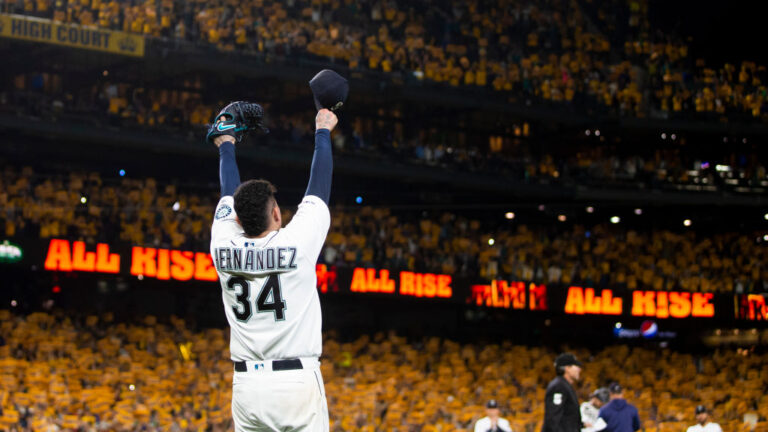
The first is Félix Hernández, who, other than the elected Jones and Beltran, was the biggest story of the 2026 Hall of Fame cycle.
After debuting with a respectable 20.6% in 2025, Hernández jumped all the way to 46.1% in his second year on the ballot, the largest rise in percentage by any returning candidate since 1967.
Like the recently elected Andruw Jones, Hernández’s Hall of Fame case rests almost entirely on his seven-year peak. His 38.0 bWAR from 2009-2015 was topped only by Clayton Kershaw, earning him six All-Star appearances, two ERA titles, and a Cy Young.
Whether it be Jones, Joe Mauer, or presumptive 2028 inductee Chase Utley, voters have been growing more comfortable electing players who lacked longevity but had dominant peaks.
The trend hasn’t yet translated to pitchers (Johan Santana certainly has a gripe), but Hernández makes as good a case as any.
Given how fast he has risen in just two years on the ballot, a 2030 induction may be a bit conservative, but it’s possible the loaded crop of 2029 newcomers will slow his momentum. Either way, it’s clear King Félix’s time is coming sooner rather than later.
The other predicted election in 2030 faces a far steeper climb to immortality. Like Hernández, Dustin Pedroia debuted on the 2025 ballot and made solid gains in 2026, but came in well behind the Mariners legend at 20.7%.
Expecting Pedroia to gain 55% in four cycles is ambitious, but there will be a few things working in his favor, beginning with the soon-to-be elected Utley. Though he didn’t hit for the same kind of power as Utley, the rest of Pedroia’s numbers aren’t too far off from those of his second base contemporary:
| Player | G | H | AVG/OBP/SLG | OPS+ | dWAR | bWAR/Peak WAR/JAWS |
|---|---|---|---|---|---|---|
| Dustin Pedroia | 1518 | 1805 | .299/.365/.439 | 113 | 15.5 | 51.7/40.9/46.4 |
| Chase Utley | 1937 | 1885 | .275/.358/.465 | 117 | 17.4 | 64.6/49.3/56.9 |
| Player | 5-bWAR Seasons | Top-10 MVP Finishes |
|---|---|---|
| Dustin Pedroia | 6 | 3 |
| Chase Utley | 6 | 3 |
Having Utley as a Cooperstown comparison point will undoubtedly bode well for Pedroia, as will the predicted elections of Yadier Molina and Buster Posey.
If both catchers, who each posted less career bWAR than Pedroia, get elected on the first ballot in large part because of their role on multiple World Series champions, it will be hard to argue against Pedroia, who was the glue of both the Red Sox’s 2007 and 2013 championship squads.
First-Ballot Electees: None
While there will be some interesting new names on the ballot, none are anywhere near the level of the six first-year players to earn eligibility in the first three years of this exercise.
First-Years Above 5%: J.D. Martinez, Anthony Rizzo
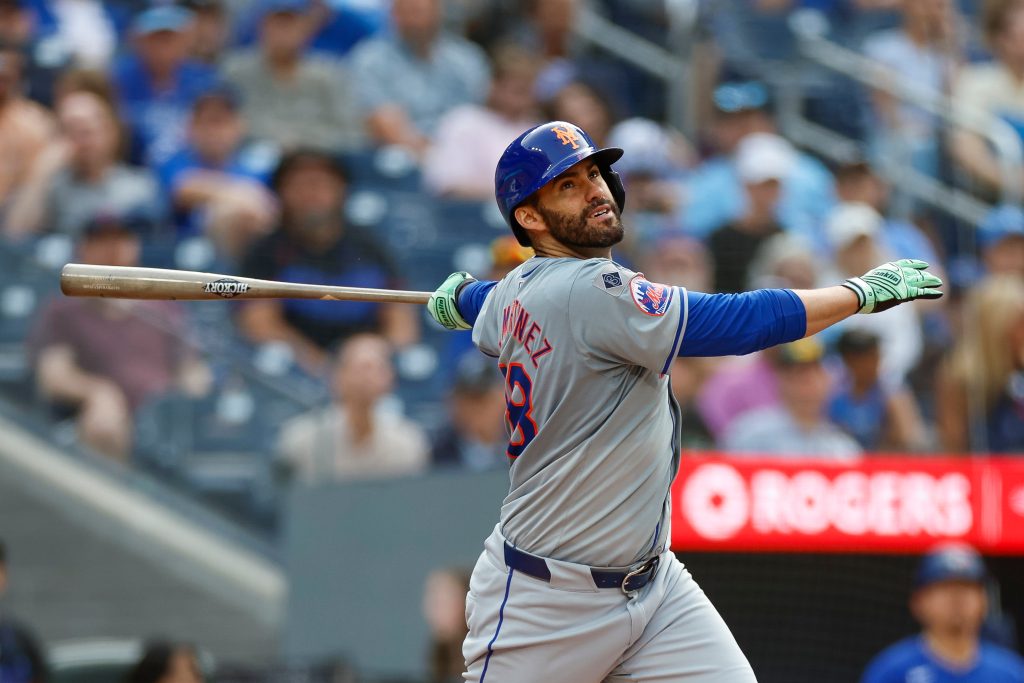
With respect to Johnny Cueto and José Abreu, there are only two first-year players with a legitimate chance of exceeding the 5% threshold in 2030.
Both Anthony Rizzo and J.D. Martinez were among the most consistent and complete hitters of the 2010s and were the cleanup hitters for a pair of juggernaut World Series champions.
Of the two, I predict Rizzo will garner the higher vote share. Though he wasn’t a consistent 40-homer hitter like Martinez, Rizzo has a clear edge in terms of on-base skills and defense, giving him a 10-point advantage in career bWAR.
His prime unfortunately coincided with that of his division rival Votto, but averaging 5.0 bWAR, 30 home runs, 99 RBI, and a 139 OPS+ for six years running is nothing to sneeze at.
Like Posey, Molina and Pedroia before him, Rizzo will also get some bonus points for being the heart and soul of the 2016 curse-breaking Chicago Cubs, a team that currently doesn’t have any Hall of Famers.
As for Martinez, the strength of his case lies in a 10-year run from 2014-2023 in which he averaged 29 home runs, 88 RBIs and a 141 OPS+. He also has a claim for being the game’s best hitter from 2017-2019, slashing .313/.388/.619 in those three seasons and averaging 43 homers and 119 RBI per year.
Because Martinez didn’t become a full-time player until age 25 and had his last great season at age 35, his counting stats aren’t great enough to make up for his one-dimensional skill set.
Still, it is worth noting that his 131 career OPS+ is ahead of inner-circle Hall of Famers like Dave Winfield (130), Carl Yastrzemski (130), and Eddie Murray (129). That could be enough to push him over the 5% mark.
Falling Off: Mark Buehrle
Much like Bobby Abreu (presumably falling off the ballot in 2029), Mark Buehrle‘s lack of dominance and recognition has overshadowed his remarkable consistency. He only received Cy Young votes once, during the White Sox’s 2005 championship season, and he only finished inside the top five in American League bWAR twice in his 12 years in Chicago.
The overall perception of Buehrle is that he was a very good pitcher for a very long time, but never truly among the game’s elite. Needing to make up 55% in just four years, it’s unlikely (though not impossible) that Buehrle will ever come close to the 75% threshold.
Written by
Daniel Fox is a contributing writer for Just Baseball. He has previously written for Pitcher List, BoSoxInjection, and in the Cape Cod Baseball League. He is…