
Predicting the BBWAA Hall of Fame Class of 2029
The ballot is going to be stacked in 2029, with three strong contenders to be elected in their first year of eligibility.
 | |
| | 
The National Baseball Hall of Fame will gain three new members this summer. Jeff Kent was chosen by the Contemporary Baseball Era committee at the Winter Meetings, while center fielders Carlos Beltrán and Andruw Jones finally crossed the 75% threshold on the BBWAA ballot last month.
With the Class of 2026 decided, Just Baseball is looking ahead to future years. This is the third entry in a series projecting who could earn induction in the next five cycles of BBWAA Hall of Fame voting.
These next five years will feature some no-doubt candidates, including a couple of players who should get in unanimously, but just as fascinating are the players with on-the-fence cases who will surely spark lively debate.
Full Series
Predicting the 2029 BBWAA HoF Class
Holdover Electees: None
With Chase Utley presumably getting elected and Andy Pettitte falling off the ballot in 2028, there is no clear returning candidate to earn induction. Félix Hernández will likely be the closest to election by this point, but a loaded crop of first-year players could prevent him from crossing the 75% threshold.
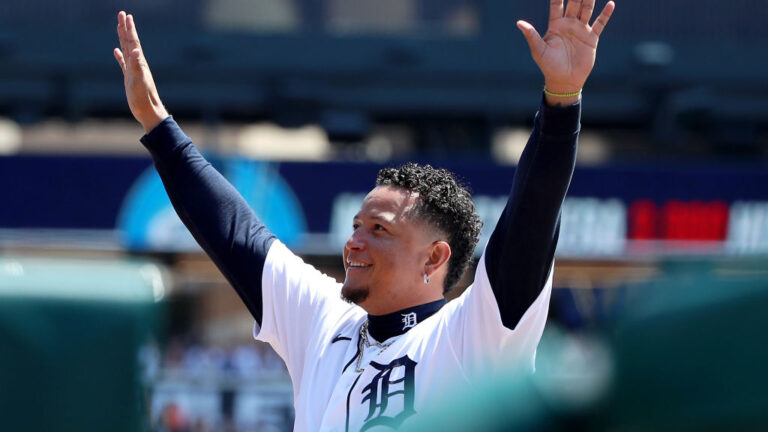
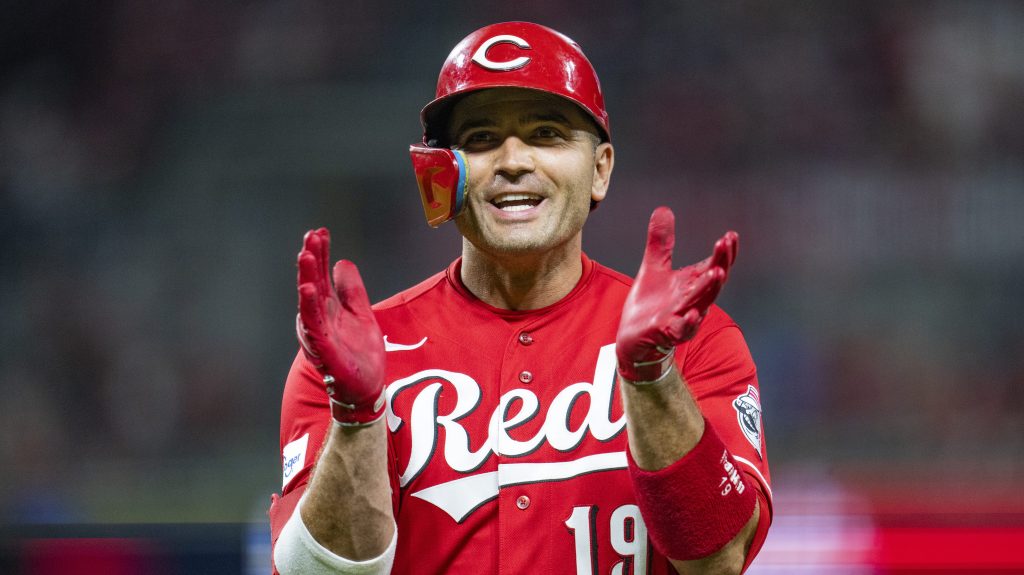
First-Ballot Electees: Miguel Cabrera, Joey Votto, Zack Greinke
This has the potential to be one of the greatest first-year classes of all time. Not since the 2015 election of John Smoltz, Pedro Martinez and Randy Johnson have three first-year players been inducted in the same year, and this trio has a similar level of star power.
Of the three, the one who is likeliest to push for unanimity is Miguel Cabrera.
He may not have been quite at the same level as Albert Pujols (a presumptive first-ballot Hall of Famer in 2028) as an all-around player, but the two-time MVP was probably the second-best right-handed hitter of his generation, easily hitting traditional milestones (500 home runs, 3,000 hits) and exceeding the first base Hall of Fame standard in bWAR, peak WAR, and JAWS.
His first base contemporary Joey Votto may not have been quite as elite a power hitter, but he made up the difference with generational plate discipline. He led the National League in on-base percentage seven times in a nine-year span and actually topped Cabrera in career OPS+ 144 to 140.
Not that Votto really needs any comparative analysis, but his resume stacked up to the recently elected Todd Helton should confirm he is a shoo-in.
| Player | G | H | HR | RBI | AVG/OBP/SLG | OPS+ | bWAR/Peak WAR/JAWS |
|---|---|---|---|---|---|---|---|
| Joey Votto | 2056 | 2135 | 356 | 1144 | .294/.406/.511 | 144 | 63.6/46.5/55.1 |
| Todd Helton | 2247 | 2519 | 369 | 1406 | .316/.414/.539 | 133 | 61.8/46.6/54.2 |
Finally, there’s Zack Greinke, who has everything you could possibly want in a Hall of Fame starting pitcher.
His 13 seasons with at least 28 games started allowed him to rack up both WAR (77.4 bWAR, 25th all-time) and strikeouts (2,979, 21st all-time). While he only finished inside the top-five of Cy Young voting three times, his 2009 (10.4 bWAR, 2.16 ERA) and 2015 (8.9 bWAR, 1.66 ERA) seasons were among the best pitching performances of the 21st century.
The fact that he wasn’t quite as dominant as Justin Verlander, Clayton Kershaw or Max Scherzer may cost him some votes among the most curmudgeonly voters and cause him to slip behind Cabrera and Votto, but Greinke should have no problem getting enough votes to round out one of the most eccentric and prolific classes in recent memory.
First-Years Above 5%: Madison Bumgarner, Adam Wainwright, Evan Longoria, Corey Kluber, Josh Donaldson, Nelson Cruz
This is going to be fun. In addition to the three first-year locks, five other players joining this ballot will have legitimate Hall of Fame arguments. Here’s a quick rundown of the sextet in descending order of the strength of their Cooperstown cases:
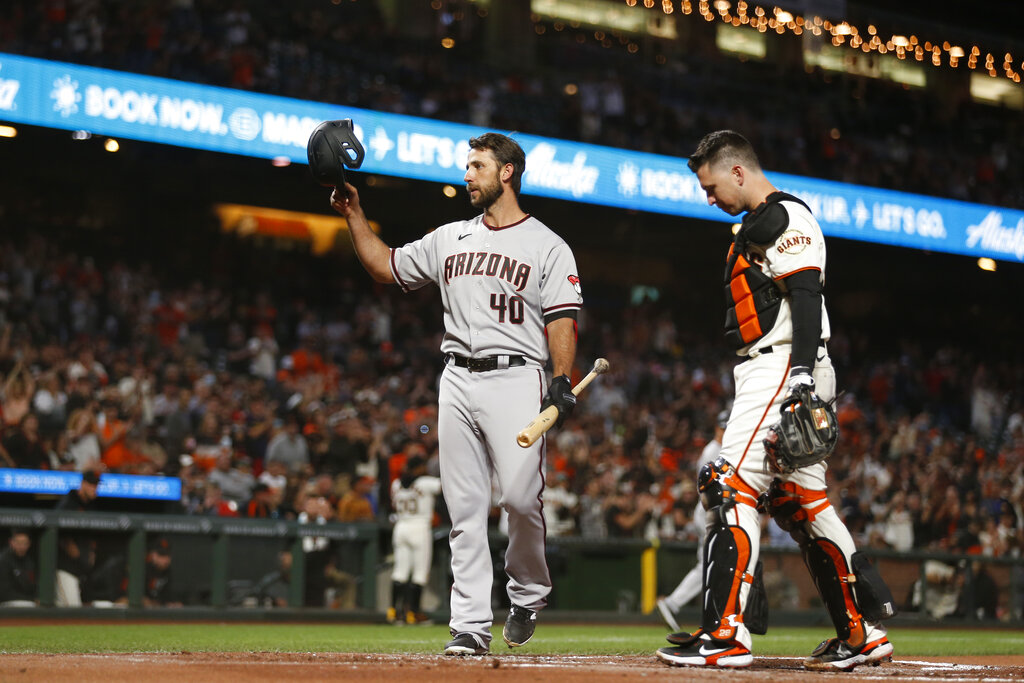
Madison Bumgarner
Following in the footsteps of Andy Pettitte, Jon Lester and Cole Hamels, “MadBum” is yet another 2000-2010s lefty with a legendary postseason pedigree.
Though he also turned in masterpieces in the 2010 World Series (8 IP, 3 H, 0 R, 6 K) and the 2016 Wild Card game (9 IP, 4 H, 0 R, 6 K), Bumgarner will always be remembered for his heroics during the Giants’ 2014 World Series run.
In 52.1 October innings, Bumgarner pitched to a 1.03 ERA and a 45-to-6 strikeout-to-walk ratio, capped off by a 21-inning, one-run domination of the Royals in the World Series.
Per Baseball Reference’s Win Probability Added, Bumgarner’s 2014 run was the second-most valuable single-postseason pitching performance of all-time, trailing only Curt Schilling in 2001.
Some voters may check off Bumgarner’s name on the strength of that run alone, but his Hall of Fame case may boil down to what came next. The massive toll of throwing 270 innings during the entire 2014 season quickly caught up to Bumgarner, as he would essentially be done as a frontline starter by age 26.
Ignoring the warning signs, the Arizona Diamondbacks gave Bumgarner a five-year, $85 million contract after the 2019 season and watched him turn in four disastrous, injury-plagued campaigns before retiring at age 33.
By traditional measures, Bumgarner’s regular season numbers are nowhere close to Hall of Fame-worthy. His 134 wins would easily be the fewest of any Hall of Fame starting pitcher, while his 32.4 bWAR would be the lowest besides 19th-century two-way star John Ward.
Despite this, Bumgarner’s postseason resume, along with a solid peak, will give him a fighting chance at Cooperstown. His odds will be particularly boosted if Buster Posey, the other defining Giants player during their three championships, is able to get in on his first ballot.
Adam Wainwright
Debuting on the ballot a year after his legendary Cardinals teammates (Pujols and Yadier Molina), Wainwright might have hurt his chances by returning for one more season, as his -1.9 bWAR, 7.20 ERA disaster in 2023 raised his career ERA from 3.38 to 3.53.
Putting aside his dismal swan song, Wainwright still has a deep resume. His 2.83 career postseason ERA includes some legendary moments as a rookie closer in 2006 and a 16-inning, two-run masterclass in the 2013 NLDS. He would have had a chance for more heroics if not for an ill-timed Tommy John surgery that prevented him from playing a part in the Cardinals’ magical 2011 World Series run.
That surgery also interrupted a terrific six-year peak from 2009 to 2014, during which he averaged 5.1 bWAR, 226 innings, and 201 strikeouts a season, earning four top-three Cy Young finishes along the way. A torn Achilles wiped out most of his 2015 season, and he was never the same dominant pitcher afterwards:
| Seasons | W-L | IP | BB/9 | K/9 | H/9 | ERA (ERA+) | bWAR |
|---|---|---|---|---|---|---|---|
| 2007-2014 | 117-65 | 1,464.2 | 2.2 | 7.6 | 8.2 | 2.99 (132) | 31.0 |
| 2016-2023 | 79-61 | 1,098. 2 | 2.8 | 7.2 | 9.4 | 4.32 (94) | 8.0 |
Had Wainwright entered the ballot 20 years ago, this steep drop-off likely would have doomed his chances. Yet as the impending election of Hernández, who was essentially done as an effective starter by age 30, proves, the standards for starting pitchers are clearly changing.
It’s difficult to know exactly what to expect by the time Wainwright hits the ballot in 2029, but it is reasonable to think he will mirror Hamels in the 20-25% range.
Evan Longoria
Playing most of his career out of the spotlight in Tampa Bay, Longoria has a stronger case than you might think. His 42.3 seven-year peak bWAR is just a point shy of the Hall of Fame average for third base, as he averaged 27 home runs and 90 RBI per year with a 128 OPS+ over his first nine seasons.
Yet, after one last semi-productive campaign with the Rays in 2018, Longoria spent his last six seasons with the Giants and Diamondbacks, averaging 1.2 bWAR and 91 games per year. Due to this drastic fall-off in his thirties, he ended his career with just 58.9 bWAR, lower than any post-World War II Hall of Famer besides George Kell.
Add in his lack of accolades in his prime (three All-Star appearances, zero top-five MVP finishes), and Longoria feels like a quintessential “Hall of Very Good” player.
Corey Kluber
How short is too short of a peak? Kluber’s run from 2014-2018 was downright Koufaxian. He averaged 6.4 bWAR, 246 strikeouts and a 2.85 ERA per season en route to two Cy Young Awards and two other top-three finishes.
Unfortunately for Kluber, he earned just 2.1 bWAR over his other seven MLB seasons, leaving him destined to follow the path of another recent two-time Cy Young Award winner.
| Player | W-L | IP | K | WHIP | ERA (ERA+) | bWAR/Peak WAR/JAWS |
|---|---|---|---|---|---|---|
| Corey Kluber | 116-77 | 1,641.2 | 1725 | 1.13 | 3.44 (122) | 34.0/34.8/34.4 |
| Tim Lincecum | 110-89 | 1682.0 | 1736 | 1.29 | 3.74 (104) | 19.5/23.9/21.7 |
With a slightly longer peak and a far better ability to limit baserunners, Kluber is likely to exceed the 2.3% Lincecum got in his first and only year on the ballot, but it would be a major surprise if he ever made a serious push for Cooperstown.
Josh Donaldson
Though they played the same position, Donaldson and Longoria had very different careers. While Longoria steadily strung together four-to-five-win campaigns during his first decade in the bigs, Donaldson didn’t become an everyday player until age 27 and tallied just 5.9 bWAR after age 33.
In between, Donaldson put together one of the best peaks of any third baseman in recent memory, averaging 5.7 bWAR, 30 home runs, and 87 RBI per season from 2013-2019. Narrow that to 2013-2016, and those numbers rise to 7.2, 33 and 103, respectively.
Though he also finished inside the top five in MVP voting in both 2013 and 2016, Donaldson’s magnum opus was undoubtedly his 2015 MVP campaign. In one of the most unfriendly offensive environments of the last 50 years, Donaldson led the league with 122 runs scored, 123 RBI and 351 total bases in addition to playing exceptional defense at the hot corner.
Even when you add in the subpar offensive seasons at the beginning and end of his career, Donaldson’s 129 OPS+ is higher than those of Hall of Famers Paul Molitor (122), Scott Rolen (122) and Adrian Beltre (116).
With all that being said, Donaldson simply didn’t remain at his peak long enough to rack up the necessary counting stats. His 46.8 career bWAR is nearly 20 shy of the Hall of Fame average for third baseman, and his 1,310 hits are fewer than any Hall of Fame position player in the live-ball era.
It was a fascinating career, and one that will be fun to revisit in more depth when he arrives on the Hall of Fame ballot, but Donaldson isn’t likely to get much more support than the 5% minimum to stick around.
Nelson Cruz
Arguably the most consistent power hitter of the 2010s, Cruz deserves an obligatory mention due to his gaudy 464 home run total, the 37th-highest of all time.
Of the 35 Hall of Fame-eligible players in front of him, only Alex Rodriguez, Mark McGwire, Sammy Sosa, Rafael Palmeiro, Manny Ramirez, Gary Sheffield, and the criminally underrated Carlos Delgado failed to earn induction.
You may have noticed a theme with that group of players, and it’s one that doesn’t bode well for Cruz’s chances of substantially clearing the 5% threshold. A 50-game PED suspension in 2013 presents a massive stain on Cruz’s candidacy, especially considering he provided little value outside of his power.
Cruz does deserve credit for hitting 307 of his 464 home runs from 2014 (his age-33 season) on, but that won’t be enough to garner widespread support.
Falling Off: Bobby Abreu
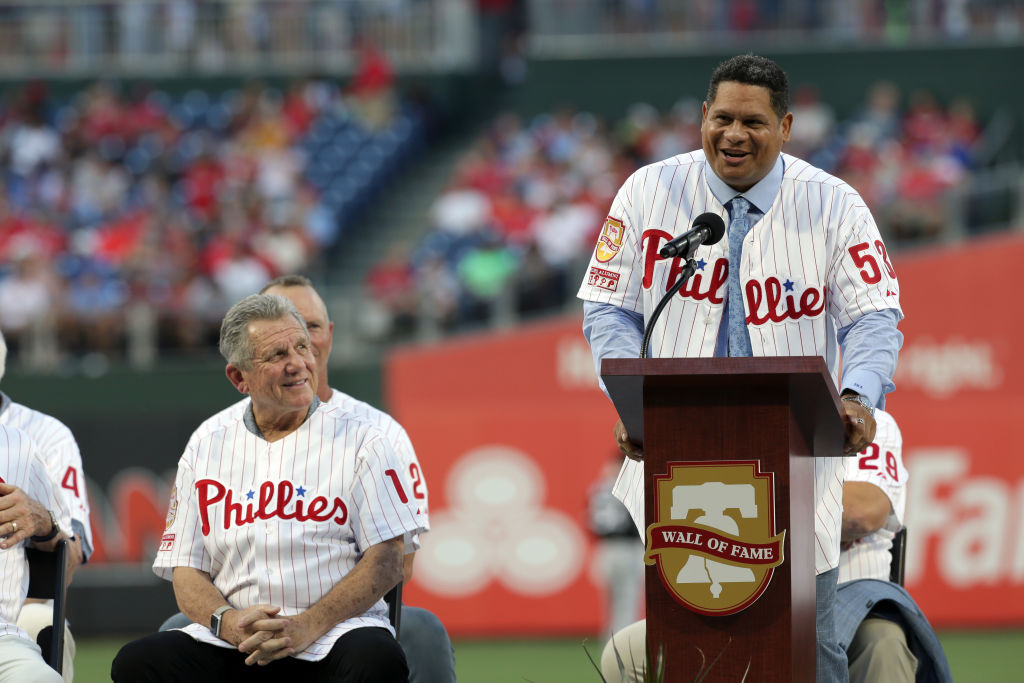
One of the most well-rounded and underrated players of the 2000s, Bobby Abreu‘s wide-ranging resume has appealed to the more analytically-minded voters.
Thanks to eight straight seasons drawing at least 100 walks, Abreu’s career 128 OPS+ is right in line with those of right field contemporaries Tony Gwynn (132), Roberto Clemente (130), and Dave Winfield (130). He was also an efficient and effective baserunner, as his nine 20-20 seasons are the most in MLB history.
Yet, much like his playing career, in which he somehow never finished inside the top 10 in MVP voting and earned just two All-Star appearances, Abreu’s Hall of Fame case has flown under the radar.
Unlike many of the recently elected position players, Abreu was never considered among the league’s best at any point in his career, and questions about his effort during his time in Philadelphia took a toll on his reputation.
In my opinion, Abreu’s overall collection of skills and consistency should make him a Hall of Famer, but it’s clear that not enough BBWAA members agree with me. With just three years to gain the support of more than 45% of the writers, Abreu’s best chance of election will come via the Contemporary Era committee.
Written by
Daniel Fox is a contributing writer for Just Baseball. He has previously written for Pitcher List, BoSoxInjection, and in the Cape Cod Baseball League. He is…