
Dillion Dingler Is Adding Value Through the ABS System
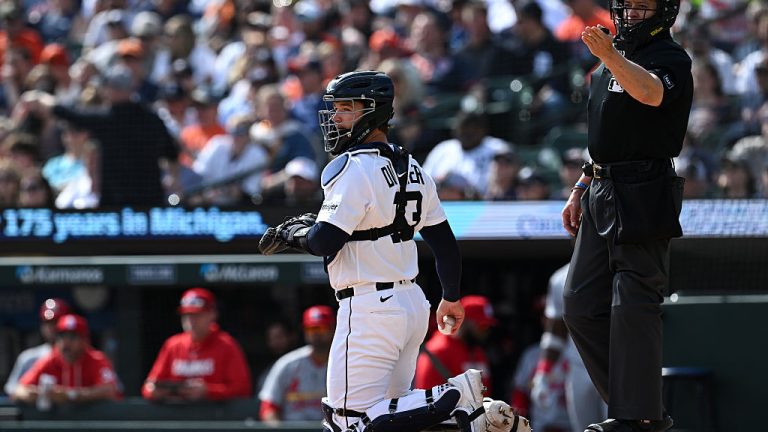
Dingler has used the ABS system to his and Detroit's advantage early in 2026. Here's how he's doing it.
 | |
| | 
When Major League Baseball implemented the new Automated Ball-Strike (ABS) system, fan reactions were mostly positive. Your team now has a lesser chance of having a wrong call swing a game, and for most fans, that was enough to get on board.
Now that we have seen the ABS system in action for a couple of weeks, I think we can agree it’s been a great addition. Missed calls being reversed have helped make the game more true, while also adding a fun, theatrical element I did not expect.
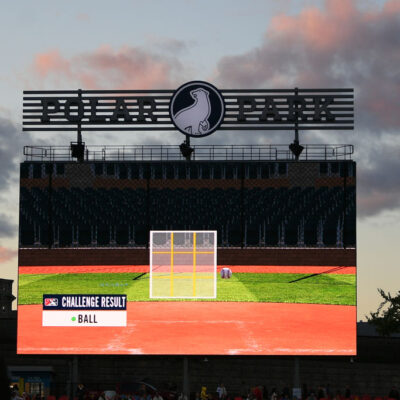
A tap on the helmet leads to a few seconds of suspense while the screen splits to the batter’s reaction and a digitalized ball tumbling towards your screen. The anticipation is like watching a slot machine line up three straight cherries. The batter’s reaction is the cherry on top.
Besides the fun and added excitement, the system has quickly become another way for players who know the zone well to add value. For the Detroit Tigers, the advantage has been significant.
Dingler’s Leading the Way
Although we saw the ABS system in the minors, most of MLB’s audience is seeing the impact for the first time. We are starting to understand the strategies players have to consider in a two-second timeframe to decide if they should use a challenge or not.
Like most aspects of the game in 2026, we have metrics that measure the success and failure of the ABS system in just about every scenario. We’ll start with the most elementary metric: wins and losses (a.k.a. overturns and confirmations).
Dillon Dingler was successful on his first seven challenges this season (his perfect streak ended yesterday). As a team, the Tigers have won nine challenges on the pitching side. Their 90% success rate is the highest in the league. To give you a frame of reference, the league as a whole is sitting at a 59% success rate on pitches challenged by catchers.
Obviously, switching a ball to a strike is great, but how much does it actually impact the game? Well, according to Baseball Savant, Dillion Dingler’s challenges have been worth 1.1 net runs, which ranks just one-tenth of a run behind Adley Rutschman for the best mark in the league. (For what it’s worth, Dingler has also added another 0.2 net runs with his one successful challenge as a hitter.)
The value is not only in changing a ball to strike three, leading to an out. A reversed call can also change an at-bat from a hitter’s count to a pitcher’s count. Doing so changes how the pitcher will attack the hitter and will allow them to “burn” a pitch by throwing a breaking ball outside of the zone, hoping for a swing and a miss.
Let’s use a real-world example. The Tigers opened the season in San Diego and found themselves trailing by one in the seventh. With a runner on first and one out, Fernando Tatis Jr. was up to bat with a 1-2 count. Emmanuel De Jesus came inside, and Dingler’s challenge led to a strikeout, removing Tatis in a huge spot.
It’s hard to say what exactly would have happened if this challenge was not won. But Tatis has a career .861 OPS off lefties, and I don’t think anyone wants to roll the dice on what could have happened if De Jesus had to throw a 2-2 pitch.
The strikeout resulted in a +2% win probability and took the Padres’ best hitter out of the equation. And guess what? The Tigers took advantage in the next inning, scoring four runs and ultimately winning the game.
In a less impactful at-bat against the Diamondbacks, Dingler’s challenge on a 1-0 pitch to Corbin Carroll was successful, forcing a 1-1 count compared to a 2-0 hitters count. De Jesus was also pitching in this scenario and ended up striking out Carroll to end the inning.
The ripple effect of a successful challenge can impact significantly more than one call. We saw Dingler challenge four times in a game against the Cardinals, winning all four. How much did that impact one game? How many pitches did it potentially save the pitchers, which could extend their outings?
Measuring the answers to these questions is not easy. Baseball Savant considers the challenges from the Cardinals game to be worth 0.5 runs, but we don’t truly know what could have happened in the pitches following if those calls were not overturned. Over the course of a year, I’m sure we will see scenarios where a challenge allows a pitcher to go deeper into an outing. Small wins, but every edge matters.
We are seeing in real time how important Dingler is to this team. He is a plus defender, and the advent of the ABS system has emphasized his value. The sample size is only eight challenges, but the results speak for themselves.
Lessons From Dingler’s Challenge Strategy
Players, managers, and fans are still learning about the best strategies for when to use a challenge and when to keep it. A called strike with a 3-0 count to a nine-hole hitter in the third inning probably isn’t worth the risk. High-leverage innings and key player at-bats are better suited to push for a strike.
I should note, a successful challenge does not count towards a team’s two challenges per game. If you win, you keep it. We saw this play out for the Tigers last weekend against the Cardinals, which I mentioned earlier.
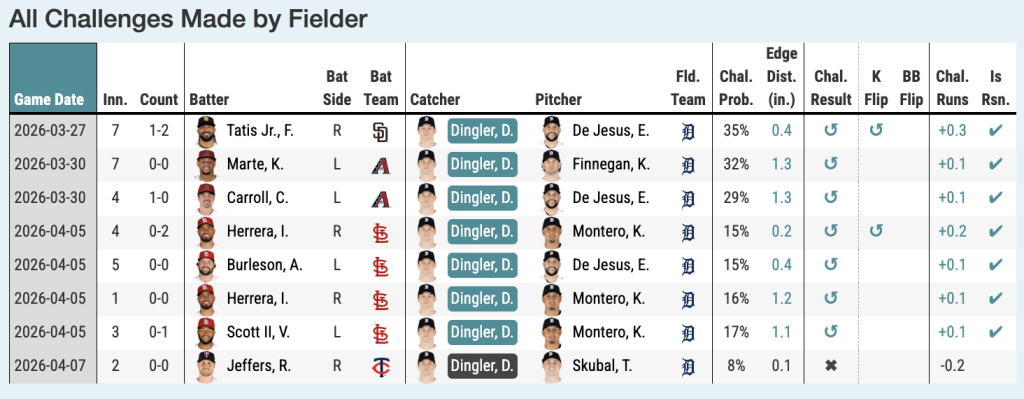
Via Baseball Savant
The graphic above shows all eight challenges Dingler has made this season and the data behind them. Although the sample is still small, there’s a common theme to note and watch for throughout the season.
First, look at the counts. Dingler has used a challenge either in even counts (0-0) or pitcher’s counts seven of the eight times he’s challenged. While not bulletproof, this gives us some intel into the importance of starting an at-bat, or keeping an at-bat, in a pitcher’s count, opening up more possibilities and pitches to get an out.
At the very least, we can say that Dingler is not holding challenges only to be used for a strike three call or late-game scenario. A willingness to use the challenge early in a count, and even the game, shows the confidence he has in knowing the zone and getting the call reversed.
Second, take note of the hitters Dingler has elected to use a challenge on. Fernando Tatis Jr., Corbin Carroll, Ketel Marte, Ivan Herrera, Alec Burelson, and Ryan Jeffers are all impactful players hitting at the top or in the middle of their teams’ batting orders. Securing outs against the most impactful players will lead to the best chance of winning, and it seems that is in consideration for challenges.
Lastly, the pitchers. Emmanuel De Jesus, Kyle Finnegan, Keider Montero, and Tarik Skubal. Again, small sample, but De Jesus and Montero (six of the eight challenges) are not exactly established major leaguers. Any inch of advantage Dingler could give them against batters who are better than they are is rather significant.
We can’t make any declarations on a new system a couple of weeks into the season, and I’m sure the strategy will change, but Dingler’s selectiveness adds to what I have outlined above. According to data from Baseball Savant, Dingler has had 28 “reasonable opportunities” to challenge and has only done so eight times. That’s a slightly below-average rate.
Tracking how Dingler’s strategy changes as the sample grows will be interesting. Obvious strikes that were called balls should get challenged every time, no matter who is up to bat or what the inning/count situation may be.
So far, each successful challenge has been on a pitch truly on the edge of the strike zone with at least 50% of the ball leaning outside of the zone. A strike, but not an easy call to make for an umpire, especially when you see it in real time with various movement and velocity. This speaks to how exceptional Dinger’s eye for the zone is.
Final Thoughts
As much as we all love to watch Dingler launch a ball into orbit and trot around the bases, his work behind the plate is even more of an art. The way he manages the pitching staff, is able to control the run game, and save errant pitches from reaching the backstop already resulted in him being a valuable defender.
Now, with the ABS system providing a new avenue to showcase defensive value, Dingler is already blossoming. I doubt he will go the entire season without losing a challenge, but he’s adjusted to the system well, and it has directly impacted at-bats and even games.
Become a Member of Just Baseball
Subscribe and upgrade to go ad-free!
* Save 25% by subscribing annually.
Written by