
How Can the Pirates Get the Most Out of Their Lineup?
With the right lineup configuration, the Pittsburgh Pirates' offense is capable of doing plenty of damage.
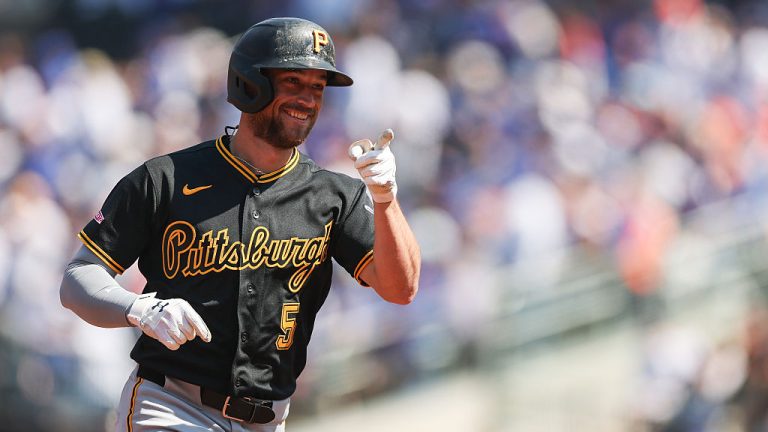
During the 2026 offseason, the main focus for the Pittsburgh Pirates was to acquire offensive help. After a historically bad team offense in 2025, their lineup needed some significant upgrades if they were hoping to compete during the 2026 season.
The Pirates were able to surpass all expectations and make these upgrades.
Most notably, they inked Ryan O’Hearn to a two-year, $29 million deal and acquired two-time All-Star second baseman Brandon Lowe from the Tampa Bay Rays in a December trade. Now that they had some new offensive weapons, they needed to learn how to maximize this group and truly get the most out of their run producers.
Although it’s still early in the 2026 season, the Pirates have struggled a little to find their footing offensively. While Lowe and O’Hearn are producing, the rest of this group is not, and Pittsburgh’s lineups haven’t been consistently optimized for run production.
With this in mind, many people have begun to speculate: how can the Pirates get the most out of their 2026 lineup? After taking a look at some of the numbers and weighing the pros and cons of each decision, we can put together a lineup capable of contending for a wild-card spot without much trouble.
Let’s break down the numbers and attempt to craft a lineup for the Pirates that’s built for maximizing run production and doing significant damage.
All stats were taken prior to play on April 3.
Identifying the Most Important Spots in the Lineup
When preparing data for this story, one of the questions that stood out to me the most was: which spot in the lineup is most important for producing runs and doing legitimate damage?
While most people may immediately say the cleanup spot — after all, it’s in the name — the answer is a bit more complicated.
To try and get a better idea of which spot in the order was most important for run producing, I collected data from the Pirates’ opening series against the Mets to figure out which spot in the order hit with the most runners on base. Some of the results were shocking and not what I expected.
| Spot in the Lineup | Runners on Base |
| 1 | 4 |
| 2 | 10 |
| 3 | 11 |
| 4 | 13 |
| 5 | 10 |
| 6 | 10 |
| 7 | 10 |
| 8 | 8 |
| 9 | 11 |
As expected, the cleanup spot in the order hit with runners on base most frequently. Although the four hole had the most opportunities, the entire middle of the order had plenty of chances to drive in runs as well.
Keeping this in mind, it’s going to be incredibly important for this club to stack the middle of their lineup with their best run producers. However, the tricky balancing act in this scenario is trying to ensure that the club is still able to get runners on base in the first place, and they’re avoiding meshing these two groups of hitters into one.
Even the best hitters in the middle of the order can’t drive in runs if no one reaches base ahead of them. That’s why the leadoff and two-hole hitters play such a pivotal role in setting the table for the power hitters that follow.
Interestingly, I was surprised to see the second spot in the order had as many runners on base as the middle of the order. Of course, these numbers may be a little skewed since the data is from their first three-game series of the year, but it suggests that this team’s second hitter could be a surprisingly productive role.
Even though the Pirates data I pulled for this story might not be the most accurate due to its small sample size, research from FanGraphs’ Scott Spratt in 2017 suggested similar results. This story points toward the fourth spot in the lineup having the most chances to drive in runs, yet the numbers stayed pretty consistent throughout the spots that followed.
All of this highlights that, while the cleanup spot remains crucial, run production is a shared responsibility across the middle of the order. Even early hitters play a surprisingly influential role.
With that in mind, the next question becomes how the Pirates can maximize their run producers, from leadoff to ninth, to best equip them to handle scoring opportunities successfully.
Maximizing the Run Producers
Now that we’ve outlined some of the most important spots in the Pirates’ lineup for the 2026 season, we have to discuss how the Pirates will maximize their best run producers. Although we’re just a few games into the season, their best sluggers are beginning to separate themselves.
In addition to pulling the data to determine the most important individual spots in the lineup, I also pulled the data to see which Pirates players were coming through when it mattered most: with runners on base.
Although it’s a small sample size, their career successes and their first series of the season have given us a good look at who the most important bats are.
For example, through his first handful of games in a Pirates uniform, Ryan O’Hearn has looked phenomenal. He’s slugged two homers, driven in six runs, and posted an OPS just south of 1.300. He’s been one of the most important run producers on this team, and he needs to be given every opportunity to hit with runners on base.
Through the first series of the season, O’Hearn was a machine with runners on base. He posted a 1.071 OPS in these situations and drove in three of the 10 runners that were on base during his plate appearances.
Also, his .772 career OPS with runners on base erases some concerns that this may be a drastic overperformance. While there’s likely some inflation present here due to the small sample size, his career numbers inspire confidence in this trend holding long-term.
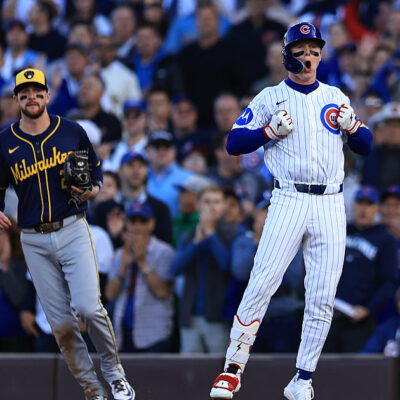
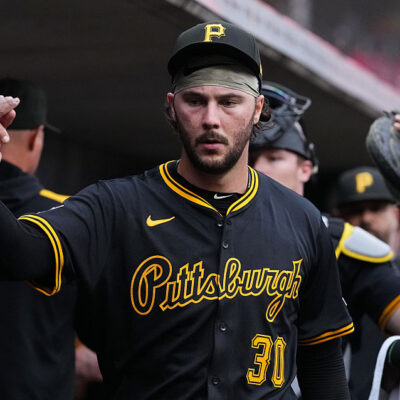
With three homers during his first three games, Brandon Lowe was another player who unsurprisingly stood out in this data. He posted a 1.333 OPS with runners on base against the Mets, and he drove in four runs during this series. Similarly to O’Hearn, his career .881 OPS with runners on base inspires confidence that this production is far from a fluke.
Henry Davis was one of only two other hitters with an OPS above 1.000 in situations with runners on base, but his sample size was even smaller than Lowe’s or O’Hearn’s. Regardless, he drove in two runs, including one on a clutch, RBI single on March 29.
Nick Gonzales was the one other player who posted an OPS above 1.000 when runners were on base, as he’s looked very good early on. With three RBI during this series, he’s a sneaky player to keep an eye on when it comes time to construct the perfect lineup.
Bryan Reynolds and Marcell Ozuna were two players who significantly underperformed their career numbers with runners on base during the first series of the year. Reynold and Ozuna both posted a career OPS above .780 with runners on base, yet failed to come close to that mark against the Mets. But, with plenty of games to go, they’re worth setting up RBI opportunities for when constructing a lineup.
Giving all of the players listed above opportunities to drive in runs will be incredibly important for this team’s success in 2026. When building lineups, these players should be given every single chance possible to hit with runners on base until they prove otherwise, as the team can benefit significantly from their impacts.
Proposing a Lineup
Now that we’ve established what the most important spots in the lineup are for run production, and who the best producers are for the Pirates, we can construct an optimized lineup based on these numbers.
| 1. Oneil Cruz, CF |
| 2. Brandon Lowe, 2B |
| 3. Bryan Reynolds, LF |
| 4. Ryan O’Hearn, RF |
| 5. Spencer Horwitz, 1B |
| 6. Marcell Ozuna, DH |
| 7. Konnor Griffin, SS |
| 8. Nick Gonzales, 3B |
| 9. Henry Davis, C |
Beginning with the leadoff position, it makes the most sense for Oneil Cruz to slot in here. Although he’s plenty capable of hitting tape-measure homers, his speed will be valuable at the top of the order. Also, Cruz has renewed his game against left-handed pitchers, which makes him less of a liability in the leadoff spot.
Continuing, Brandon Lowe is the perfect two-hole hitter for this club. With a career .881 OPS with runners on base, Lowe is a threat to drive in runs, but he’s also best used earlier in the order to protect the better run producers such as Ryan O’Hearn and set up more scoring opportunities later down in the order.
Like Cruz, he’s also capable of hitting towering home runs, meaning he could still be a serious RBI threat in this spot. Especially with our discovery of the sneaky value the two-hole provides, Lowe is the perfect hitter for this spot.
Bryan Reynolds holds the team’s second-highest OPS with runners on base, which matches him filling in at arguably the second-most important spot in the order from a production standpoint. Also, Reynolds is able to break up a stretch of lefties that would otherwise be five hitters deep, making him even more important in this spot.
Although it’s still very early in the season, Ryan O’Hearn has looked like the team’s most threatening offensive presence so far. As we established earlier, he’s been a consistent threat with runners on base throughout his career (.772 OPS), and he’s backed that up with an astounding 1.071 OPS in those same situations so far this year.
With three capable bats ahead of him, O’Hearn is the perfect bat to help bring some of these hitters across the plate with his extra-base hit capabilities. Also, he may do better with runners on base, but he’s posted a career .722 OPS without runners on base, meaning he could get by during instances where he leads off the inning.
Even though he has yet to get going in 2026, Spencer Horwitz follows things up in the five-hole. He posted a 119 wRC+ and a .353 OBP during his first full season with the Pirates last year, and he, like many on this team, has done noticeably better with runners on base.
Horwitz is the perfect middle-ground between being capable of driving in runners, while also being someone who can continue passing the baton and set up opportunities for hitters in the latter half of the order.
Assuming O’Hearn and Horwitz both handle their roles as expected, Marcell Ozuna could act as the team’s second cleanup hitter in the six hole. At his best, he’s one of the better extra-base hit threats this lineup has to offer, and as a result, he’d be valuable near the end of what I’d consider the “meat of the order.”
As I was putting the finishing touches on this story, the Pirates promoted Just Baseball’s No. 1 prospect, Konnor Griffin, to the big leagues. With how Jared Triolo has performed early this season and the success of Nick Gonzales, Griffin is expected to take his place in the order.
Just as he is in seemingly every part of his game, Griffin is a Swiss Army knife for this lineup. His speed makes him a legitimate leadoff threat in a perfect world after he gets some big-league time, but the team will likely be more hesitant to throw him into the fire this early on. In the seven hole, he could function in a leadoff-adjacent role without being the team’s one-hole hitter.
Gonzales and Henry Davis would be the best picks to round out this lineup and help set up opportunities for the top of the order. They’ve both performed well with runners on base early in 2026, and they should be given ample opportunities to keep doing so at the bottom of the order.
With how this lineup is structured purely off run production, they could quickly become a lethal group if all goes to plan. This is a lineup that’s capable of doing damage and also simply passing the baton to the next hitter, which is a recipe for success.
Become a Member of Just Baseball
Subscribe and upgrade to go ad-free!
* Save 25% by subscribing annually.

Written by
Jay Staph, a huge baseball fan and stat nerd, founded and ran his own baseball writing website, BSBWrites, at just 16-years-old. With focal points around prospects,…