
Yankees’ Offseason Setting Up For Disastrous 2026 in Rugged AL East
The Yankees have been quiet this offseason, while key injuries and division rivals improving should worry the Bronx faithful.
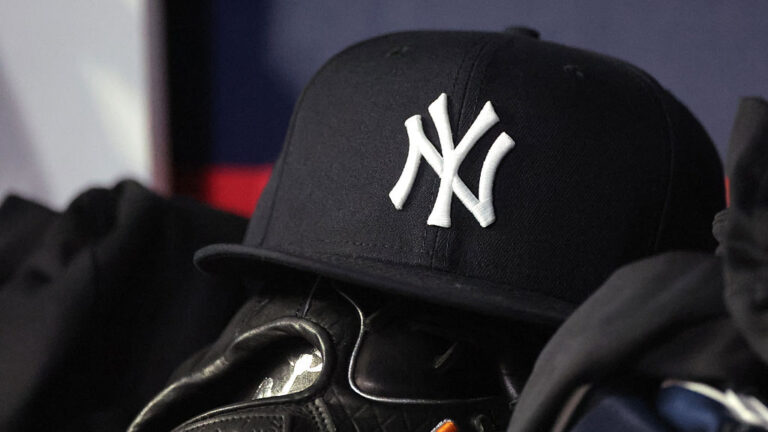
Someone needs to remind the New York Yankees that they can actually sign MLB free agents to more than just minor-league contracts.
If they need a refresher on how that works, they can look around the American League East at their division rivals who have been busy this offseason and putting themselves in a position to leave the Yankees in the rearview mirror.
The Yankees continued what has been a head-scratching offseason so far on Sunday, inking veteran infielder Paul DeJong to a minor-league deal. How DeJong might fit in to a roster that is already teeming with potential infield candidates, including Amed Rosario, who the Yankees brought back on a one-year deal earlier in the offseason.
Per MLB Trade Rumors, New York started the new year with just over $29 million allotted to offseason signings. The bulk of that went to outfielder Trent Grisham, who surprisingly received a qualifying offer and cashed in with a $22.025 million deal for the 2026 campaign.
The Yankees spent $4.5 million on a pair of pitchers (Ryan Yarbrough and Paul Blackburn, both returning from the 2025 squad) and $2.5 million on Rosario.
One can argue that the Yankees are building depth while holding out to see if they can land Kyle Tucker, Cody Bellinger and/or Bo Bichette. However, while the Yankees have been taking that approach, they’re falling behind in the race for talent in the division.
Toronto and Baltimore were the top two spending teams before 2025 came to a close, with the Blue Jays pouring out $277 million to lead all MLB teams — and that was before Toronto entered into a deal with Japanese third baseman Kazuma Okamoto over the weekend.
Both those teams have added arms as well, making them arguably, on paper, stronger than they were last season (a scary thought knowing the Blue Jays were so close to winning the World Series).
Additionally, Boston brought in one of the most notable arms available for trade by bringing Sonny Gray over from the Cardinals. Gray and Johan Oviedo may fill out a Boston rotation that looks to be improved over the team that was knocked out of the postseason by the Yankees last year.
So, why is adding to the Yankees’ roster this offseason so important? Here are a few reminders.
1. Opening Day Will Arrive Without Key Yankees
The Yankees won’t have their best pitcher, their most reliable starter from last year, or their starting shortstop when the season begins.
Gerrit Cole is recovering from Tommy John surgery and won’t pitch until summer. Carlos Rodón, coming off an excellent 18-win campaign with a 3.09 ERA, had elbow surgery to clean out loose bodies and bone spurs and his return timeline stretches into late April or May at best.
Additionally, Clarke Schmidt won’t be available until midseason following his own Tommy John procedure. Anthony Volpe underwent arthroscopic shoulder surgery to repair a torn labrum and won’t be available until well into the spring.
This creates enormous pressure on an already uncertain rotation. Max Fried will anchor things, but the Yankees will rely heavily on largely unproven arms like Cam Schlittler and Luis Gil to eat innings. At shortstop, Jose Caballero appears headed for Opening Day duties. That’s hardly inspiring for a team with championship aspirations.
Asking a patched-together roster to stay competitive in baseball’s toughest division while waiting for injured stars to return is asking for trouble. One bad month in April could sink the season before it truly begins.
2. The Anthony Volpe Problem Hasn’t Gone Away for Yankees
Last season exposed serious questions about Volpe’s future as New York’s franchise shortstop. He hit just .212 with a .663 OPS while committing 19 errors, many coming while he played through shoulder discomfort that required multiple cortisone shots. His playoff performance was even worse with 16 strikeouts in 26 at-bats, looking completely overmatched.
Surgery revealed more extensive damage than originally diagnosed, pushing his return deep into 2026. Even if he comes back healthy, the Yankees face an uncomfortable reality: They may have invested significant developmental resources in someone who isn’t the answer.
GM Brian Cashman insists the organization still believes in Volpe, but that faith is looking increasingly like wishful thinking. If he struggles again after returning, New York has wasted another season hoping for a breakthrough that may never come.
3. Outfield Depth Remains a Question Mark
Grisham accepted his qualifying offer, but his playoff meltdown — a .426 OPS with just two extra-base hits in 29 at-bats — revealed his limitations when the stakes are highest.
Bellinger opted out after a productive season (.814 OPS, 29 home runs), and the Yankees must now decide whether to re-sign him at an inflated price or trust their youth movement.
That movement includes Jasson Domínguez, who still has to prove he can handle everyday work at the MLB level, and Spencer Jones, who showed well in Triple-A but remains unproven at the highest level.
Betting on prospects is fine for rebuilding teams. For a franchise expecting championships, it’s a risky gamble. If Bellinger doesn’t return and neither youngster delivers, the outfield could become a black hole that undermines everything else.
So, what are the Yankees seemingly hoping for?
- Cole and Rodón return at full strength
- Volpe overcomes injury and last year’s struggles
- Young outfielders make immediate impacts
- No new injuries disrupt plans
That’s a lot of optimism for a franchise that just lost in the ALDS despite winning 94 regular-season games. The baseball gods don’t typically reward teams that need everything to go right.
The Reality Check
As of now, the Yankees are entering 2026 with three key players injured, unproven talent filling critical roles, and division rivals actively improving their rosters.
The Yankees had an opportunity to be aggressive this winter. So far, they have chosen caution and patience instead. Certainly things may change with a big signing or trade, but the clock is ticking.
If New York doesn’t add significantly to its roster, when April arrives and the injured players are still rehabbing while untested youngsters struggle against elite competition, the offseason’s conservative approach may feel like a critical miscalculation.
In the AL East, you can’t afford to hope everything works out. The Yankees are about to learn whether hope is a strategy or a trap.

Written by
A member of the Baseball Writers Association of America (BBWAA), Kevin Henry has been covering MLB and MiLB for nearly two decades. Those assignments have included…