
Mike Soroka Was a Sneaky-Good Signing for the Diamondbacks
Here's a breakdown of Soroka's fit on the D-Backs' pitching staff and what he means for their offseason plans moving forward.
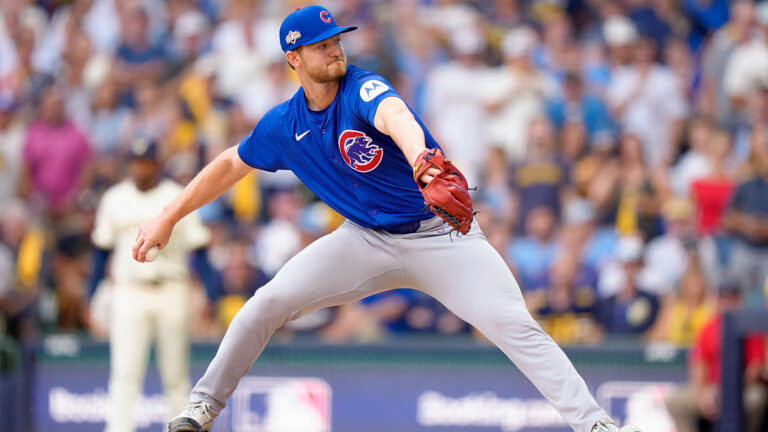
According to reports on the morning of December 8, the Arizona Diamondbacks and right-handed pitcher Michael Soroka agreed to terms on a one-year contract pending a physical for the 2026 season. That was reported by Jesse Rogers and Jeff Passan from ESPN.
The one-year deal is worth $7.5MM with an additional $2MM in incentives to make it a potential $9.5MM for the whole season. What those incentives are remains to be found out.
Per Arizona Sports reporter John Gambodaro, Soroka is expected to start the season in the starting rotation for the D-Backs, and that this move doesn’t preclude them from adding more starting pitchers or relievers.
The Diamondbacks still have at least one open spot in their starting rotation and multiple open spots in their bullpen, including a closer. General manager Mike Hazen is expected to make at least one more move soon, perhaps during the Winter Meetings.
After all, this move kicked off the Winter Meetings transactions.
Mike Soroka’s Fit With Arizona
Why would Arizona pick Soroka out of the multitude of available starting pitchers in free agency? After all, they were connected with Lucas Giolito and Merrill Kelly, and there are many other enticing options that are semi-affordable or even cheaper.
However, Arizona is working with a limited availability of payroll space. At least, that’s the general belief entering the offseason, and that they won’t reach the heights of 2025 when they were close to $200MM.
It’s assumed they had between $25-45MM left to spend entering the Winter Meetings before they reach their cap that owner Ken Kendrick set. That said, as is well known, if there’s a player Kendrick really wants, such as Corbin Burnes last year, then the budget ceiling can be blown sky-high.
Still, the team wasn’t going to be able to afford a higher-tier starting pitcher plus a player like Kelly to go with a closer and a right-handed bat in free agency. They needed a player on the cheaper side to allow for more flexibility with the other acquisitions.
That’s where the 28-year-old Soroka came into the picture.
Valuable Depth At an Affordable Price
Thanks to another season with limited ability due to an injury, he was on the cheaper side of starting pitching. Plus, since he’s dealt with so many injuries over the last half-decade, he was limited to just one-year deals.
In a year from now, Arizona should have a much better stockade of MLB-ready starting pitchers, not to mention more payroll flexibility.
Arizona needed a pitcher capable of making starts or perhaps relieving, one that comes with some upside and at a low cost with limited years. Soroka matched all those metrics to a tee. The contract terms fit smack dab in the perfect spot that only soaks up at most $9 million of their $25-45 million budget.
That leaves them enough money to sign a reliever or two and a starting pitcher or a bat depending on what happens with the Ketel Marte trade situation going on.
They also know they now have at least four MLB-caliber starting pitchers to start the season with. They don’t have to rely upon a couple of rookies or swingman Bryce Jarvis in their rotation to start the year if they don’t want to.
This was a critical piece to add at an affordable rate. Considering the price of starting pitchers in the market, getting a No. 5 pitcher that has experience out of the bullpen was a strong move.
For example, since Corbin Burnes is expected back near the All-Star break, Soroka can easily be moved into the bullpen to keep him healthy and turn him into a versatile long man to open a spot for Burnes to rejoin the rotation when the time comes.
It avoids the need to have that awkward conversation with a long-term starting pitcher like Brandon Pfaadt, Eduardo Rodriguez, or another free-agent starter, depending on the results of this upcoming season, of course.
Soroka is a proven reliever who did well with the Cubs in that role following his injury to end the 2025 season.
A History of Injuries, but Intriguing Upside
Of course, it’s due to those injuries in Soroka’s past that he was this cheap. He’s missed time with injury in every season since 2020. That includes two seasons in which he didn’t throw a single pitch. Notably, that was due to back-to-back years of tearing his right Achilles.
Thankfully, his elbow has been spared this whole time for the most part. He missed a few weeks to end the 2023 season with forearm inflammation and missed a couple of months in 2025 with a shoulder and biceps strain. Otherwise, his arm has been healthy. That’s good news when your job is throwing pitches and not hitting.
He’s just entering his age-28 season, so there should be plenty of bullets left in his arm and the potential for untapped upside.
Soroka’s results in 2025 showed a lot of upside that could be harnessed.
He’s pitched only 215 1/3 MLB innings since 2020. There will have to be a protective policy for him throughout the season to not overwork the arm due to the limited amount of innings in order to keep him healthy. That’s why a move to the bullpen when Burnes comes back is likely.
So, what could be in store for Soroka in 2026 after a mixed bag of 2025? It was a season in which the advanced stats loved him but the base stats were less than enthusiastic about him, making for an interesting player to target.
Expectations For Soroka In 2026
While his rate stats of a 4.52 ERA, 3-8 record, 12 home runs allowed over 89.2 innings were lackluster, there’s plenty under the hood to like.
He had a much lower FIP of 4.23 while striking out 95 batters and walking just 29. In fact, his K/9 over the last two seasons has been a strong, hovering around 9.5.
His 17.4% K-BB% in 2025 was a great ratio as well. Additionally, he allowed just 72 hits (.215 opponent average), highlighting that the home run ball is what did him in as opposed to an abundance of hits allowed.
Soroka’s expected stats were even better. His xERA was a standout 3.45 compared to his actual mark. His expected batting average was just .210 with an xWOBA.289, which, again, were quite encouraging.
Overall, one could say he was unlucky last season and should’ve had far better rate stats than what he actually had.
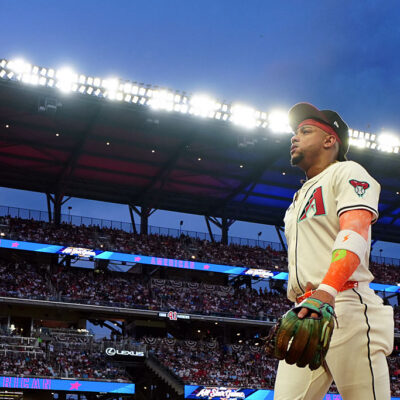
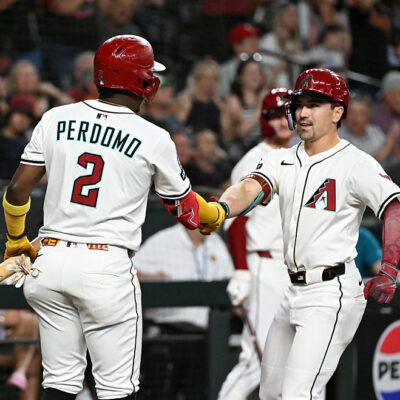
His best pitch was the slurve, a slider-curveball combination. It was one of the best pitches across all of the majors in 2025. It was basically unhittable, especially for power. Opponents hit just .118 against it with a slugging of .245. It had a sky-high whiff rate of 38.3%. It was a genuine elite pitch that was one of the best secrets in baseball.
His changeup was quite good as opponents hit just .206 against it with a .265 slug against. The problem child that Arizona will have to help is his fastball. It averaged 93.6 mph, much harder than the early years of his career. However, batters hit .273 with a slug of .524 against it.
If they got into a fastball count, they had the advantage by far.
However, the expected stats were better on it as the expected batting average was just .249 and slugging was .442. Those numbers are much more palatable and accepting.
If he can improve his fastball, which is certainly possible and perhaps even likely as the results return to the mean, and if Arizona can find a way to keep him healthy for 15-20 starts and 30-40 games overall, he could be a really good find for them. It would easily be enough to make the contract well worth the money.
Final Thoughts
While you can’t predict injuries or expect him to miss a lot of the season, it could be reasonable to believe that he will need to be skipped in the rotation a few times to keep him healthy.
However, once he’s moved to the bullpen, if that happens, he could have an easier time staying healthy by serving as a long man with plenty of rest between outings. Arizona knows this and will be certain to manage his innings and pitches.
He won’t be expected to pitch six innings every time. In fact, he did that just four times last year. However, Soroka can be a reliable five innings every time with the occasional chance for more. All he has to be is a good No. 5 starting pitcher and that’ll already be a big improvement for Arizona compared to the past season.
Soroka raises the floor of the rotation and pitching staff for the Diamondbacks. While this isn’t close to the only move that the Diamondbacks will need to make for the rest of the offseason, it’s a strong start.

Written by
Jake Oliver is a Baseball Reporter covering the Arizona Diamondbacks for Just Baseball. He is a former reporter and prospect writer for Diamondbacks On SI and…