
Who Will Win the Battle for the Padres’ Fifth Rotation Spot?
The Padres will have several candidates battling for the final spot in the rotation this spring. Who might win the job?
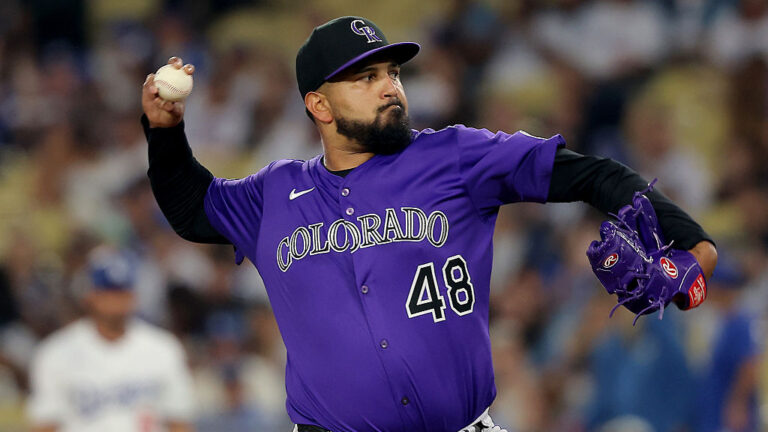
In an interview on February 10, 2026, skipper Craig Stammen was asked if he expected additional moves from AJ Preller. His response was, “AJ’s always got something up his sleeve…don’t put anything past him.”
Stammen couldn’t have put it any better. From that day forward, Preller has signed Miguel Andújar, Nick Castellanos, and Ty France for lineup depth while adding Germán Márquez, Walker Buehler, and Griffin Canning for the rotation.
Currently, the rotation is headlined by Nick Pivetta, followed by Michael King, Joe Musgrove, and Randy Vásquez. Stammen has iterated that Vásquez has an “inside track” to make the rotation, so we are going to operate as if he is the fourth starter.
This leaves Marco Gonzales, Triston Mcknezie, JP Sears, Matt Waldron, Miguel Mendez, Márquez, Buehler, and Canning to hash it out for the fifth spot in the rotation.
Considering the sheer amount of options Preller’s given to Stammen to choose from, let’s sort through them and see who potentially will earn a spot.
Walker Buehler
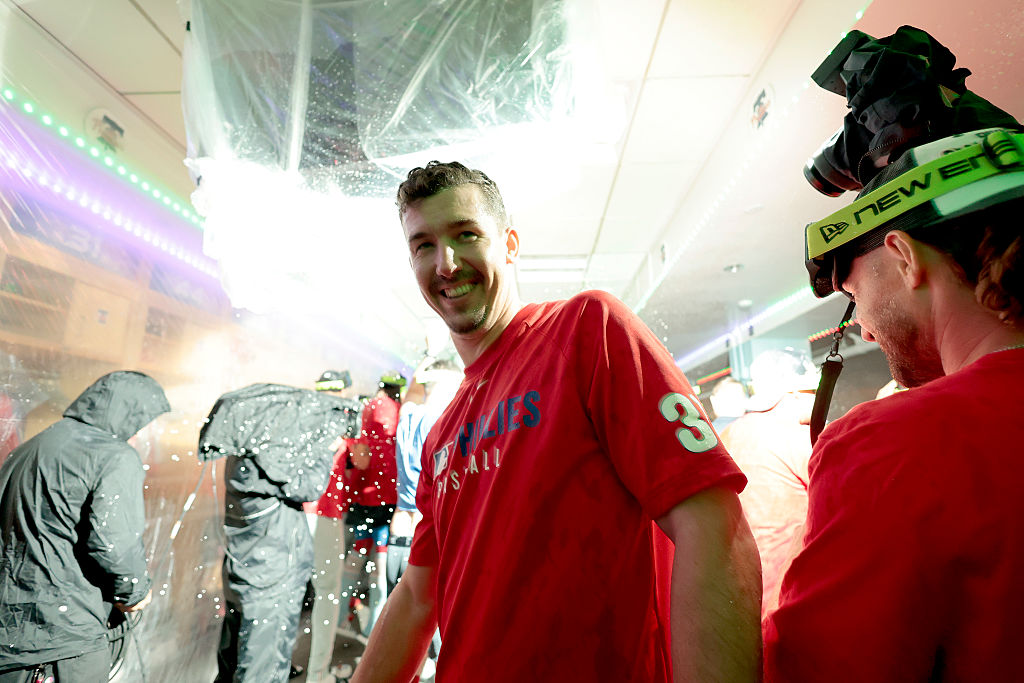
The days of Buehler being a bona fide ace are likely over. However, this doesn’t mean he can’t provide meaningful innings for the San Diego Padres.
In his first season back from Tommy John, the results were lackluster. In 126 innings, he posted a 4.93 ERA with 92 strikeouts and 61 walks. To make matters worse, his whiff rate (19.2%) and strikeout rate (16.3%) sit in the ninth percentile. And his walk rate of 10.6% is a career worst.
Another thing to note is Buehler’s velocity. Pre-surgery, he sat at 95 mph on his four-seamer; last season, he was at 93.9 mph. It’s not a significant drop, but it’s enough to notice in the way he goes about attacking hitters. His 25.3% use of his four-seam was a career low, which required him to be more crafty rather than bullying hitters.
Of his other offerings, only two graded positively in terms of Run Value, which was his sinker (6) and his sweeper (1). With this fastball dipping in velocity, the drop in the effectiveness of his secondaries was put on display last season.
Now, for the positives, he found ways to produce soft contact. He ranks in the 82nd percentile in average exit velocity and the 70th percentile in hard-hit rate. Tack on a 42.5% ground-ball rate, and there’s something to build on.
As the season went on, Buehler improved. In his final 32 innings, he owned a 2.53 ERA. The biggest adjustment was a spike in four-seam usage, like his time with the Dodgers.
The foundation is there for Buehler’s success. Regaining velocity and tinkering with pitches or pitch mix will be imperative. If he can get back to living at the top of the zone with his heater and tunneling other pitches off of it, he will have a solid shot at making the fifth spot.
Germán Márquez
Like Buehler, Márquez has been brought in as a reclamation project. In his first season back from Tommy John, again, like Buehler, was ugly.
In 26 starts, Márquez owned a 6.70 ERA with a 1.71 WHIP across 126.1 innings pitched. The argument could be made that he was the worst pitcher in baseball last season, and according to his -42 total Run Value, he was.
That being said, there is still upside with Márquez, starting with the four-seamer. Yes, it was mashed last season, but Marquez maintained his pre-surgery velocity, which is a win.
To help fully understand his upside, let’s go back to his successful seasons — 2018 and 2021. During that stretch, Márquez was a legitimate rotation arm, even while pitching half his games at Coors Field. In 2018, he posted a 3.77 ERA and struck out 230 batters. In 2021, he threw 180 innings and was named an All-Star.
What is most intriguing about Márquez is his knuckle-curve. It’s his best putaway pitch, but last season, he couldn’t create enough depth, only averaging -0.8 inches of induced vertical break (iVB).
When it wasn’t down in the zone, it got crushed to a 44.1% hard-hit rate. Despite that, it still generated a 36.8% whiff rate and a 33.9% strikeout rate, showing the capability of an elite pitch when used properly.
Given a full offseason to regain feel and trust in his stuff, I expect Márquez to be in the 96-97 mph range with his fastball, with his curveball being his primary putaway. He has the stuff to slot into the rotation, but he will need to show that he can limit hard contact and recapture his swing-and-miss ability.
Triston McKenzie
After his 2022 season, McKenzie looked to be one of the brighter young arms in the league. In 31 appearances, 30 starts, he owned a sparkling 2.96 ERA across 191.1 innings. Unfortunately, the injury bug plagued him for years after his breakout, and now he is attempting to make a comeback.
McKenzie stands at six feet and five inches tall, weighing around 165 pounds, earning him the nickname “Dr. Sticks”. However, this tall and lanky frame helps him create elite extension toward home plate. Releasing the ball at six feet and eight inches, this helps his fastball play harder than his velocity.
On top of releasing the ball close to home plate, his four-seam fastball created elite ride, which resulted in a 19.9% whiff rate on the pitch in 2022. Working off his fastball was his old-school curveball.
With his tall and over-the-top release, it created tons of downward break and had opponents whiffing 25% of the time in 2022. This combination gave batters trouble, leaving them late on the fastball up or fishing at the bottom of the zone.
In terms of stature and his primary ways of collecting outs, we are looking at potentially another Pivetta-type resurgence. Whether he can stay healthy is another thing.
A return to his 2022 self would be a massive upgrade for the rotation. That had to have been the thought process when bringing him in; now it’s time to see if that comes to fruition. At worst, he could be a long-inning reliever who makes an occasional spot start for San Diego.
JP Sears
The lefty was brought over in the blockbuster Mason Miller trade, and in his few opportunities, he didn’t perform. In five starts, he turned in a 5.47 ERA in 24.2 innings.
Sears isn’t one to blow fastballs by hitters, but he does offer a plus sweeper that plays well off of his sinker. This offseason, he has worked on tightening his off-speed pitches and has come to Arizona throwing a little harder.
Among the names competing for a spot, Sears offers the least amount of upside. He doesn’t strike guys out at a high clip or miss barrels consistently, but he does limit walks. Plus, he has a proven track record of durability, starting at least 27 games since 2023.
Sears will really need to impress this spring if he wants a shot at making the rotation. If he can find a way to generate more whiffs and cut down on hard contact, there is a chance.
Griffin Canning
Before signing a one-year deal with the Mets, Canning spent his first six years with the Angels. In five seasons, he was slightly below league average with a 4.78 ERA, but something clicked when he made it over to Queens.
Canning was in the midst of a resurgence, owning a 3.77 ERA in 76.1 innings. Unfortunately, he tore his Achilles in a start against Atlanta in June, requiring surgery and to miss the remainder of the season.
His best pitch last season was his changeup, with 15 inches of induced horizontal break (iHB). He primarily kept the pitch low in the zone, allowing the arm-side run to pour into righties and away from lefties. He added 3.2 iVB on his slider, creating more downward tilt.
These two pitches helped Canning produce an elite 51.6% ground-ball rate, allowing him to outperform his 45.7% hard-hit rate and 4.70 expected ERA.
The timeline for Canning will start the season on the injured list, and his timeline to return is in late April or early May. If he can command his changeup and slider the way he was prior to his injury, there is no doubt he will find his way into the rotation when healthy.
Final Thoughts
Why not take as many swings as you can and see which ones hit? That is the exact approach Preller took in building out the rotation. With limited financials, he went digging in the bargain bin and gave Stammen options.
While a logjam of capable starting pitchers could be viewed as an issue, this can work in the Padres’ favor. Since King and Musgrove are coming off injuries, there is no certainty that they both stay healthy over the season. This is where the flurry of arms comes into play, allowing Stammen to plug guys in.
There is a world where the Padres employ a six-man rotation under two circumstances. One being that multiple guys show they are capable of being in the rotation, or two, the club wants to manage King’s and Musgrove’s innings.
Each of these starters have shown success at the major-league level, some reaching heights of being considered top five at the position, now there is an opportunity to show they still have it. Like Preller, you can’t ever count out Ruben Niebla to work his magic and pull yet another diamond out of the rough.
Become a Member of Just Baseball
Subscribe and upgrade to go ad-free!
* Save 25% by subscribing annually.

Written by
Ethan is an aspiring sports analyst who has a passion for all sports. He was a collegiate baseball player and is a recent San Diego State…